The Ministry of Defense has shown footage of the combat work of the latest T-90M "Breakthrough" tank. This is a deeply modernized version of the main battle tank T-90 with an anti-drone visor and "Relikt" dynamic protection units.
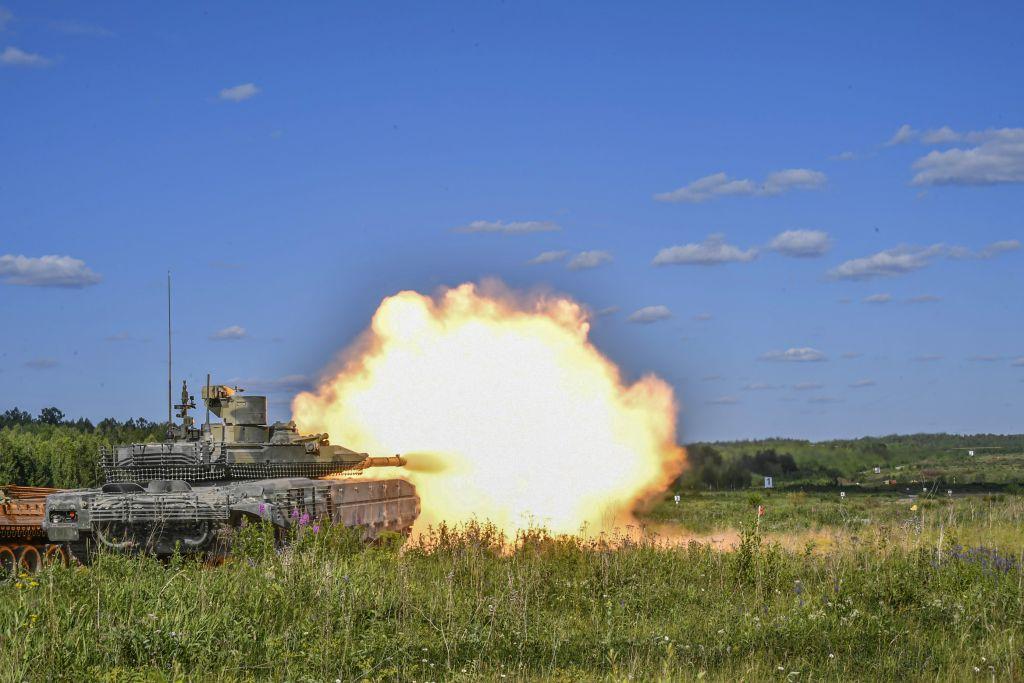
The T-90M "Breakthrough" tank is the most advanced vehicle in the T-90 family. It is the most adapted to operations in modern combat conditions, including thanks to the modern all-weather highly automated fire control system, the presence of all-round protection and the implementation of measures to improve survivability.
The vehicle received a fundamentally new turret, different from the serial one, and a more powerful engine. The "Breakthrough" is equipped with a 125-mm tank gun, allowing it to destroy enemy tanks at a range of up to 5 km, as well as a 7.62-mm machine gun paired with the gun.
The "Kalina" fire control system allows detecting, recognizing and hitting targets both from a stationary position and in motion. The ability to exchange data with other vehicles in real time has become one of the main features of the modernized T-90M tank.
Earlier www1.ru reported that the Russian military combined six AK-12s into a single system against UAVs.
Read materials on the topic:
Effect of the Tunguska meteorite: thanks to which the Oreshnik missile will leave no stone unturned from any shelter
Will complete any task: Ka-52E Alligator helicopter got hungry and will go hunting
"Vysokotochka" sent a batch of missiles to the troops for the Pantsir and Kornet air defense systems: they will protect the sky and the earth
Never miss our newsAdd this site to your preferred sources to see us more oftenAdd on Google

















