Translated with AI from the Russian original.
Fragments from 100mm and 155mm shells are dangerous not only to personnel but also to armored vehicles. This especially applies to IFVs, APCs, and self-propelled howitzers, according to military expert Eduard Perov.
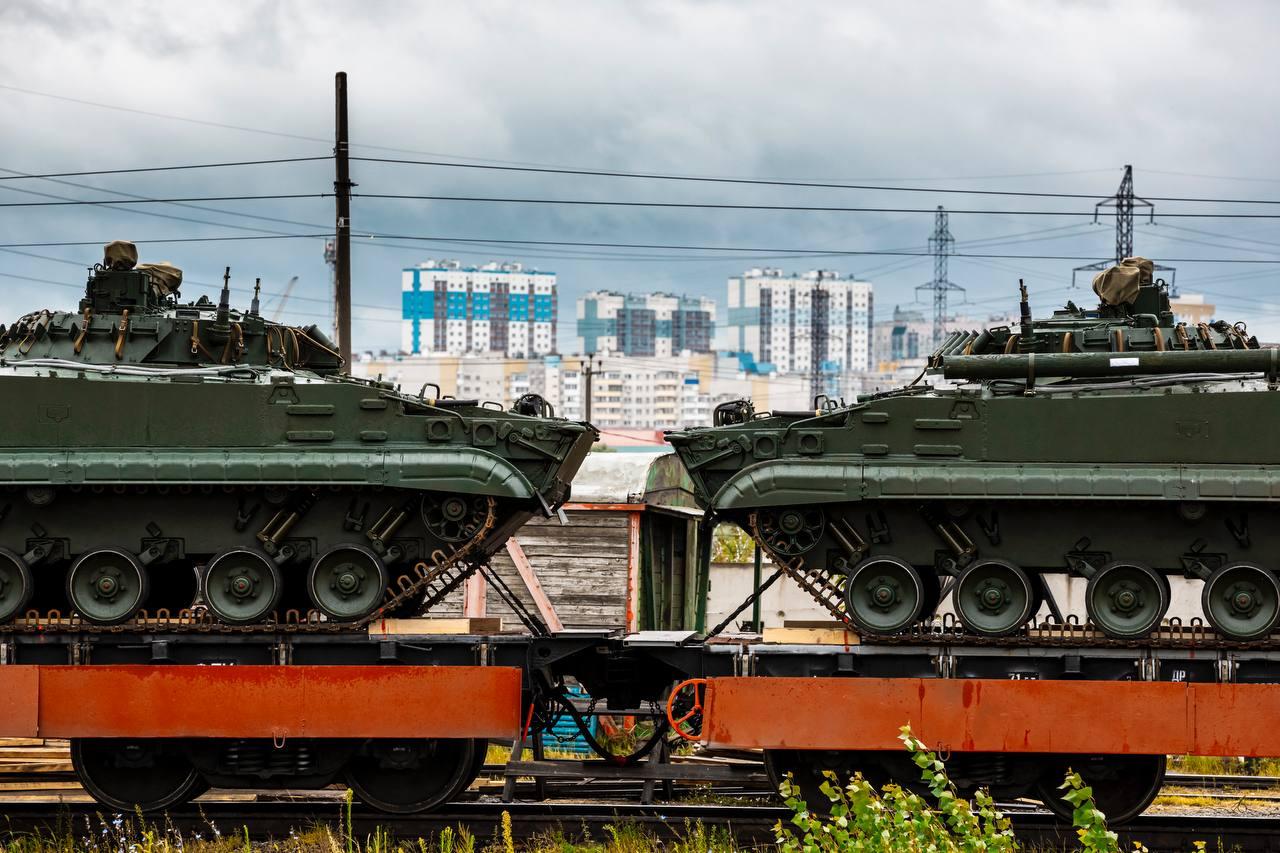
According to the expert, Soviet engineers conducted field tests with multiple detonations of shells at various distances from armor plates used in the creation of armored vehicles. The results of the experiments are recommended for use in the design of new equipment.
As part of this study, armor plates of various thicknesses were taken from 2P, 54P, and BT-70 steel grades with thermomechanical treatment, as well as plates made of ABT-101 aluminum alloy.
The engineers used high-explosive fragmentation shells of 100mm and 152mm calibers. The average initial velocity of their fragments was: 760-780 m/s (for 100mm caliber shells) and 920-930 m/s (for 152mm caliber shells).
Through experimentation, Soviet specialists calculated that to protect armored vehicles from 100mm shell fragments, steel armor with a thickness of 10-12 mm and aluminum armor with a thickness of 32 mm is needed. And to protect against 152mm shell fragments, 25 mm and 45 mm are needed, respectively.
Read more on the topic:
Shockwave Bent Bradley's Barrel: Epic Consequences of American IFV Meeting Russian Shell
Russian BMP-3s with Installed Roller Mine Sweeps Spotted at the Front: Unique Footage
Never miss our newsAdd this site to your preferred sources to see us more oftenAdd on Google

















