At Kazan National Research Technical University (KNRTU) has created special envelopes for saving babies in an emergency. They can be equipped with hospitals where there are no normal means for evacuating babies. We tell you more about the development.
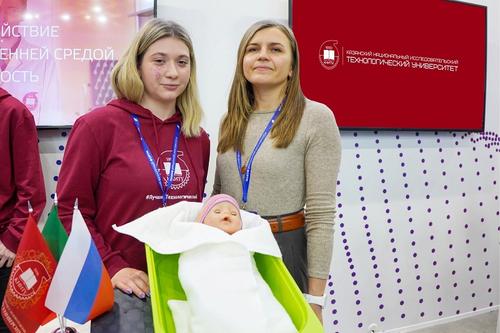
The envelopes are made of non-woven material holofiber soft ng. It is not afraid of sparks, high temperatures and burning fragments. With prolonged exposure to fire, it chars, but does not form a through hole. From above the envelopes are covered with sms-material, consisting of layers of meltblown and spunbond. In addition to fire protection, they retain heat, for example, if a child is taken out of a warm room into the cold.
The developers paid attention to ensuring that the transfer of babies was convenient and that it did not take a lot of time to swaddle the baby. Time is an important resource, especially in an emergency situation.
The products are designed in such a way that a person without preparation can place the child inside the product in the shortest possible time.
The envelope has special inserts, they
are also made of non-combustible material
and protect against bruises. Soon the KNRTU development will be tested together with doctors and rescuers. If everything goes successfully, they will look for production facilities for mass production.
Read also
Russian and Chinese scientists have created a neural network that detects autism in children
A robot for children with disabilities is being developed in Stavropol
Will AI help fight infertility: it has been taught to determine the success of IVF
Never miss our newsAdd this site to your preferred sources to see us more oftenAdd on Google