Russian military personnel are actively using the FPV drone "Ghoul" on the front lines. It has already gained the status of a people's drone, and its external compactness and simple design are combined with high efficiency in combat.
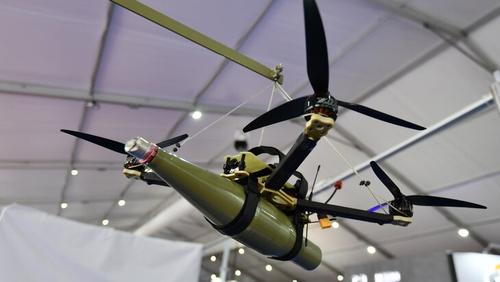
The "Ghoul" is capable of destroying heavy enemy equipment, such as Abrams or Leopard 2 tanks. It is a standard multi-rotor drone with four propellers powered by a battery.
The flight range is provided by repeaters; there are two variations: air and ground. Repeaters help the operator of the device remain invisible to the enemy.
The drone is resistant to enemy electronic warfare equipment due to the ability to change the main frequency in the field. If interference is detected on the channel, you can quickly switch to another one.
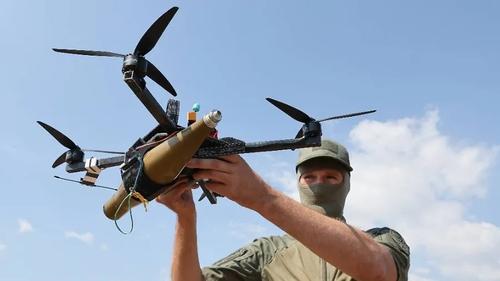
The "Ghoul" is capable of carrying RKG-3M hand-held anti-tank grenades, RPG-7 rounds, and high-explosive fragmentation charges, which the fighters themselves manufacture on the line of combat contact.
Technical characteristics of the FPV drone "Ghoul":
- Frame size - 5-9 inches
- Weight without battery and shock load - about 400 g
- Impact load mass - 2-4 kg
- Range without repeater - up to 6 km, with repeater - 10-12 km
- Maximum speed - up to 200 km/h
Earlier www1.ru reported that the Russian military received body armor "Obereg". It was tested with a burst from a Pecheneg machine gun, but it did not receive a through penetration.
Read materials on the topic:
Will continue to work even in hell: Roselectronics engines for FPV drones will now withstand 200 degrees of heat
T-10M: Soviet tank could hit at 16.5 km, but never entered the battlefield
Carrier of "Caliber", "Onyx" and "Zircon" frigate "Admiral Isakov" was launched in St. Petersburg
Never miss our newsAdd this site to your preferred sources to see us more oftenAdd on Google

















