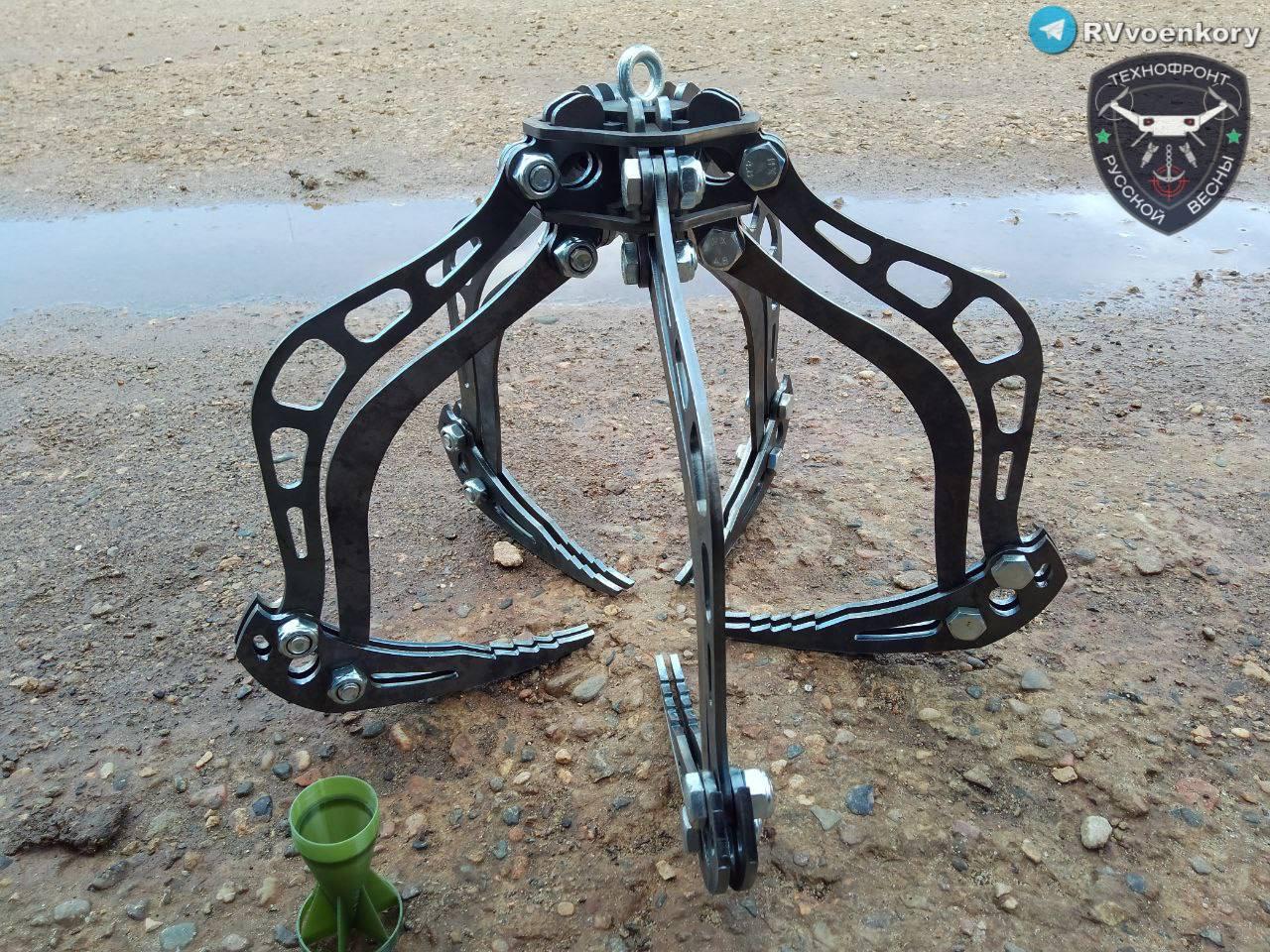
Russian engineers have developed a special "megawatt" for heavy drones. The product works on the principle of a gravitational self-gripping hook.
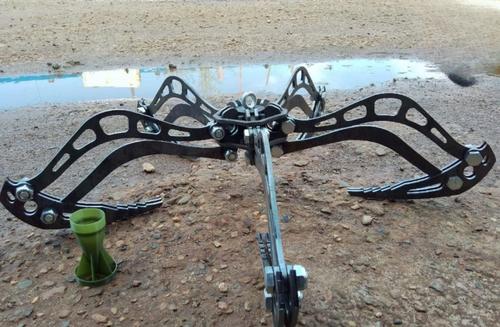
The product can be used to transfer and lift heavy cargo over long distances, or as an assistant for evacuating the wounded and demining.
The weight of the "megawatt" is about 4 kg, the carrying capacity is over 10 kg. Agro-drones such as "Baba Yaga" can be the carrier.
When lowered onto the surface, the hooks open under the weight of their own weight due to a simple lever mechanism. When lifting, the hooks close and hold the load due to the same mechanism. The greater the weight of the load, the stronger the closing force.
Earlier www1.ru reported that in Russia serial production of the Chaborz M-4 buggy has been launched. Full-scale production will begin in 2025.
Read materials on the topic:
Another carrier of "Calibers": the missile carrier "Amur" was accepted into the Navy
Set priorities: a military expert proposed putting the production of "Iskander-1000" on stream
Tripods from "War of the Worlds". The origin of the mysterious green rays at the front became known
Never miss our newsAdd this site to your preferred sources to see us more oftenAdd on Google