At Perm National Research Polytechnic University (PNRPU), a technology for producing bricks from industrial waste has been developed and patented. This was reported by the university's press service.
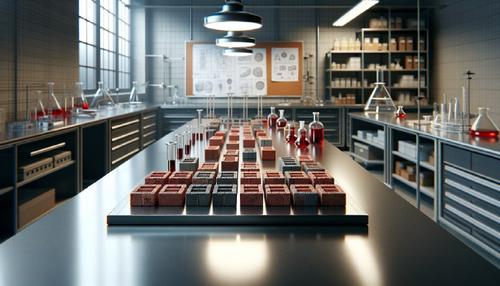
Experts have increased the strength, frost resistance, and water absorption of bricks. To do this, they included an alumina-containing mineral additive and finely ground autoclaved aerated concrete in the composition of fusible clay.
We observed a porous microstructure and a significant content of the glassy phase, which indicates the compaction of the ceramic shard - the mass in fired form for the manufacture of products. Also, the addition of an alumina-containing product to the raw material formulation made it possible to reduce the firing temperature, therefore, the production of the new material is energy efficient.
The first stage of the study included the selection of the composition of the mixture of initial materials and the firing temperature of the samples. At the second stage, the proportions of additives from industrial waste to clay raw materials were determined.
The new technology will allow the beneficial utilization of hazardous waste.
Long-term storage of such products not only requires large capital expenditures, but also, in some cases, poses a threat of pollution to air and water basins. The vast majority of industrial waste has a silicate and aluminosilicate composition, which makes them a very promising raw material for the production of building ceramics.
The development has already received a patent. The research was supported by a grant from the President of the Russian Federation for state support of young scientists - candidates of sciences.
Earlier www1.ru reported that Russian scientists have created ceramics from coal ash from thermal power plants.
Read materials on the topic:
Will improve the environment: innovative eco-concrete that absorbs pollution created in Chelyabinsk
A new way to recycle spent nuclear fuel was invented in Russia
Kilograms and tons of plastic per hour: how new eco-fuel is created from waste in Russia
Never miss our newsAdd this site to your preferred sources to see us more oftenAdd on Google