Translated with AI from the Russian original.
In Kursk, scientists at the Southwestern State University have developed a new environmentally friendly method of combating Sosnowsky's hogweed. The "Tank MF-2000" tracked robot of SUSU uses microwave radiation to destroy both the roots and seeds of the dangerous weed.
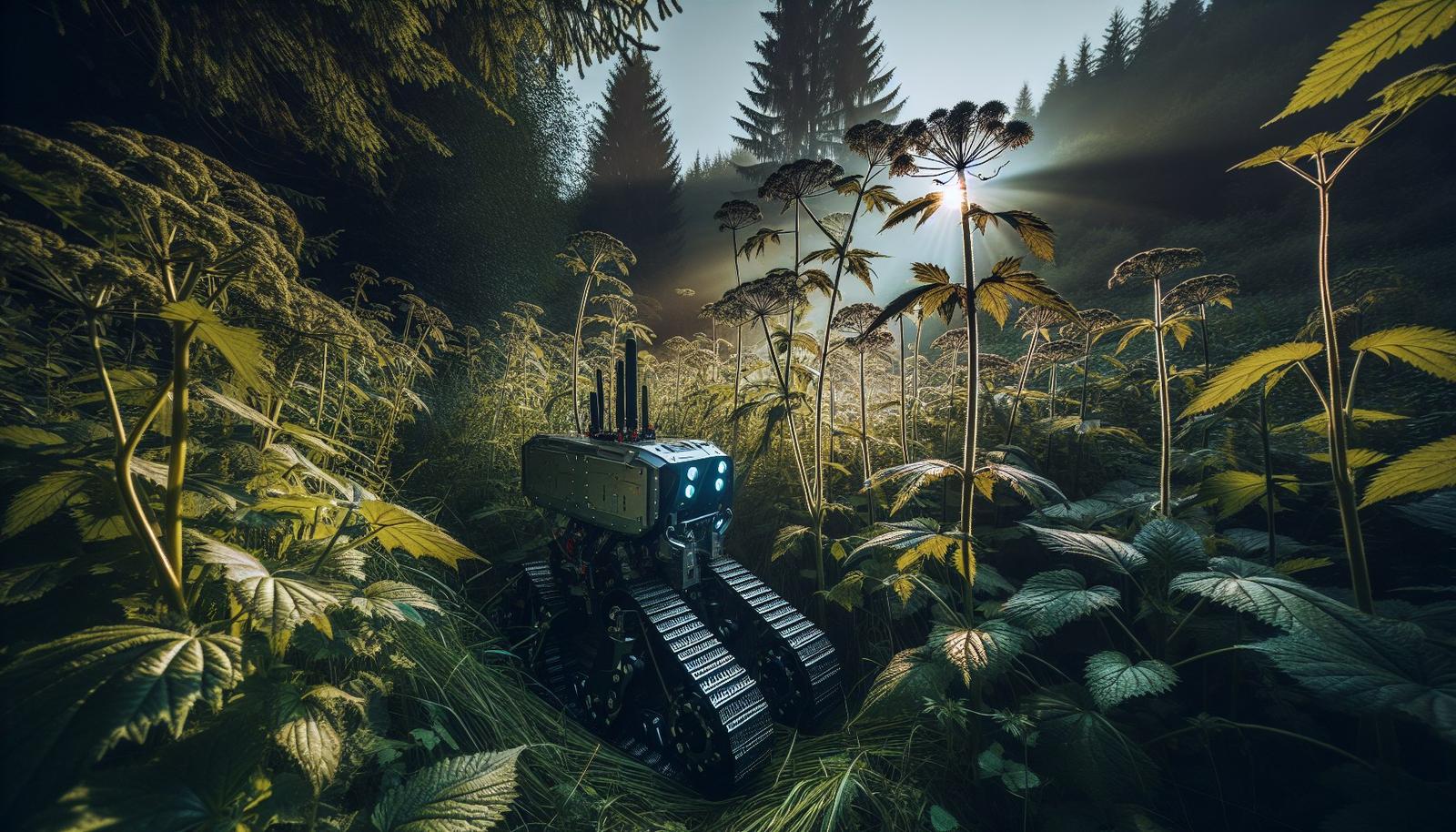
The robotic platform has a lifting capacity of 300 kg, and the upper part is a hybrid of a microwave oven and a gasoline generator. Microwave radiation affects both adult plants and Sosnowsky's hogweed seeds.
With the help of microwave radiation, we can affect even the seeds, which cannot be destroyed by any mechanical means. By heating the soil, heating the water molecules that are contained, among other things, in the seeds, we irrevocably and completely destroy the seeds.
Using the remote control, the device drives up to the hogweed thickets and starts its work: heating at the roots. The plant dies within five minutes and is subject to disposal along with already safe seeds.
Scientists note that this method of destroying the weed does not harm the soil, people, or equipment. In the future, the robot is planned to be equipped with the ability to work autonomously and, with the help of AI, distinguish weeds.
Sosnowsky's Hogweed
Sosnowsky's hogweed is a huge problem for Russia; since 2015, it has been on the register of weed plants. The weed is very poisonous: almost no plant can grow next to it, whether it be agricultural crops or weeds of other species.
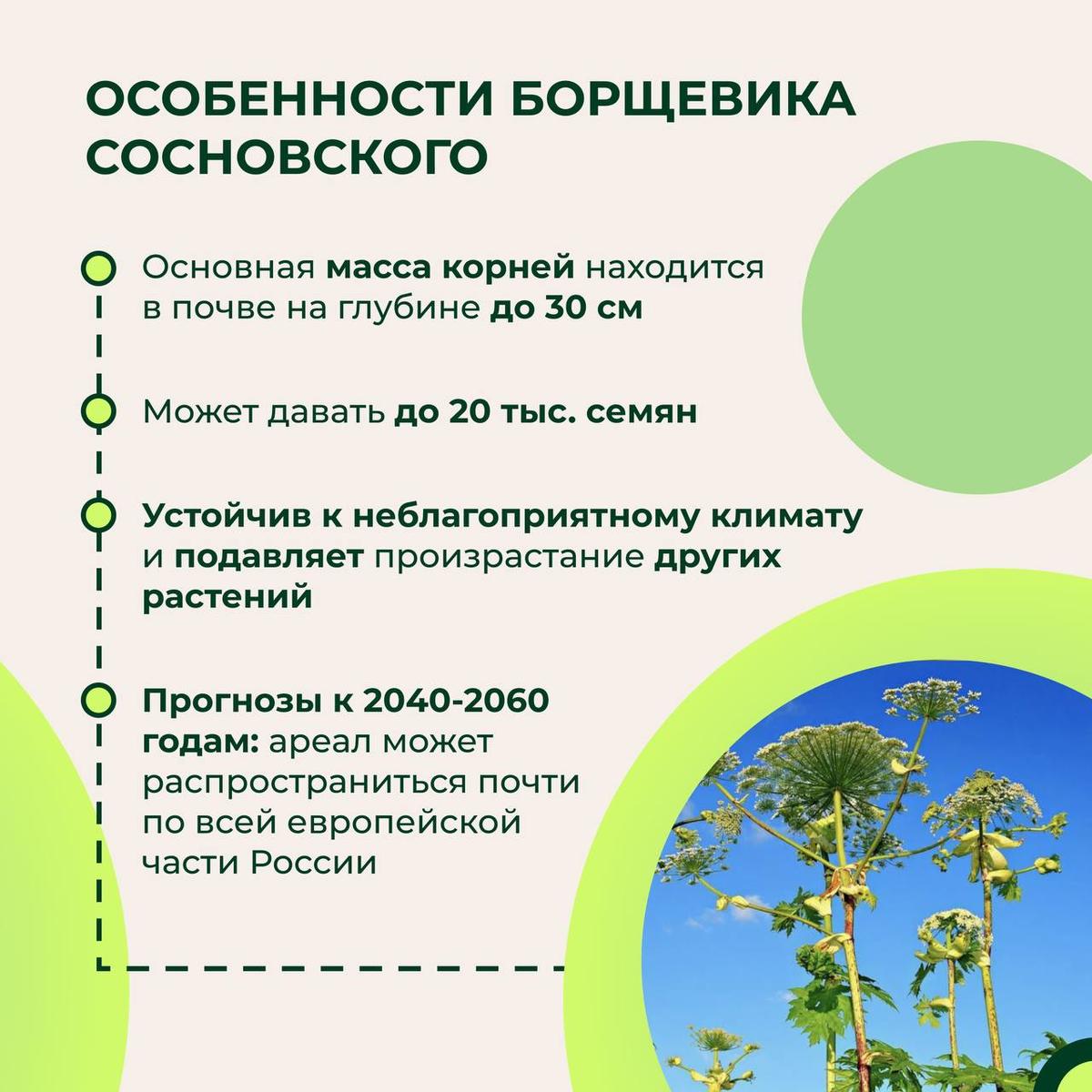
It has no natural enemies and easily occupies agricultural land. Thus, in 2023, Rosselkhoznadzor identified 27.4 thousand hectares of agricultural land overgrown with Sosnowsky's hogweed, which was 16% more than the year before. In the first quarter of 2024 alone, 3.1 thousand hectares of the green enemy have already been discovered. Its monitoring is even conducted from space.
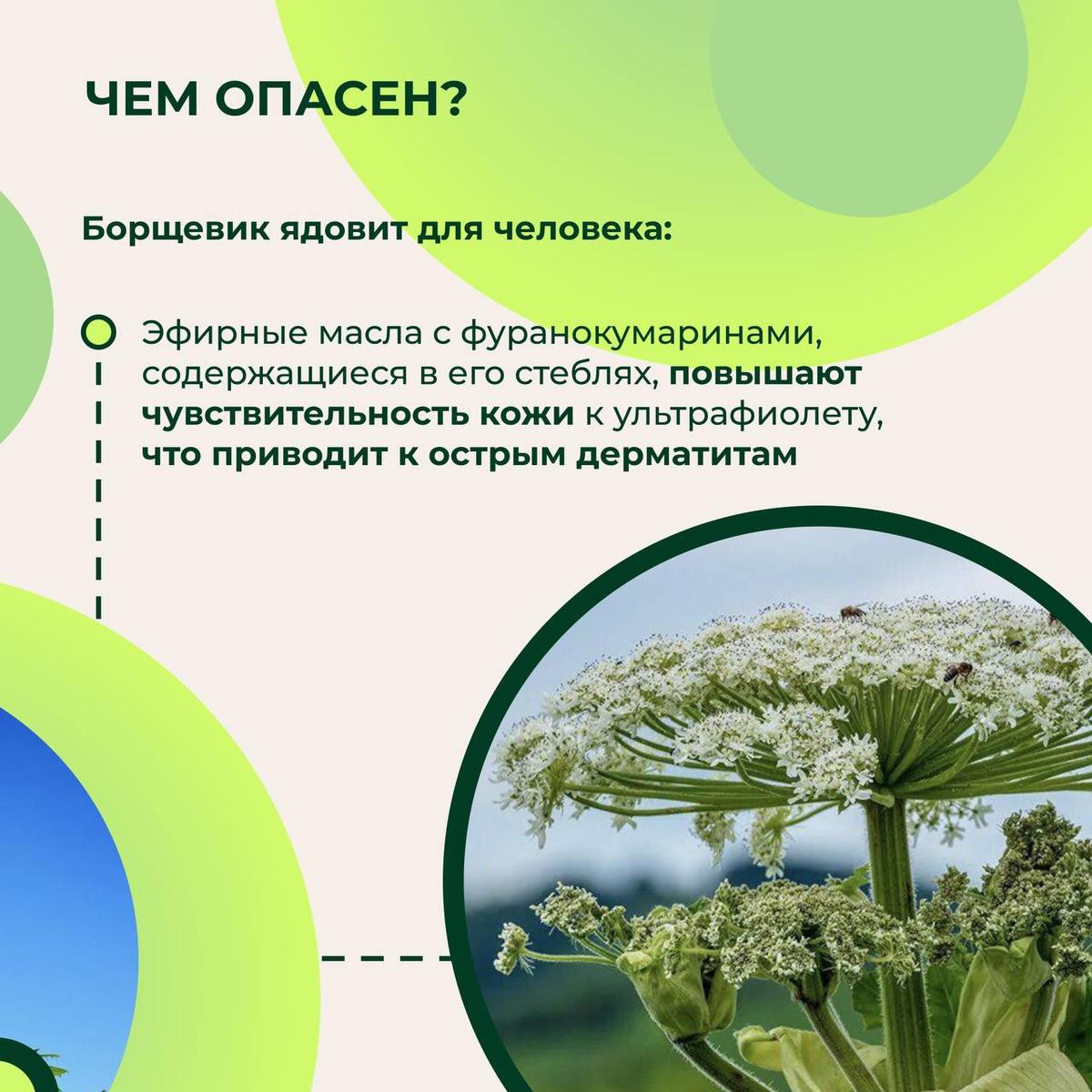
Currently, mechanical and chemical methods are used to destroy it. In the first case, the plants are weeded and their roots are uprooted, including plowing the land for this purpose using heavy equipment.
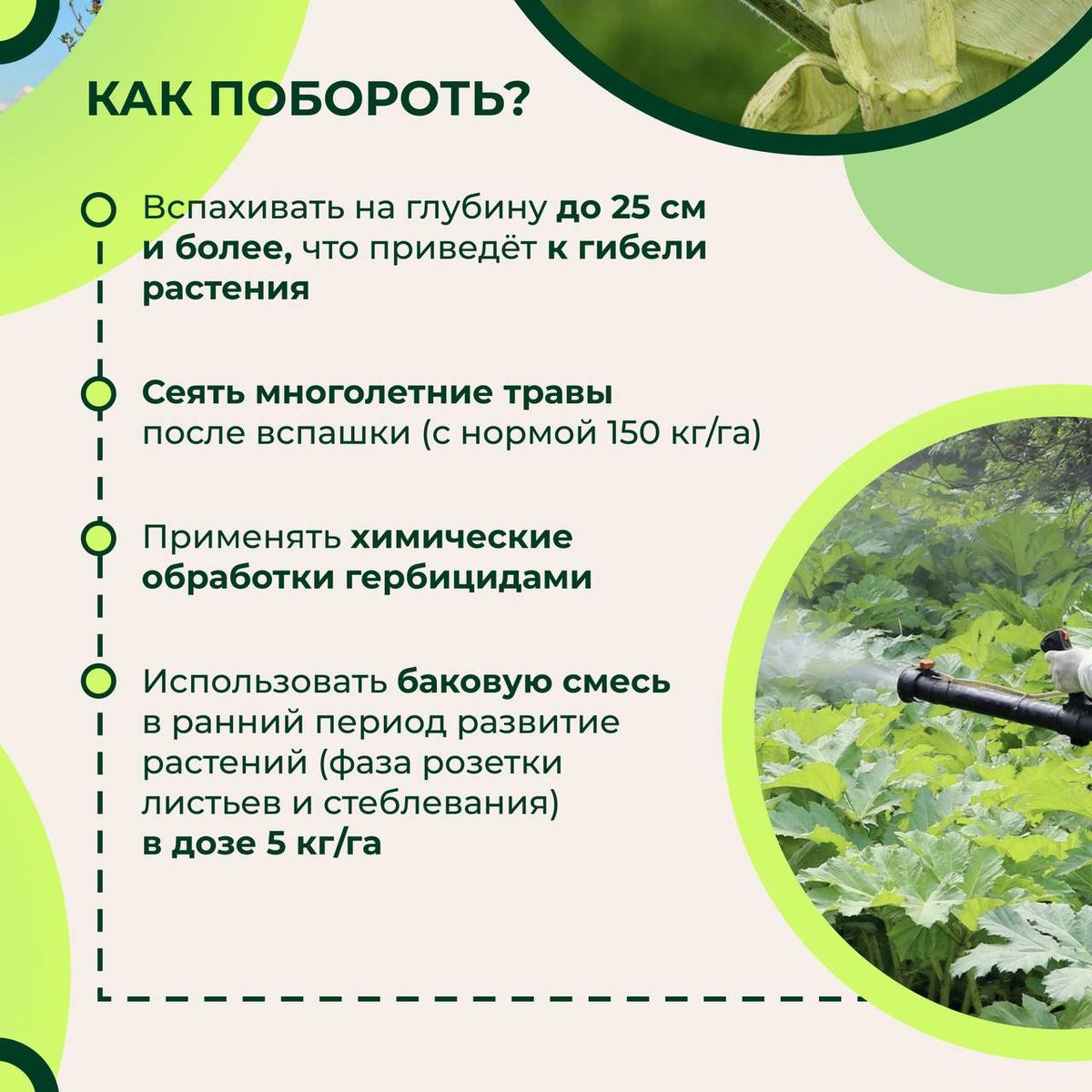
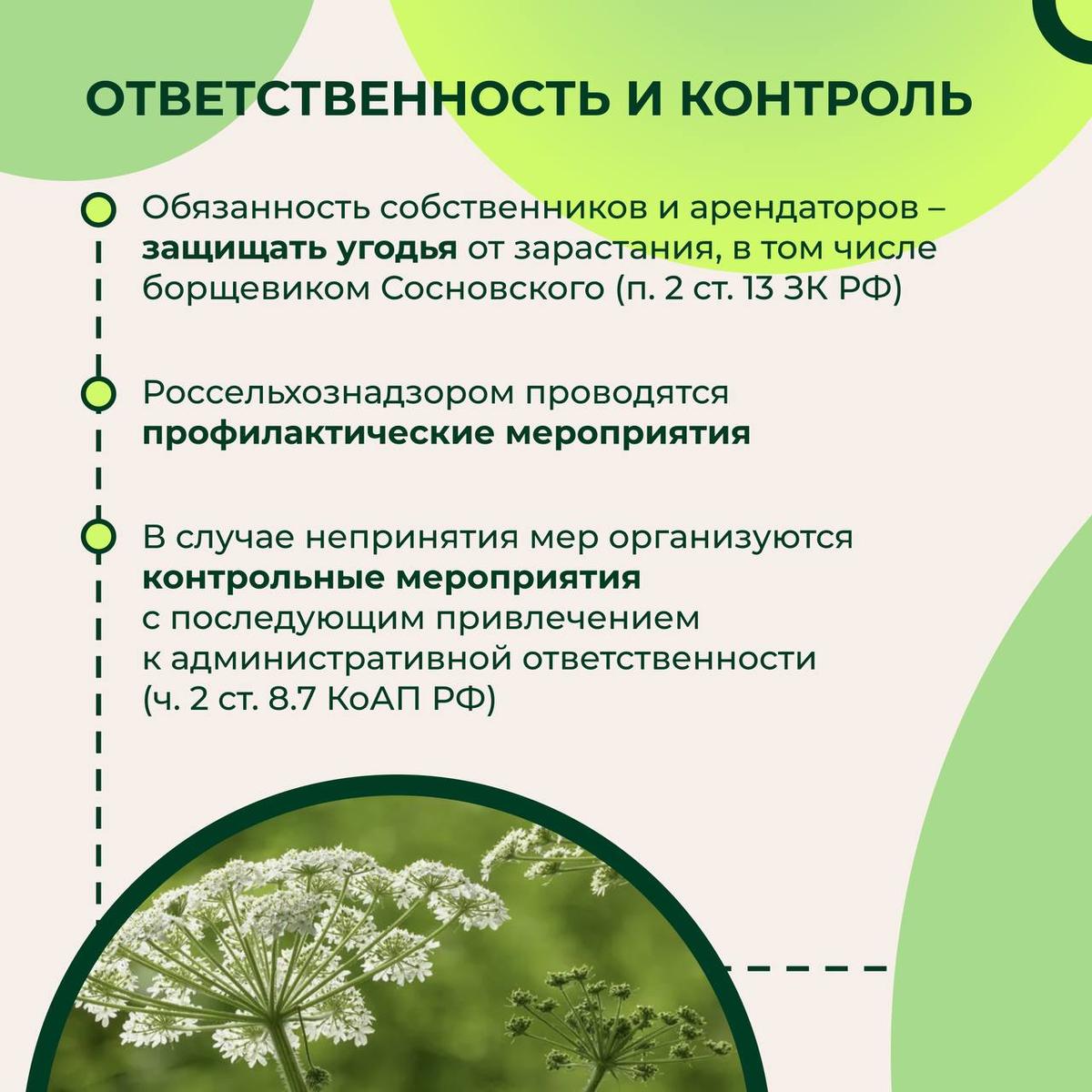
In the second, the thickets are sprayed with herbicides, but the effect from them occurs more than a year later. The destroyed parts of the hogweed are burned: an umbrella left on the ground with unripe seeds is able to ripen even without a stem and calmly sow itself in the soil. At the same time, responsibility for combating Sosnowsky's hogweed lies not only with government bodies, but also with the population.
The search for new ways and forms of destroying the plant with less harm to the environment is constantly underway. In particular, at the beginning of the year in Moscow, a Krasnogorsk electric platform for combating hogweed wasshown.
Read materials on the topic:
Guards, surveyors, data collectors - where robot dogs are already working in Russia
Helping doctors and patients: "robo-cats"-assistants appeared in Moscow hospitals
Anthropomorphic robot lunar rover from Magnitogorsk tested
Never miss our newsAdd this site to your preferred sources to see us more oftenAdd on Google

















