Reshetnev Company continues to work on optimizing the production of spacecraft for the "Sphere" project. They face the tasks of reducing the assembly and production time of satellites and improving their characteristics. One of the areas of optimization is changing the technology for creating solar panels for "Marathon IoT" satellites, taking into account how these batteries worked on the experimental grouping device.
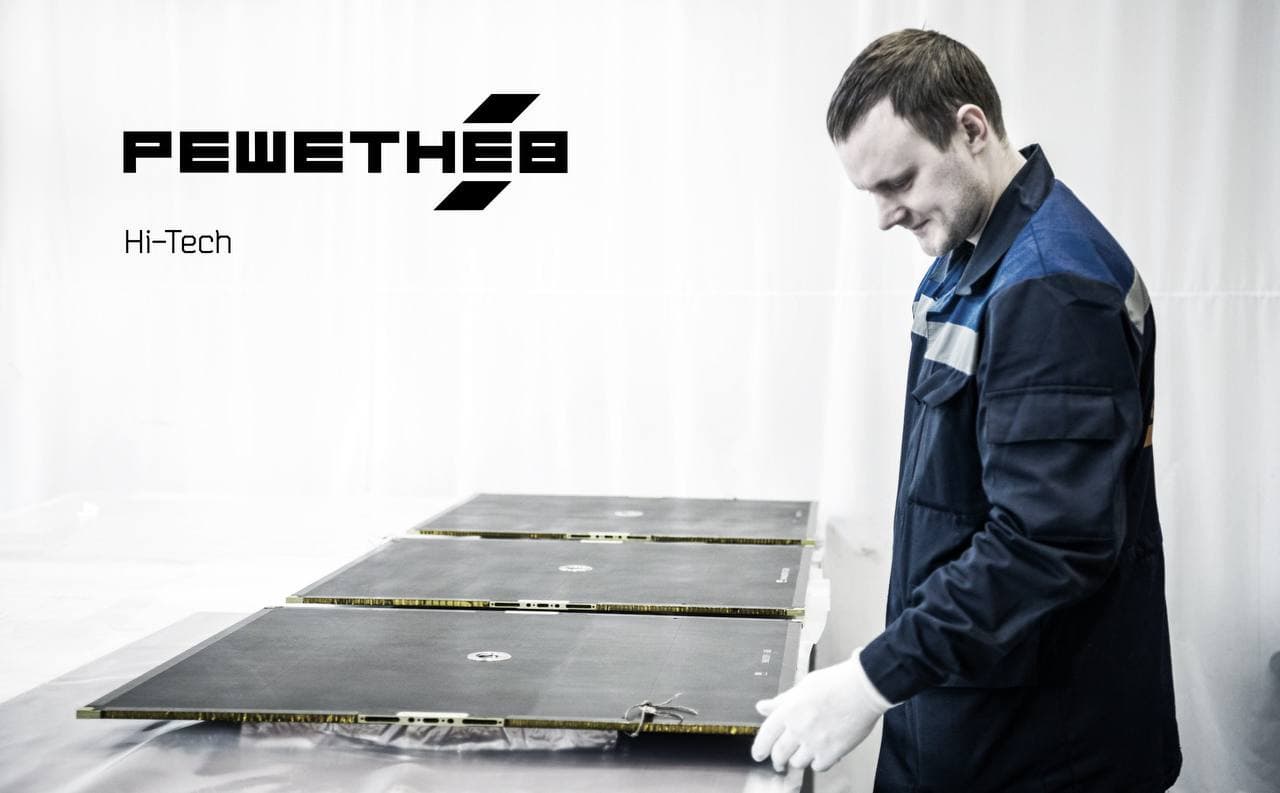
Significant work has been carried out by Reshetnev Company in terms of the target function of the battery — providing the satellite with energy. In serial "Marathon" devices, it is planned to use photovoltaic converters made of industrial silicon, combined with glass into a single structure, the so-called photovoltaic module. Its installation will take significantly less time.
The mechanical device of the solar panel has also been changed:
- the number of parts and fasteners and their nomenclature has been reduced;
- the locking system on the device has been optimized — there are fewer mechanical elements, and they themselves have become simpler;
- the design of the mechanical device is now fully adapted for assembly using an automated tool. For example, a screwdriver.
According to satellite builders, as a result, the mechanical device of the solar panel for mass production has become more than two times lighter. The functionality remained the same.
Earlier, «РЕШЕТНЁВ» presented a new orientation method for satellites, which will also be used for «Марафонов IoT». It has already been successfully tested on the first device of the federal project "Sphere", the demonstrator satellite «Скиф-Д» . Work is underway to adapt this orientation method for the «Гонец-М1» and «СКИФ» groupings.
Read materials on the topic:
Universal solar batteries for the Arctic and space are being created in Russia
A universal control system is almost ready for the new Russian Amur-SPG launch vehicle
ODK will build new engines for the first ultra-light Russian launch vehicles