Translated with AI from the Russian original.
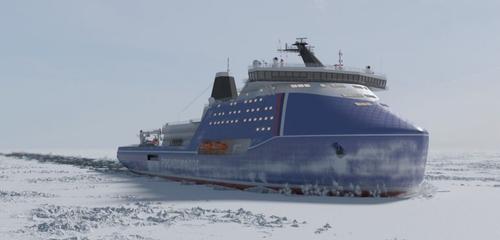
The Zvezda Far Eastern Shipbuilding Complex is working on the creation of the world's most powerful nuclear icebreaker, Russia. The vessel will be commissioned by 2030, according to First Deputy Prime Minister of the Russian Federation Denis Manturov.
A government representative said that three nuclear-powered ships are already operating in the waters of the Arctic Ocean - "Siberia", "Ural" and "Arktika" with a capacity of 60 megawatts.
Another icebreaker, Yakutia, will appear at the end of 2024. By the end of 2030, the nuclear fleet will be replenished with the icebreaker Russia.
And, of course, the most powerful icebreaker, which is being built today at Zvezda, the only one of its kind in the world - 120 megawatts - Russia.
"Russia" is the flagship nuclear-powered ship of Project 10510 (Leader). Its speed in clear water is 22 knots. The length of the vessel is 209 meters, and the width is 47.7 meters.
The nuclear-powered ship will be equipped with a nuclear power plant with two RITM-400 reactors (a domestic new generation project that can provide year-round patency along the Northern Sea Route). The capacity of each reactor is 315 megawatts.
Earlier, www1.ru reported that new sketches of the lead nuclear icebreaker of the new Project 10510 (Leader), which is being built in the Far East, have appeared on the network.
Read materials on the topic:
Mooring trials of the nuclear icebreaker Yakutia with two RITM-200 reactors have begun
Diesel generators are being tested on the Russian nuclear-powered ship Yakutia
Never miss our newsAdd this site to your preferred sources to see us more oftenAdd on Google

















