The Russian heavy-lift launch vehicle Angara-A5 is performing its mission, having taken off from Vostochny today at noon Moscow time. The third launch was successful, and it is already known that the Orion booster block of the rocket put part of the payload into orbit in the form of the small Gagarinets satellite. The Cubesat 3U satellite from private company Avant Space is designed to test elements of the service platform. The mission continues.
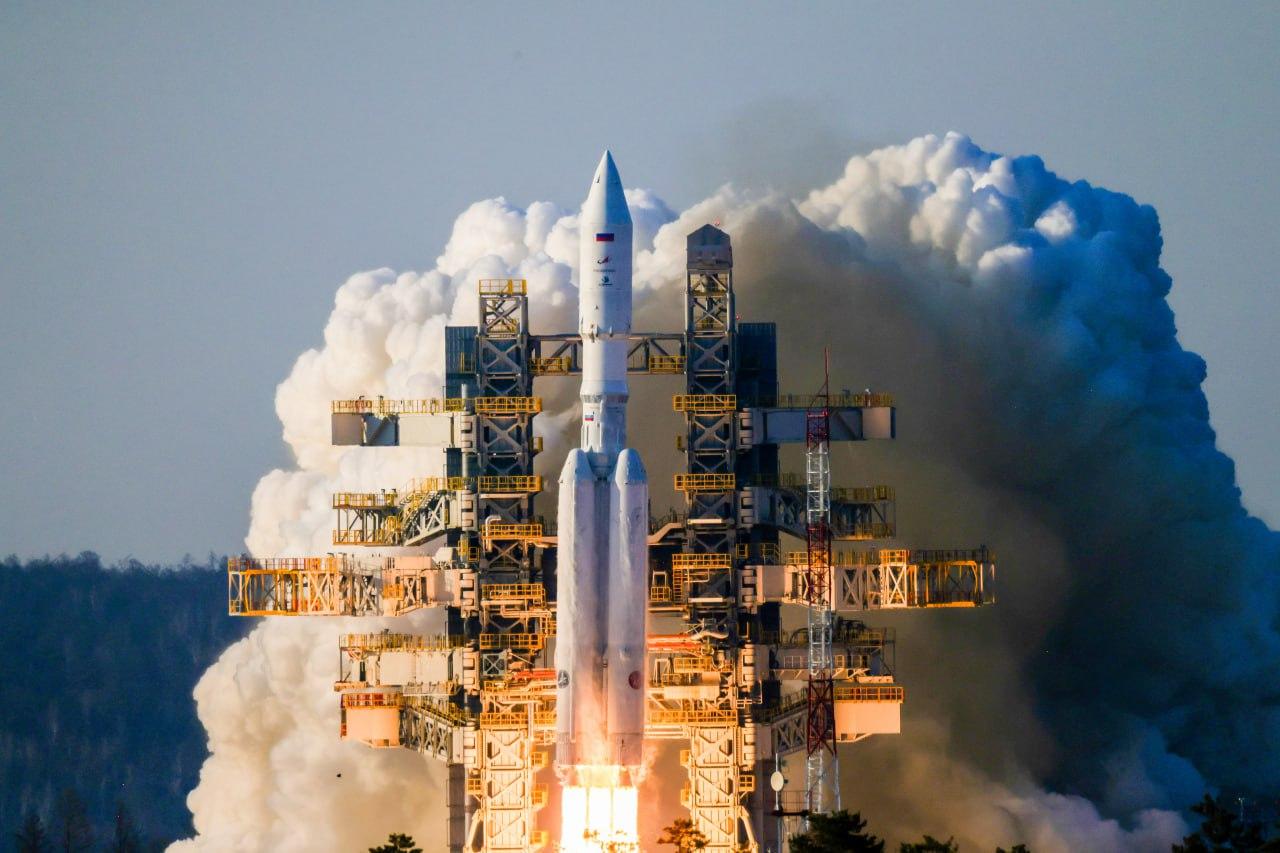
On Earth, tens of thousands of people across Russia and around the world watched the rocket launch. The head of the State Corporation Roscosmos, Yuri Borisov, after it became clear that the flight was proceeding normally, spoke to journalists at a short briefing. He thanked everyone who participated in the creation and launch of Angara-A5 for their work.
According to him, there are still many tasks and a lot of work ahead on the rocket. The launch is only the beginning of flight design tests of the Amur space rocket complex with Angara launch vehicles at the cosmodrome.
In 2028, Angara will gain experience in launching a manned spacecraft, and by this time it is necessary to make the rocket as reliable as possible.
These were difficult three days, because this is not a television show and not the launch of a festive firework. This is routine hard work. We have started flight design tests, which are designed to identify all the shortcomings, all the nuances and ensure reliability in the future during serial launches of Angara. This is only the fourth launch of the heavy Angara in ten years, the rocket has not yet gained the required level of readiness, this is a natural process. This is a new cosmodrome [Angara-A5 is the first heavy rocket for Vostochny, - ed.], this is a completely new automatic launch, and all the technical failures that occurred the day before yesterday and yesterday are normal work for all of us. We have a lot of work to do with this rocket to ensure its reliability. I hope that in 2028 it will be possible to launch a manned spacecraft!
The head of the space agency especially noted the work and efforts of the combat crew that was involved in the launch.
I sincerely thanked the combat crew today. Only thanks to their efforts - they did not give up, thoughtfully worked on correcting all the situations - in the end, success awaited us all today.
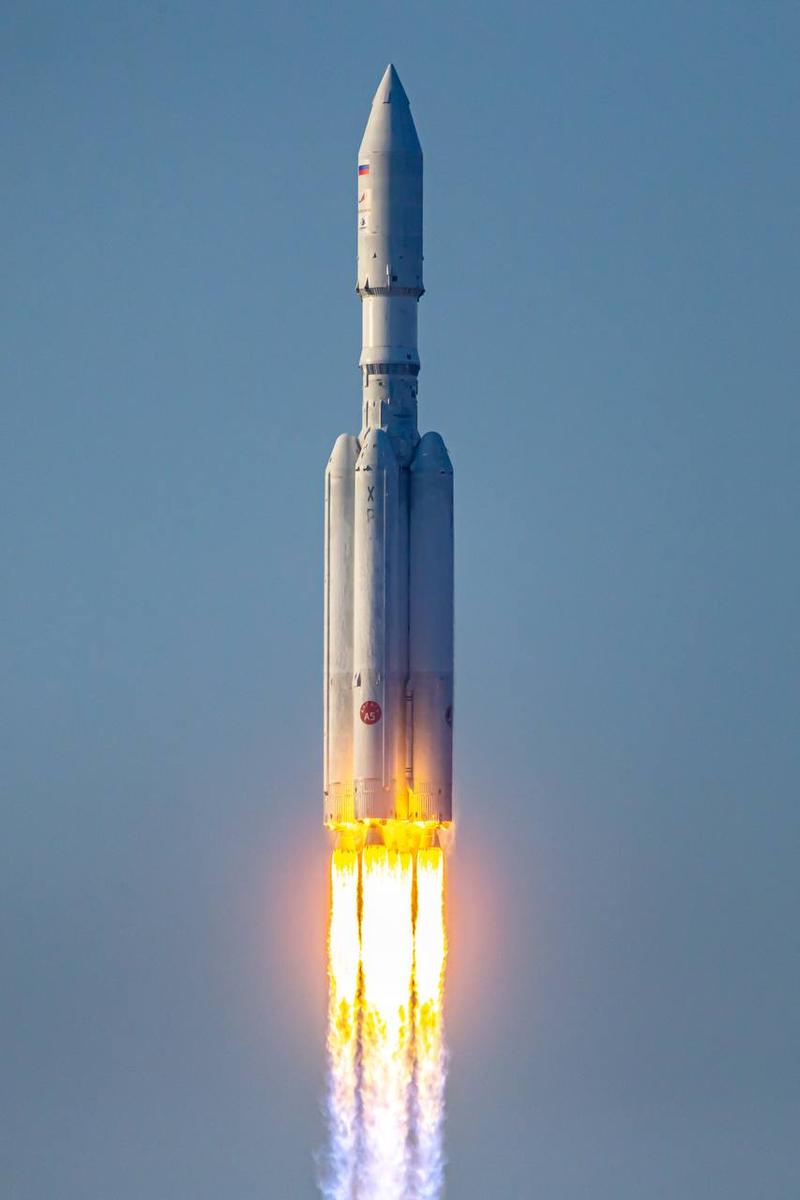
The fact that Angara-A5 was launched today is also due to the merit of dozens of Russian enterprises and thousands of various other specialists. From Roscosmos, these are:
- Khrunichev Center — developer and manufacturer of the Angara-A5 launch vehicle;
- RSC Energia — manufacturer of the Orion booster block;
- TsENKI — as the operator of Russian cosmodromes;
- NPO Energomash — as the creator of engines for the launch vehicle;
- NPTsAP — responsible for the control systems of the rocket and booster block;
- RKS — responsible for measuring instruments;
- TsNIImash — scientific, methodological and expert support.
If we consider resources outside the space state corporation, then, for example, the Roselectronica holding of Rostec built a new launch complex from scratch in five years . This is more than a million meters of cable lines, about one and a half thousand items of equipment and other components, and hundreds of hours of work in the open air.
According to TsENKI, the launch complex occupies 109 hectares and is designed for 10 launches of the Angara family of rockets per year in cargo and manned versions. More than one hundred buildings and structures have been completed or are under construction next to it.
Shipbuilders from USC also participated in the manufacture of the launch complex. Specialists from the Zvezdochka Ship Repair Center have been manufacturing and sending a number of important elements of the launch table to the cosmodrome since 2015. It was the two almost 90-ton spars of Zvezdochka that made it possible to launch a heavy rocket from the basic model of the launch table, strengthening the object.
Among other infrastructure facilities of the launch complex from these specialists were:
- a set of cladding for gas reflectors of the table and parts of a set of spare mounting parts. Almost 1500 tons of metal were cut, processed, assembled and welded;
- metal structures of rotary root sections of holding and maintenance farms of the cable-filling tower;
- body and covers of a vacuum unit for the technical complex of the new cosmodrome.
And at Uralcryomash, as part of UVZ Rostec, a liquid oxygen refueling system for the booster block, a water supply system for cooling the launch table and a naphthyl refueling system for the rocket were created. In addition, Uralcryomash developed and produced special tanks for naphthyl, in which the fuel arrived at Vostochny.
Never miss our newsAdd this site to your preferred sources to see us more oftenAdd on Google

















