Rosatom has received new orders for the construction of floating nuclear power plants (NPPs) following the international forum "ATOMEXPO-2024." The discussion revolves around the construction of 15 floating power units (FPUs), according to the corporation's CEO, Alexey Likhachev.
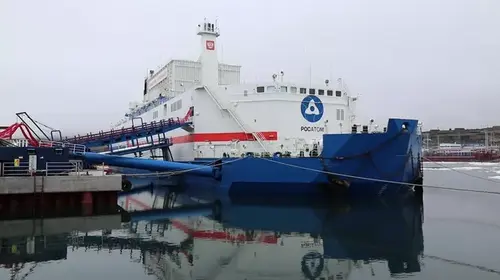
South Africa is among the potential customers for floating nuclear power plants. According to him, Rosatom sees demand for these technologies from the African state.
Providing other countries with floating nuclear power plants aligns with the government's plan to develop exports of Russian small-capacity NPPs. Currently, this direction is of great interest to the corporation.
What is known about floating nuclear power plants
At the "ATOMEXPO-2024" site, Rosatom showcased a line of new floating NPP projects.
Where can such stations be used:
- in coastal and remote areas
- on islands
- in ports
- in agglomerations
Their purpose is to supply electricity to mining enterprises, large-scale construction projects, and mineral extraction companies. Currently, a floating NPP based on FPU-106 is being built in Russia. It will provide energy to the Baimskaya Mining and Processing Plant in Chukotka (which has 13 deposits, including copper, gold, molybdenum, and silver).
What reactors are used in floating nuclear power plants
For export, Rosatom offers FPU-100 with a capacity of 100 MW and 2 RITM-200M reactors. For the domestic market, the corporation will create FPU-106 (capacity 106 MW, 2 RITM-200S reactors), as well as FPU-180 (capacity 180 MW, 2 RITM-400M reactors). The service life of floating power units for other countries is 60 years, for Russia it is 40 years.
Never miss our newsAdd this site to your preferred sources to see us more oftenAdd on Google