The M.V. Keldysh State Research Center conducted firing tests of the KM-55 plasma engine over a wide power range. Xenon and krypton were used as the working fluid.
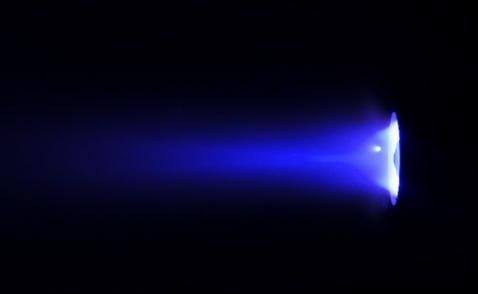
The engine demonstrated stable operation in the power range from 600 to 1200 W. The specific impulse when operating on xenon was up to 2050 s, when operating on krypton — up to 1900 s, the thrust range for xenon was from 28 to 87 mN, and for krypton — from 34 to 66 mN.
The KM-55 is planned to be installed on small spacecraft. In the future, the engine may also be used as part of the "Sphere" project.
The goal of Roscosmos' "Sphere" project is to create multi-satellite constellations that will provide broadband Internet access, develop satellite communications, and remote sensing of the Earth. At the same time, the Internet will be available in permafrost conditions, in the deep tundra, and in other remote regions of Russia.
Read materials on the topic:
Project "Sphere": how satellites are developing in the Russian space industry
The first satellite of the new Russian project "Skif-D" transmitted data to Earth
Never miss our newsAdd this site to your preferred sources to see us more oftenAdd on Google

















