Translated with AI from the Russian original.
"Rosatom" plans to launch wind energy projects up to 500 MW in Kyrgyzstan. This became known at the panel discussion "Green Energy. Optimization of the Energy Balance" in the capital of this republic.
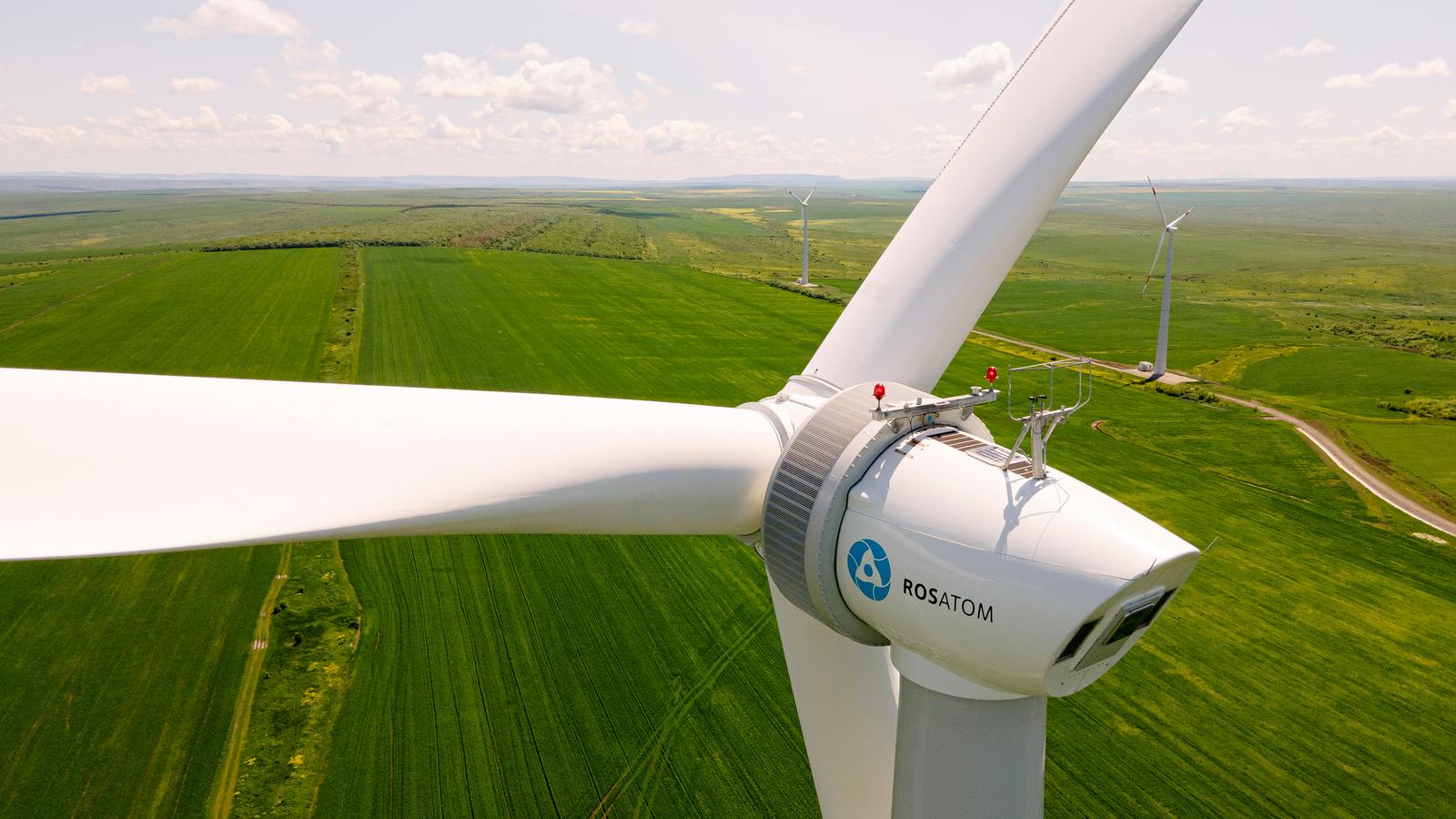
In Kyrgyzstan, we are working on two sites for wind energy projects – in the Issyk-Kul region up to 100 MW and in the Batken region about 80 MW. We have already started investing in the implementation of these projects.
Konstantinov noted that together with the Ministry of Energy of Kyrgyzstan, the state corporation has plans to implement wind energy projects up to 500 MW in the republic and "build several hydroelectric power stations with the support of the Russian-Kyrgyz Development Fund."
"Rosatom" is already actively participating in the implementation of a project to build small hydropower plants in the republic. These are the "Leilek" HPP with a capacity of 5.9 MW and the "Dzheruy" HPP with a capacity of 28 MW.
As for wind energy, in October 2023, the Russian-Kyrgyz Development Fund has already signed an agreement with "Rosatom"'s wind energy "daughter" to study and implement a project to build a wind power plant in the Issyk-Kul region, in the north of Kyrgyzstan.
Earlier it became known that "Rosatom" is also preparing to develop a pre-feasibility study for Kyrgyzstan for the construction of a small nuclear power plant (SNPP) based on the "RITM-200N" reactor unit. The state corporation is already building the world's first similar land-based SNPP in Yakutia. It will provide electricity to one of the largest gold deposits in Russia, "Kyuchus", and a number of settlements.
"RITM-200N", which will be installed at the new nuclear power plant in Yakutia, and possibly at the SNPP in Kyrgyzstan, if the parties agree on its construction, is a unique development of Russian scientists based on reactors for nuclear icebreakers and floating nuclear power plants "RITM-200". The capacity of "RITM-200N" is at least 55 MW with the possibility of increasing to 110 MW, the utilization rate of installed capacity is 90%.
One fuel cycle of the unit is 5-6 years, the estimated service life of "RITM-200N" is 60 years with the possibility of extension. "RITM-200N" will need a major overhaul approximately once every twenty years.
Never miss our newsAdd this site to your preferred sources to see us more oftenAdd on Google

















