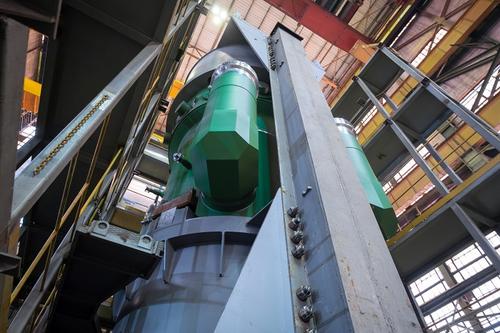
Rosatom has released the last reactor for the RITM-200 nuclear icebreakers at ZiO-Podolsk under the corresponding agreement for the supply of power plants.
However, there are many prospects for using the reactor of this model - these are mini-NPPs on land, and floating NPPs.
RITM-200 reactors have proven themselves well on our new universal nuclear icebreakers, which has made navigation along the Northern Sea Route more efficient. In the future, these same reactors will become the "heart" of floating nuclear power plants that will supply energy to the Baimskaya ore zone in Chukotka, as well as the onshore SMR in Yakutia
Characteristics of "RITM-200"
"RITM-200" is a Russian reactor unit with a capacity of 175 MW. The reactor weighs 147.5 tons, height - 7.3 meters, diameter - 3.3 meters, it is more compact and lighter than its predecessors. The total design life of RITM-200 is forty years.
The reactor houses a cassette-type core containing 199 fuel assemblies with cermet fuel made of uranium-235 enriched up to 20%. A chromium-nickel alloy is used as the cladding material for the fuel elements. The service life of the reactor core is 7 years.
"RITM-200" are installed in individual protective shells made of steel, water and concrete, completely separated physically and spatially.
The calculated dose load on the crew of a nuclear icebreaker during normal operation and design accidents does not exceed 0.01% of the natural background. The radiation dose, even in the event of a beyond-design accident with severe damage to the core, is lower than the values at which protective measures are required.
The reactor operates on the Russian nuclear icebreaker fleet - the only one in the world, it is installed on nuclear icebreakers of project 22220. These include the icebreakers Arktika, Sibir, and Ural.
Never miss our newsAdd this site to your preferred sources to see us more oftenAdd on Google

















