In an interview with RBC, the CEO of S7 Airlines, Dmitry Kudelkin, said that the airline is not going to abandon the Brazilian Embraer E170 aircraft. Previously, the airline planned to decommission them in 2023–2024, replacing them with more spacious and newer aircraft.
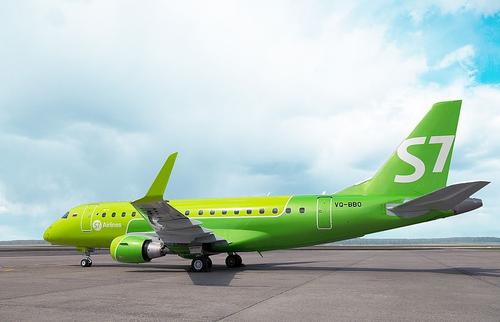
«We will continue to operate the E170, they are currently flying efficiently», Dmitry Kudelkin said. He said that almost all E170s fly from Novosibirsk, where S7's regional flight program is «seriously developing».
S7 Airlines owns 17 Embraer E170s manufactured in 2004-2005. The aircraft were received in 2017–2018 under an operating lease for a period of seven years from GE Capital Aviation Services Limited. Each can carry 78 passengers to a distance of up to 3.8 thousand km. No other Russian air carriers have such aircraft.
The next largest in the S7 Airlines fleet are the medium-haul Airbus A320neo, designed for 164 seats and with a flight range of 6 thousand km. «This is the correct ratio in world aviation. Because a twofold difference in capacity gives a sufficient difference in the cost of one flight. In this case, a flight on a small plane is still significantly cheaper. If the difference in capacity is less, then a large plane is always more efficient», Kudelkin explained.
Never miss our newsAdd this site to your preferred sources to see us more oftenAdd on Google

















