Russia has quietly developed a ground robotics industry, unnoticed by the West. Most companies producing autonomous platforms are circumventing sanctions. This is reported by Defence blog, citing an analytical report from StateWatch.
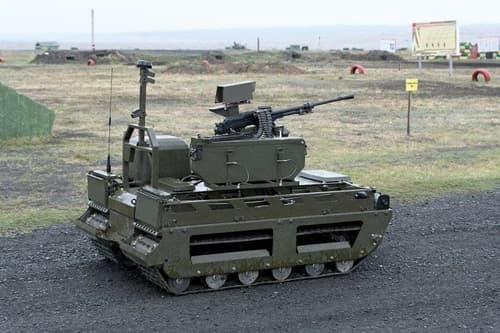
Experts claim that the Russian Armed Forces currently use 32 models of ground robotic systems. As of April 2026, 29 of them are in serial production.
By September 2025, the number of registered robotics companies reached 563. This is 21.5% more than in 2021.
Among the most well-known serial robots are "Kuryer" (produced by OOO "NRTK Kaps"), "Varan" (OOO "Agentstvo Tsifrovogo Razvitiya"), "Impuls-M" (OOO "Gumich-RTK"), and "Omich" (Omsk Automobile and Armored Tank Engineering Institute). According to Defence blog, Russian servicemen were most often supplied with the NRTK "Kuryer". By the end of 2024, at least 50 robotic platforms were used in combat operations.
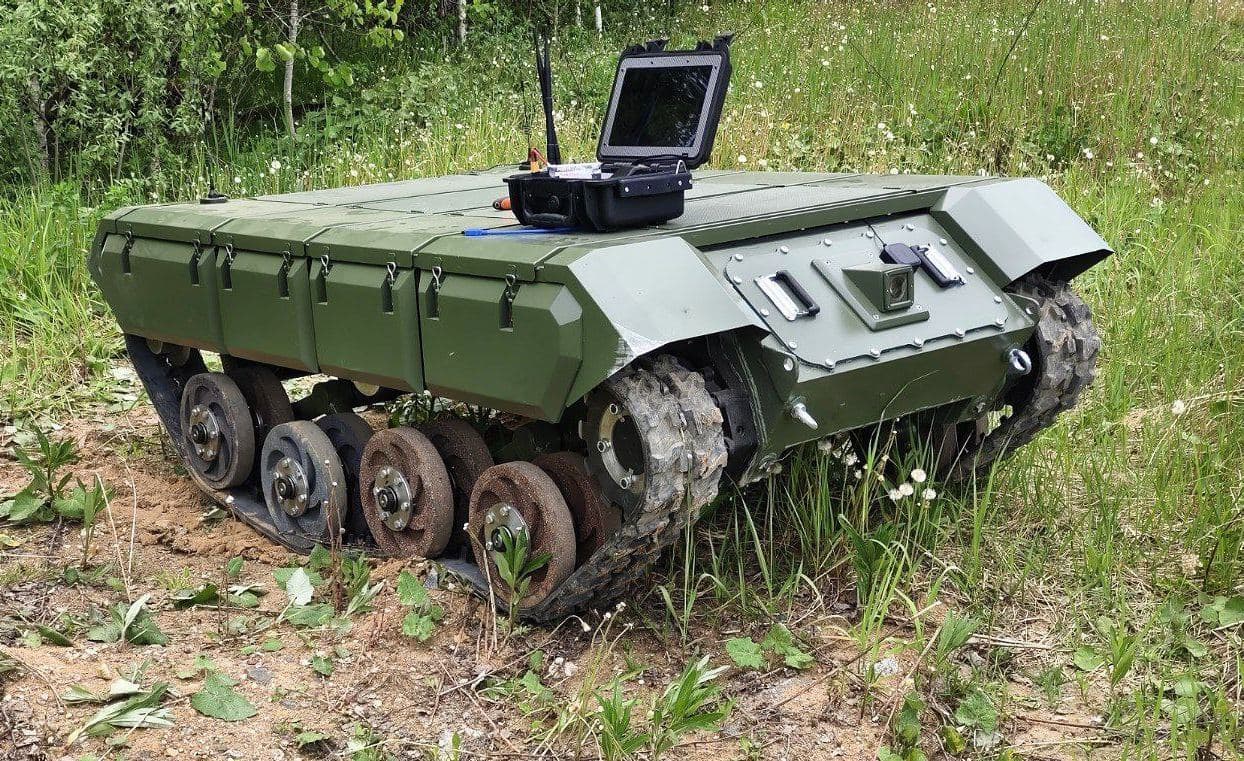
However, none of the aforementioned companies are under sanctions. As of March 2026, only 10 out of 20 robotic platform manufacturers have been included in the US or EU sanctions list.
Electronic components from China are used, among other things, for the production of ground robots. Russia purchases about 90% of all its electronics from China, analysts assure.
According to the report, OOO "NRTK Kaps" buys DC motors from the Chinese company HD LED Technology, and OOO "Gumich-RTK" imports ball screws manufactured by Qingdao Tsingleader. The manufacturer of the "Bogomol" robot receives lithium batteries from Gaoneng Battery and EVE Energy.
However, in customs documents, these components are declared as "spare parts for quadcopters" or "equipment for molding plastic products".
Russian engineers have indeed made progress in creating army robots, experts admit. But they have critical vulnerabilities. For example, communication remains a big problem – it is easily suppressed by enemy electronic warfare systems. Therefore, developers offer the military to control ground drones using fiber optic cables or signal repeaters.
Most platforms lack armor and become targets for FPV drones. Their range is also limited.
The advantages of Russian robots include advanced cameras and high cross-country capability on tracked chassis.
Read more on the topic:
Never miss our newsAdd this site to your preferred sources to see us more oftenAdd on Google

















