Today, February 16, marks 71 years since the first test flight of the strategic bomber Tu-95 — a machine that defined the development of long-range aviation for decades to come.
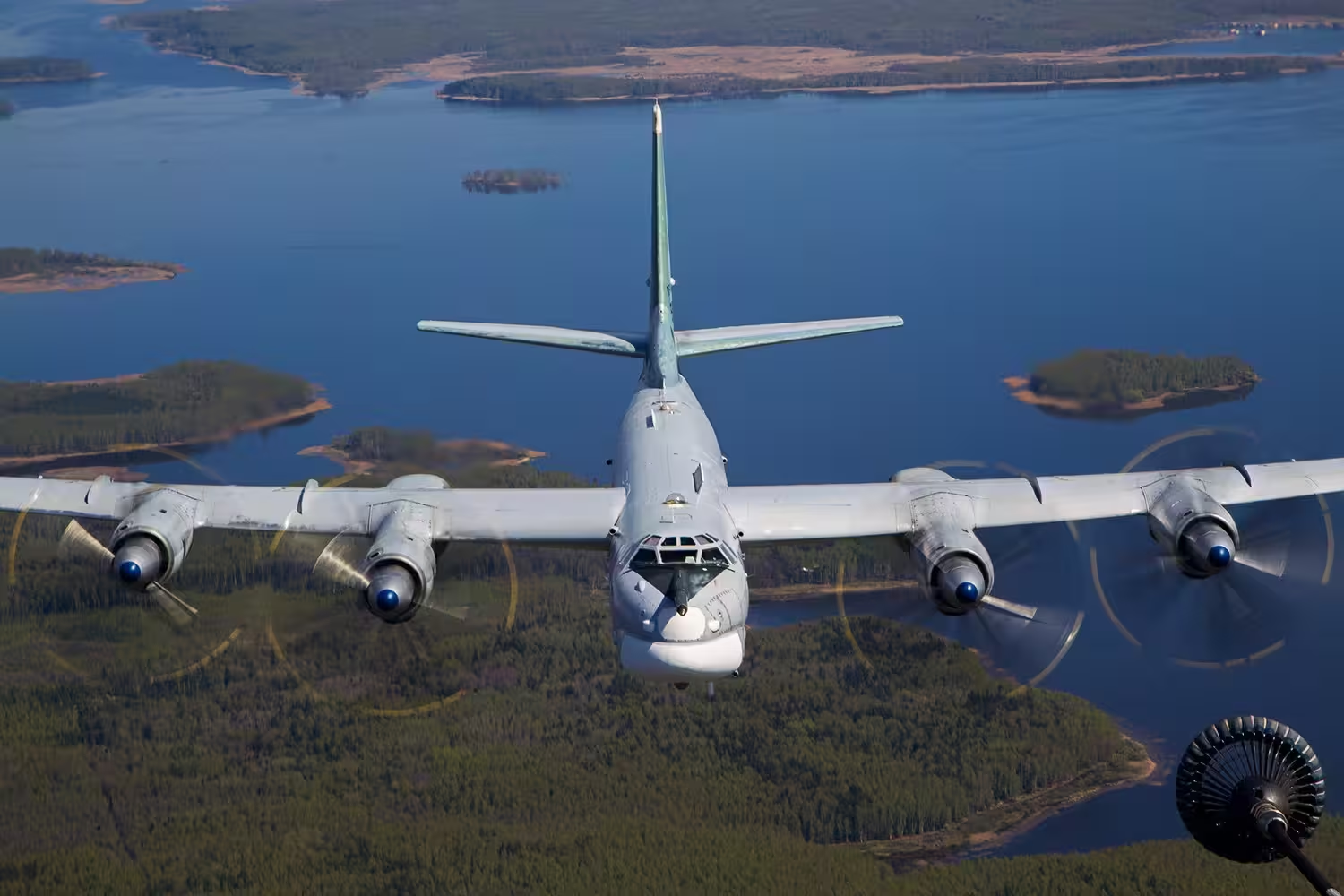
The aircraft took to the skies in the mid-1950s and immediately demonstrated a combination of range, speed, and payload capacity unavailable to most of its counterparts of that time. The development was carried out at the Tupolev bureau in response to the need for a long-range strategic weapons carrier. "Pervyi tekhnicheskii" recalled the development of the project and its influence on the world's entire strategic aviation.
The birth of a strategic platform
The project was created during a period of technological breakthrough in the aviation industry. The designers placed their bet on a turboprop design with contra-rotating propellers — this solution ensured high efficiency in cruising modes.
Turboprop engines are much more economical than jet engines. This allows the aircraft to remain in the air for a very long time, until an order is given to carry out some combat mission. Yes, they are somewhat inferior in speed, but at the same time they have better thrust-to-weight characteristics and are better suited for performing specific tasks.
This is precisely what allowed the aircraft to perform intercontinental missions and stay airborne for a long time. Early tests already confirmed the platform's potential for modernization.
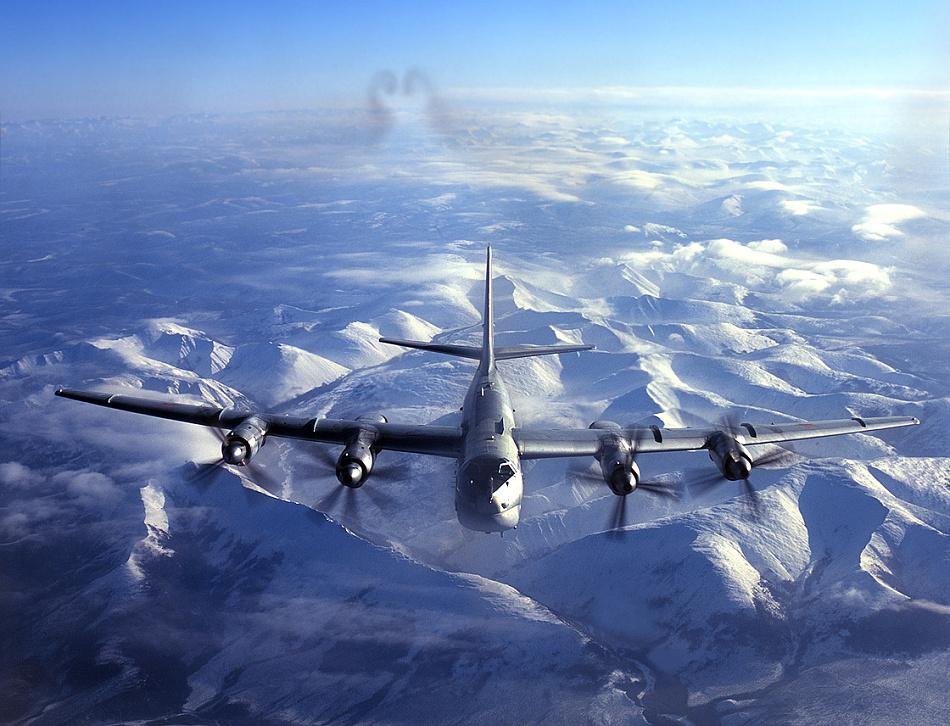
From 1957, Tu-95 aircraft already began entering service with the troops. At the same time, the development of various modifications of the new aircraft began. For example, the Tu-95KD and Tu-95-20 models were armed with Kh-20 cruise missiles with a nuclear warhead, capable of striking targets at distances of up to 600 km.
A machine that outlived eras
The Tu-95 became the basis of an entire family of modifications — from cruise missile carriers to reconnaissance variants. The aircraft was regularly updated: its avionics, navigation systems, and weaponry were changed.
The "Bear" is more economical than its jet counterpart, the Tu-160. In addition, it is less demanding and can land at unprepared airfields. For example, our pilot Vladimir Reshetnikov successfully landed the Tu-95 on ice in the Arctic. At the same time, turboprop engines generate less heat, which means such an aircraft is less visible to foreign satellites.
Thanks to its margin of structural strength, the design adapted to new requirements without a radical redesign of the airframe. This is a rare example of equipment whose architecture has remained relevant for decades.
A symbol of long-range aviation
Over time, the "Bear" turned into one of the most recognizable strategic aircraft in the world. It is distinguished by the characteristic sound of its propellers and its silhouette with a large wingspan. The aircraft took part in demonstration flights, patrols, and exercises, shaping the image of Russian long-range aviation on the international stage.
The state of the Tu-95 today
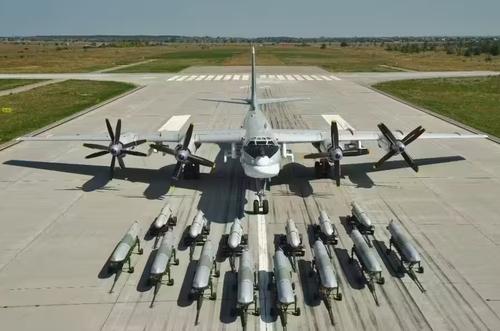
Serial production of the Tu-95MS was completed in 1992. At the same time, aircraft with the MS index existed in two modifications — Tu-95MS-6 (31 units) and Tu-95MS-16 (57 units).
The differences between them lay in the number of missiles the aircraft could carry on board — respectively 6 and 16. According to estimates by Western experts, the Russian Aerospace Forces have approximately 58 Tu-95 aircraft of all modifications.
Read more materials on the topic:
- The Tu-95MS "Bear" may receive hypersonic missiles for the first time
- The secret weapon of the Cold War: how the Tu-95 bomber frightened the West with a single flight
- Russia's strategic aviation: the Tu-95MS and Tu-160 await modernization, while the Tu-22M3 is keeping pace
Never miss our newsAdd this site to your preferred sources to see us more oftenAdd on Google

















