The Russian military drama "T-34", directed by Alexey Sidorov, brought together a star cast led by Alexander Petrov, Viktor Dobronravov, Vinzenz Kiefer, and Irina Starshenbaum, as well as other famous artists. The film was first shown in Russian cinemas on January 1, 2019, and was released worldwide on January 7. The Russian television premiere on May 9, 2019, on Victory Day, on the Russia-1 TV channel, was significant. The film received high praise from critics and viewers, as evidenced by three Golden Eagle awards out of ten possible, including recognition for best director, best screenplay, and best visual effects.
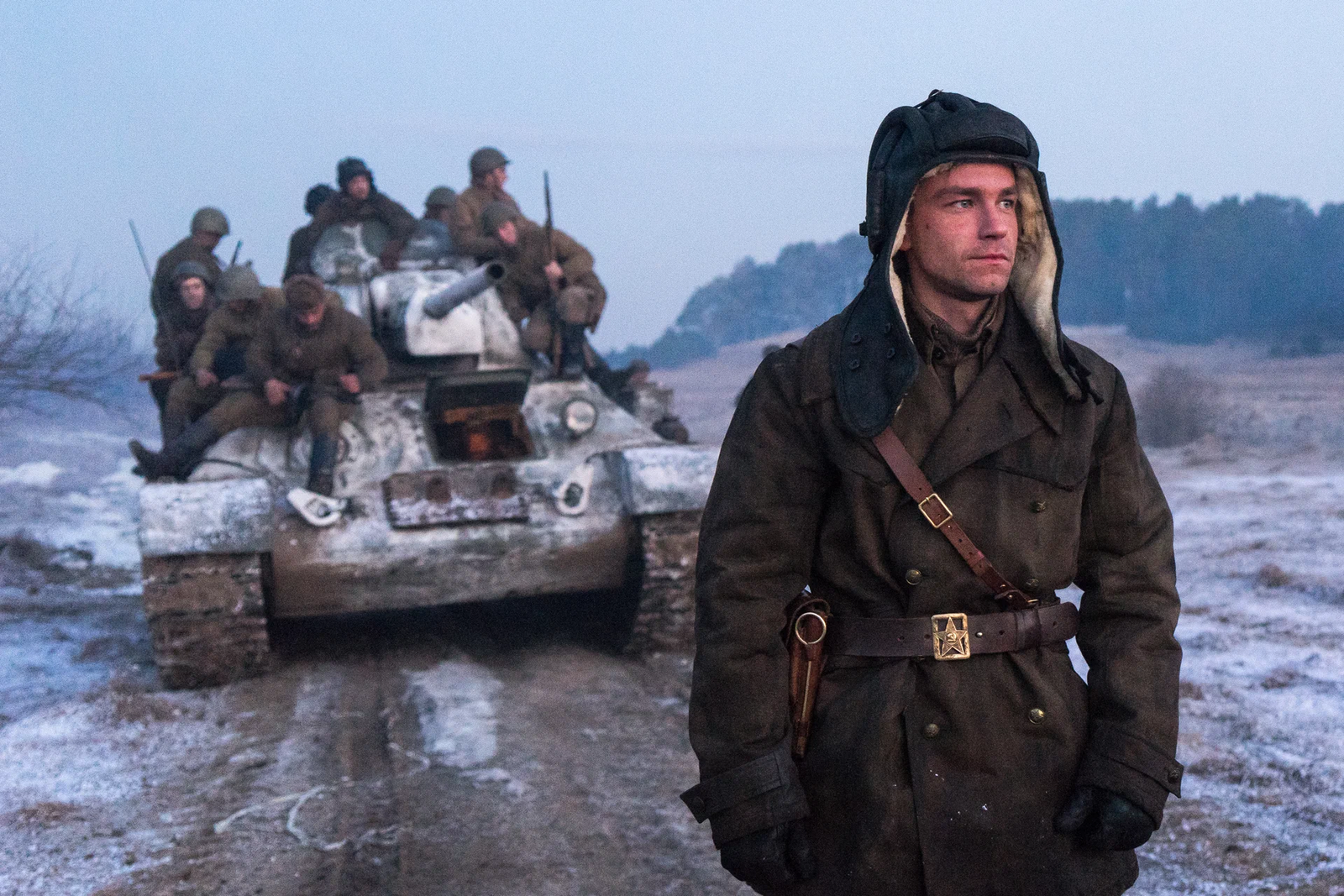
This brutal patriotic blockbuster tells the story of Lieutenant Nikolai Ivushkin, who, while in captivity, agrees to a deadly role - to become a living target for German tests of new tank weapons. But, taking his place in the cabin of his T-34, Ivushkin turns this doomed mission into an incredible escape plan.
The history of the creation of the military action drama "T-34" began on September 10, 2015, when the film company "Mars Media" announced the production of its ambitious project. Leonard Blavatnik, a well-known investor and media mogul, joined the team, whose decision to support the film was dictated not only by personal interest in the history of the Great Patriotic War (his grandfather was a participant in the fighting), but also by a high assessment of the film's potential - the selection of the best young artists, the professionalism of the film crew and the reliability of the partner in the person of "Mars Media".
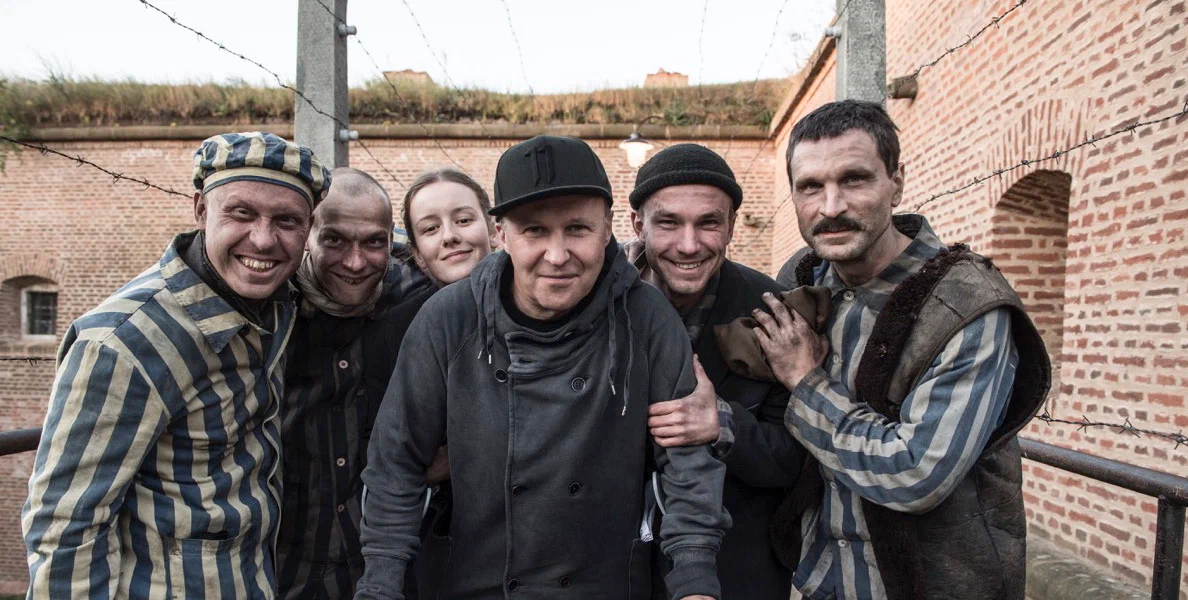
The main stage of filming took place from February 2016 to July 2017. The geography of filming was extensive: from the Russian expanses, including Moscow, the Moscow region, and the picturesque surroundings of the village of Strelkovka in the Kaluga region. Scenes in the concentration camp were filmed in Terezin (Czech Republic), on the site of the former Terezin concentration camp, now the Ghetto Museum.
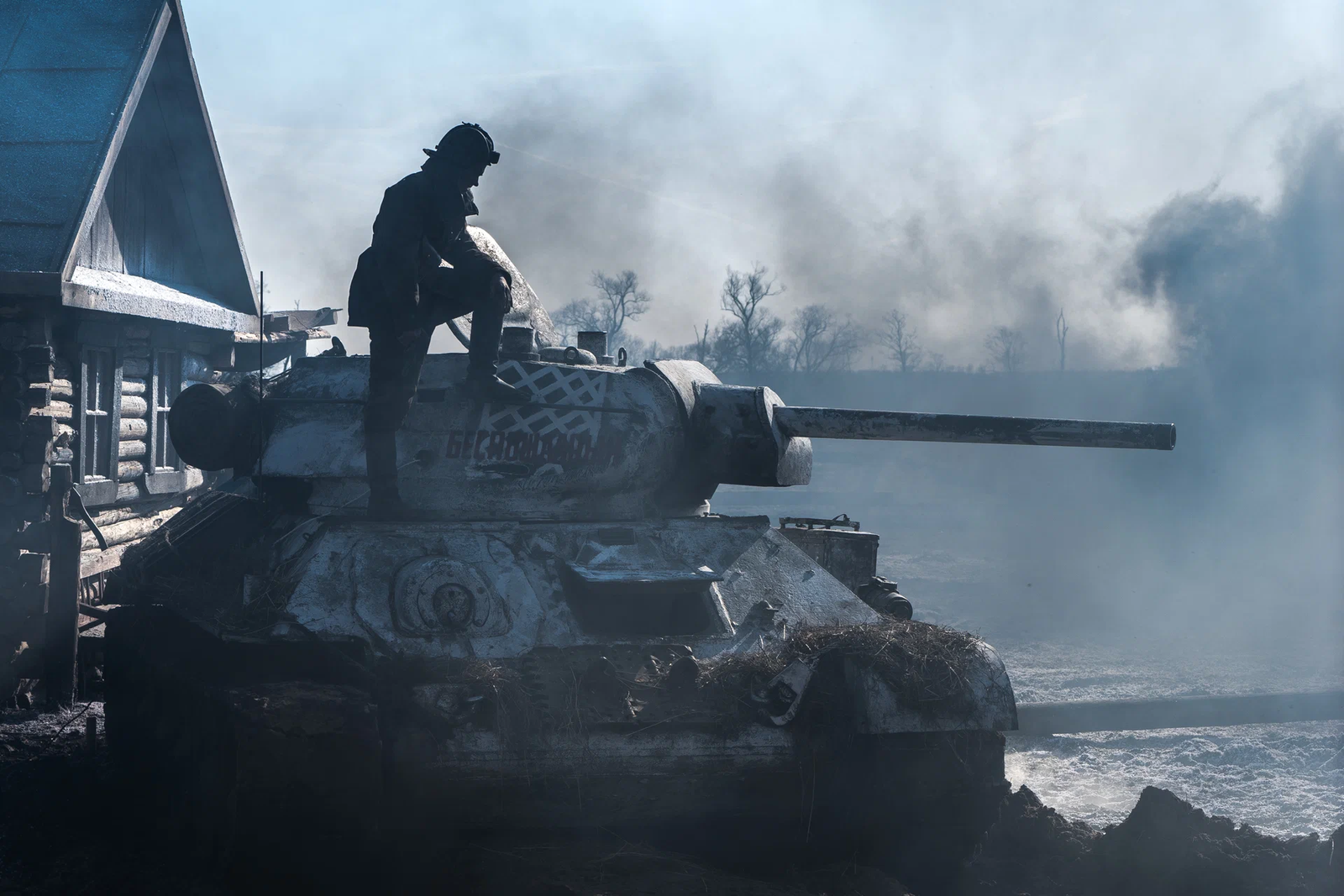
Several tanks were used in the filming, including a real T-34 that was shot down during the war. The car was specially restored: the engine was overhauled and brought to combat condition, and the camouflage used in winter in 1941 under the name "winter forest" was recreated.
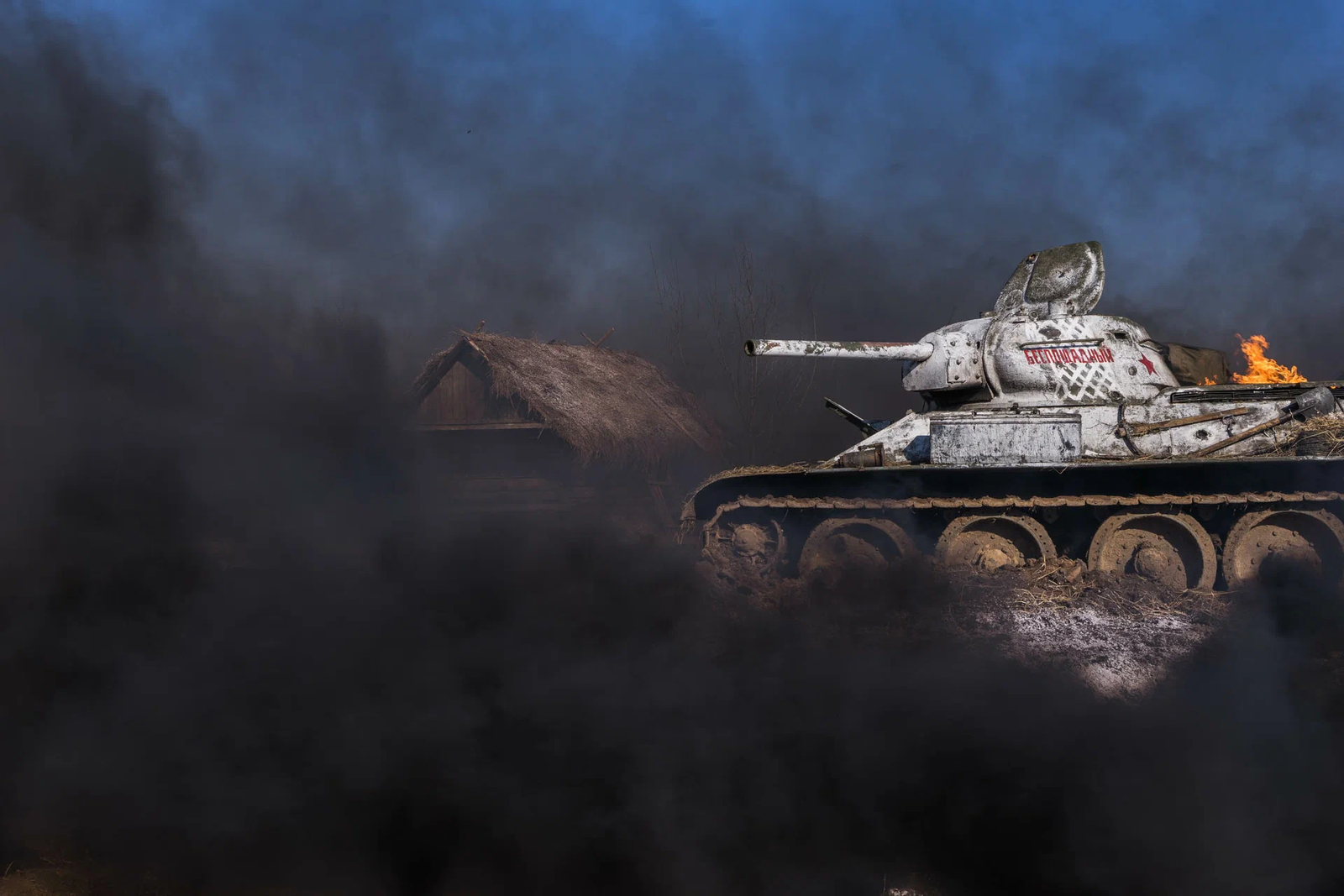
More than twenty-five impressive sets were erected for the filming, recreating locations such as a Russian village, a prisoner-of-war camp, a German training ground, and a railway station. Filming of mass scenes in pouring rain lasted two days. On the first day, the extras were so frozen that the producers had to double the payment for the shift in order to attract at least some of them.
The T-34 tank appears not just as a combat vehicle in the film, but almost as a living character. It becomes a symbol of Soviet engineering thought, capable of withstanding the onslaught of superior enemy forces. The main character, like the tank itself, is a steel embodiment of courage, resilience, and unwavering will to win.
The "iron machine" in the film is inextricably linked with the history of Soviet tank crews, their dedication and devotion to the Motherland. Every shot, every maneuver of the tank is a reflection of their struggle for freedom and independence. The T-34 becomes the personification of their hope for victory, their faith in a better future.
The T-34, a Soviet medium tank, became the key combat vehicle of the Great Patriotic War. Its serial production began in 1940. From 1942 to 1947, it was the main tank of the Red Army and the Armed Forces of the USSR, remaining so until the appearance of its improved version, the T-34-85, in the first half of 1944. The T-34 is the most mass-produced tank of the Second World War, as well as the post-war period, with a total production volume of 35,330 units.
Technical characteristics:
- Combat weight of the T-34 tank - 26.5-30.9 tons.
- Hull length - 5920 mm.
- Hull width - 3000 mm.
- Height - 2405 mm.
- Clearance - 400 mm.
- Engine - V-shaped 12-cylinder four-stroke diesel with liquid cooling model V-2-34.
- Engine power - about 500 hp (depending on modification).
- Highway speed - 54 km/h, although the maximum reached 70 km/h.
- Cross-country speed - 25 km/h.
- Highway range (at full fuel load) - 300 km.
- Cross-country range (at full fuel load)- 230 km.
- Power density - 19.5 hp/t.
Armament:
76-millimeter gun: L-11 (ammunition load 77 rounds) with a barrel length of 30.5 mm caliber of the 1939 model; F-34 (ammunition load 100 rounds) with a barrel length of 41.5 mm caliber of the 1940 model. Two 7.62 mm DT machine guns (one - in the upper frontal armor plate of the hull, the other - in a paired installation with the gun).
Read more on the topic:
Jet tank: A Soviet experiment that could have changed everything
A tank tractor for evacuating "Boeings" has appeared in Russia
Never miss our newsAdd this site to your preferred sources to see us more oftenAdd on Google

















