The new anti-tank missile system (ATGM) on a tracked or wheeled platform, "Kornet-D1," has already passed the final stage of live-fire tests and has begun to enter service. Military expert Evgeny Damantsev spoke about the advantages of the self-propelled system.
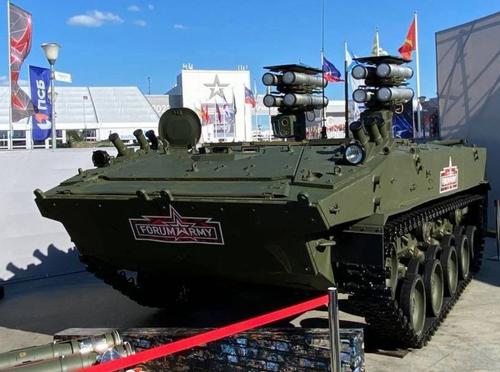
The analyst recalled that the quadruple launchers of the complex are equipped with individual sighting and guidance systems. They are capable of firing a salvo of four 9M133M-2 / FM-2 missiles at enemy armored vehicles at a distance of up to 10,000 m, while previous versions were capable of hitting at 5,500 m.
In terms of target channel capacity, the Kornet-D1 has already surpassed the Chrysanthemum-S, and in terms of firepower performance, it has reached their level.
The "Kornet-D1" is capable of simultaneously engaging two different targets and also has the ability to fire in automatic mode.
Currently, the complex is being created for two types of carriers: the wheeled base of the Tigr-M armored vehicle and the tracked base of the BMD-4M airborne combat vehicle. The Kornet-D1 ATGM was developed in the interests of the anti-tank units of the Airborne Forces artillery.
Earlier, www1.ru reported that the latest drone positioning technology has been developed for the Russian army.
Read more materials:
Reliable barrier: special units have been created in Russia to protect rear facilities from UAVs
Kryptonite for Baba Yaga: a unique Sokol drone interceptor with AI has been developed in Russia
Never miss our newsAdd this site to your preferred sources to see us more oftenAdd on Google

















