Translated with AI from the Russian original.
After severe brain injuries, damaged neurons hardly regenerate. However, scientists from Tomsk Polytechnic have found a way to help the brain initiate this process. They created a special hydrogel with nanoparticles that, with the help of a magnetic field, stimulates nerve cell growth and simultaneously reduces inflammation.
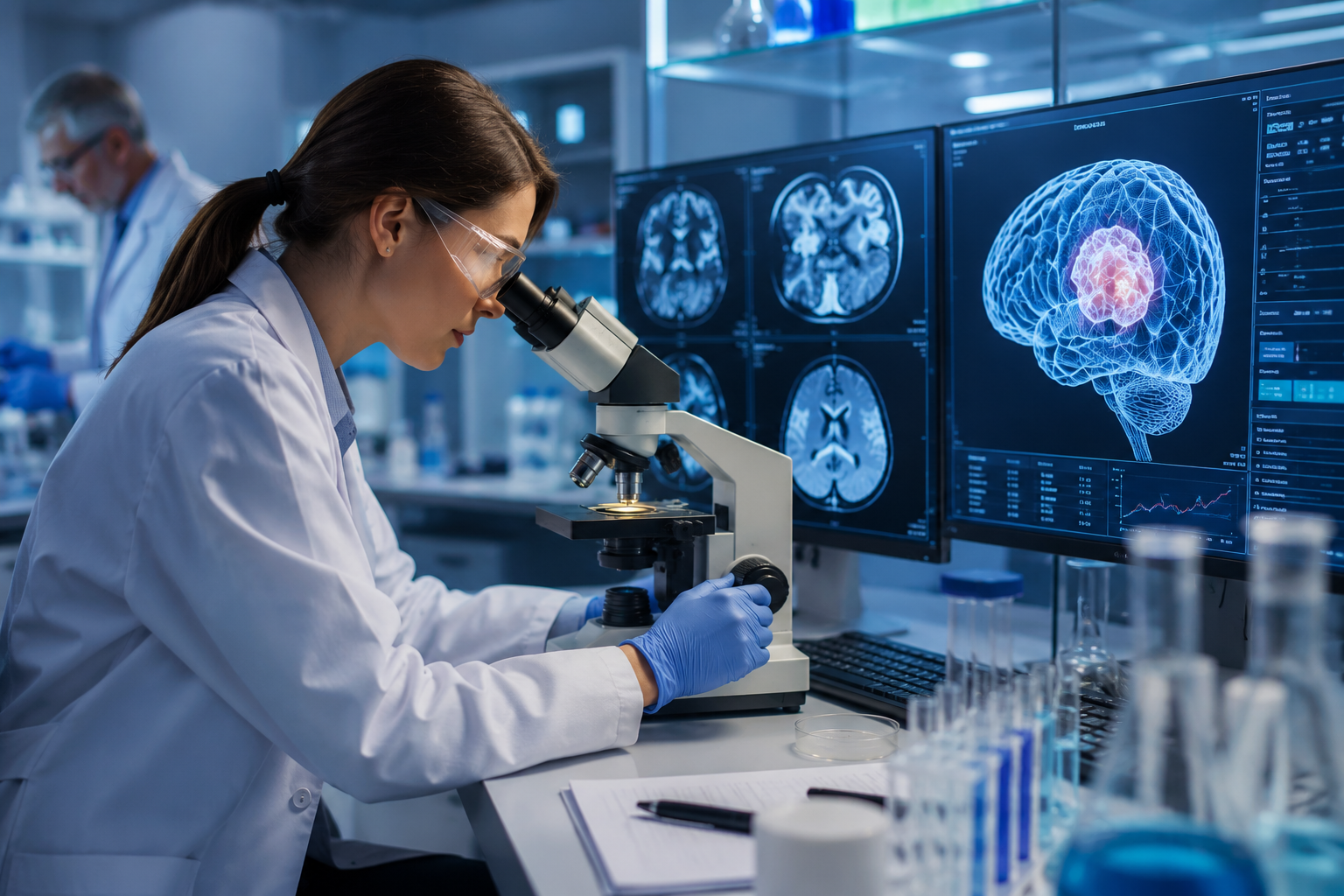
After traumatic brain injuries, neurons die and hardly regenerate. One promising method of recovery is to make brain stem cells migrate to the damaged area and transform into new neurons there, the Russian Ministry of Education and Science reported.
However, this process is hindered by the consequences of the injury: inflammation, oxidative stress, and damage to healthy tissues. Therefore, scientists need methods that simultaneously aid recovery and protect the brain from further damage.
To solve the problem, Tomsk Polytechnic synthesized a hydrogel with the addition of magnetoelectric nanoparticles to restore brain function after injuries. The use of biomaterials combines two treatment strategies – magnetic stimulation restores neural connections, and the hydrogel has anti-inflammatory properties.
The nanoparticles created by the scientists have a complex double structure: a magnetic core based on manganese ferrite and a piezoelectric shell. Under the influence of a magnetic field, the core changes shape, creating tension that deforms and polarizes the shell.
Thanks to this, scientists can control the electrical activity of particles without direct contact. The researchers placed the resulting material in a hydrogel based on collagen, hyaluronic acid, and metformin.
The scientists' development has undergone laboratory testing. Animal tests showed restoration of spatial orientation and memory.
Scientists from TPU, the Institute of Catalysis SB RAS, Skoltech, Tomsk State University, and Sichuan University (China) participated in the study. The results of the work are published in the Journal of Materials Chemistry B.
Read more on the topic:
Never miss our newsAdd this site to your preferred sources to see us more oftenAdd on Google

















