Scientists from MIPT, MEPhI, and XPANCEO have created a new sorbent that removes toxic dyes from water 25 times more effectively than the original material. In laboratory tests, the purification quality reached 96.8%. The technology is already planned for industrial trials next year.
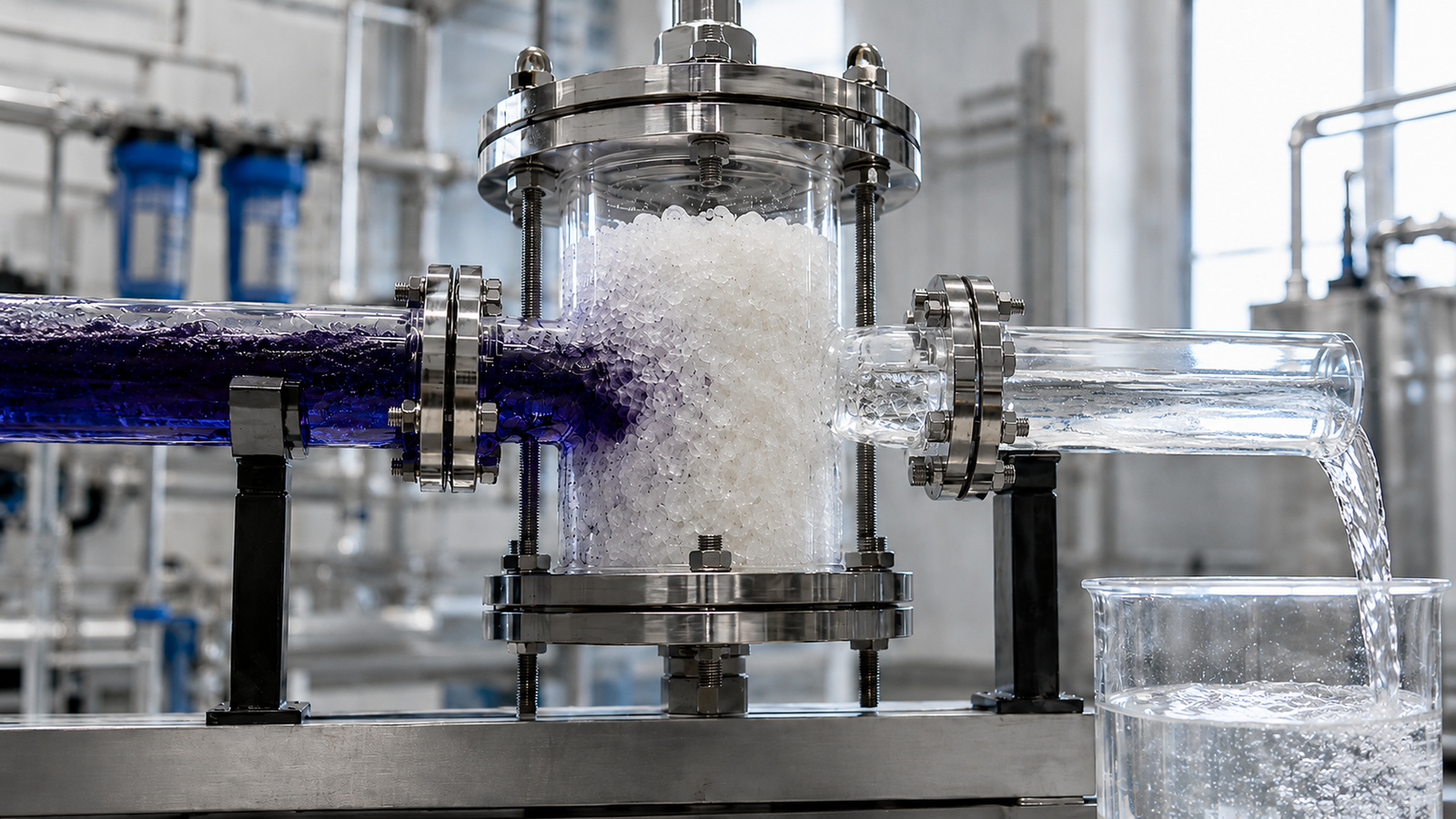
Every year, industry produces over 700 thousand tons of synthetic dyes, and up to 15% of them end up in wastewater. These substances are difficult to break down, block light penetration into water, hinder photosynthesis, and can be toxic and even mutagenic.
Therefore, water purification from such compounds is one of the key environmental challenges. However, traditional methods have problems: sorbents often work poorly, are not selective, and are difficult to dispose of.
The new development is based on lithium niobate, a material already used in photonics and electronics. Previously, it was considered practically inert for water purification. But scientists have shown that if properly modified, it begins to act as a powerful "absorber" of dyes.
Specialists tested the material on four different dyes. It effectively removed only those substances that can chemically "attach" to its surface. For example, one of the dyes was hardly retained at all – this showed that everything works precisely due to chemical bonds, and not simple "adhesion."
After treatment, the material began to work much better: purification reached 96.8%, and the amount of contaminants it can retain increased from approximately 4 to 100 mg per gram.
The production process itself is quite simple – everything is done in ordinary water, without toxic reagents and complex equipment. Therefore, the technology is easy to scale and suitable for industry. The material can be reused and does not produce toxic waste, the scientists stated.
Read more on the topic:
Never miss our newsAdd this site to your preferred sources to see us more oftenAdd on Google