Alexey Emelyanov, a student at Moscow School No. 2086, has developed a wearable epileptic seizure detector. As reported by TASS in the Moscow Department of Education and Science, the device is built on a combination of an accelerometer and a machine learning model deployed directly on the bracelet's microcontroller.
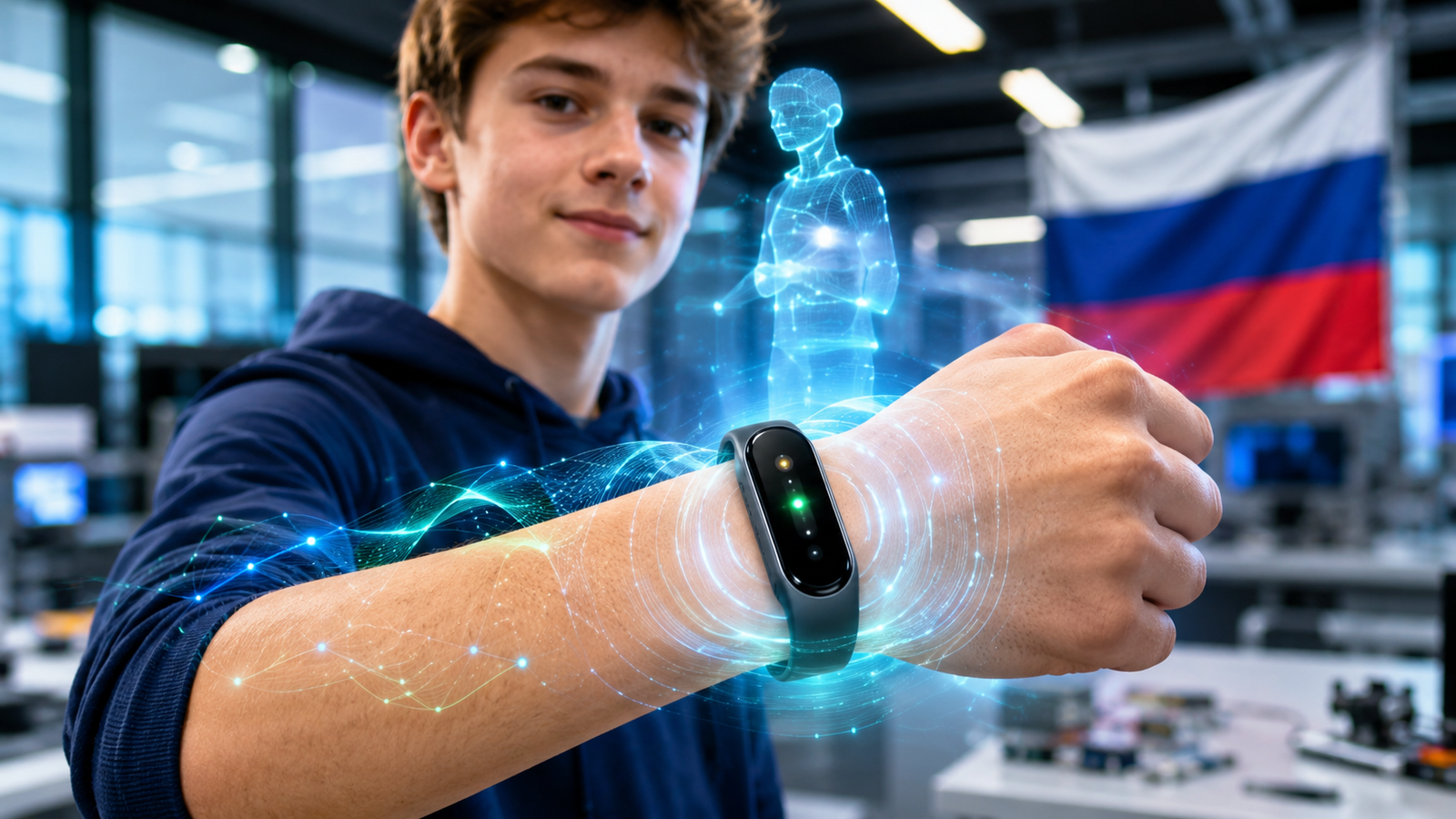
The sensor continuously monitors movements. As soon as sharp, chaotic, and high-amplitude oscillations are detected across several axes simultaneously — a characteristic pattern of a generalized convulsive seizure — the model classifies the event. To train the model, the student collected several hundred samples: over 200 measurements of simulated seizures and an equal number of normal daily activities. The recognition accuracy reached 97.8%.
When triggered, the bracelet transmits a signal to the owner's smartphone via Bluetooth Low Energy. The mobile application starts a ten-second countdown timer: if the person is conscious, they can cancel the call. If there is no reaction, the application automatically sends an SMS and makes a call to a pre-set number. A manual SOS button is also provided for cases when the user feels an approaching seizure in advance.
The prototype has already confirmed its functionality. In the future, the developer plans to expand the training dataset with real patient data, reduce the device's dimensions, and lower its power consumption. Essentially, the student has created an affordable alternative to expensive medical monitoring systems that fits into a bracelet and does not require a stationary server.
Read more on the topic:
Never miss our newsAdd this site to your preferred sources to see us more oftenAdd on Google

















