Scientists from Izhevsk have developed a new igniter for solid-propellant rocket engines, capable of reducing the destructive effect of shock waves during launch and ensuring more stable operation of the propulsion system. The invention was authored by specialists from the Federal State Budgetary Scientific Institution "Udmurt Federal Research Center of the Ural Branch of the Russian Academy of Sciences".

One of the main problems of solid-propellant engines arises in the first moments after launch. When the igniter ignites the main fuel charge, shock waves are formed inside the chamber. They reflect off structural elements, create sharp pressure drops, and can disrupt combustion stability. In the most severe cases, such loads can lead to engine damage.
Specialists from the Udmurt Federal Research Center of the Russian Academy of Sciences proposed changing the shape of one of the key elements of the launch system. Instead of the traditional cylindrical igniter body, they used a strong perforated body in the form of a cone with an apex angle from 30 to 120 degrees.
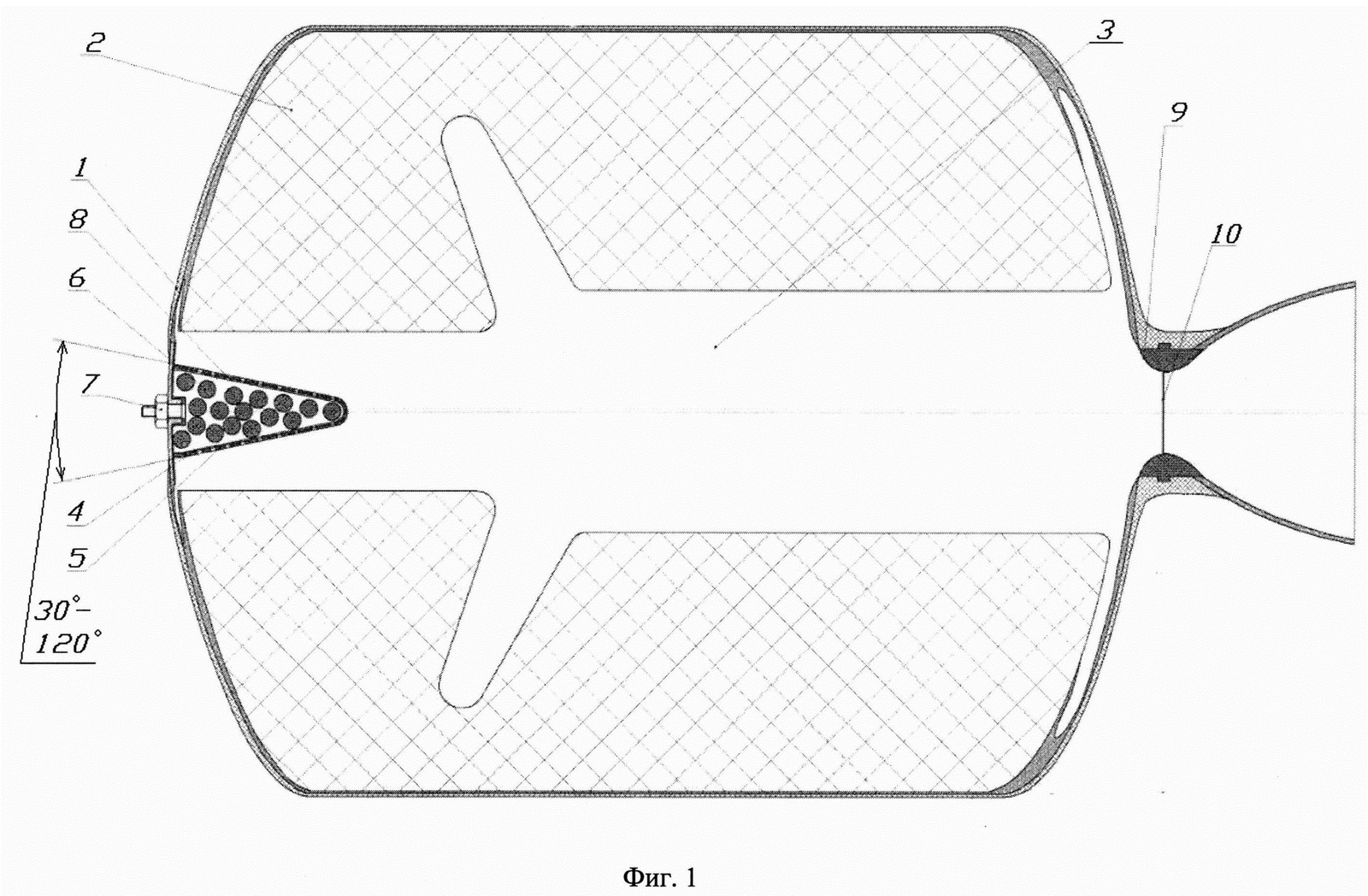
This solution allows for the dissipation of the reflected shock wave and accelerates its decay. This reduces the influence of wave processes on fuel combustion, and the engine reaches its operating mode more stably.
Additional protection is provided by an elastic porous heat-protective coating with open communicating pores, applied to the outer surface of the body. The material absorbs part of the acoustic vibrations that arise in the charge channel after launch.
According to the authors of the project, the new design is relatively simple and can be used not only in solid-propellant rocket engines, but also in gas generators, powder pressure accumulators, and other systems where reliable ignition and stable entry into normal operation are critically important.
Read more on the topic:
Never miss our newsAdd this site to your preferred sources to see us more oftenAdd on Google






![Growth Point: After 5G Launch, Mobile Internet in Russia Accelerated by 20%","subtitle":"TelecomDaily recorded an upload speed increase of 19.7%, and download speed of almost 14%","announce":""}[]}],](https://media.ixbt.site/fit-in/320x/ixbt-data/1727896/ai-image-nvgq0a0v5cjnyxwoc8xpelva.webp)