Translated with AI from the Russian original.
Scientists at the St. Petersburg State University of Industrial Technologies and Design (SPbSUITD) have developed a method for assessing the residual deformation of prostheses in the human body. This was reported by the university's press service.
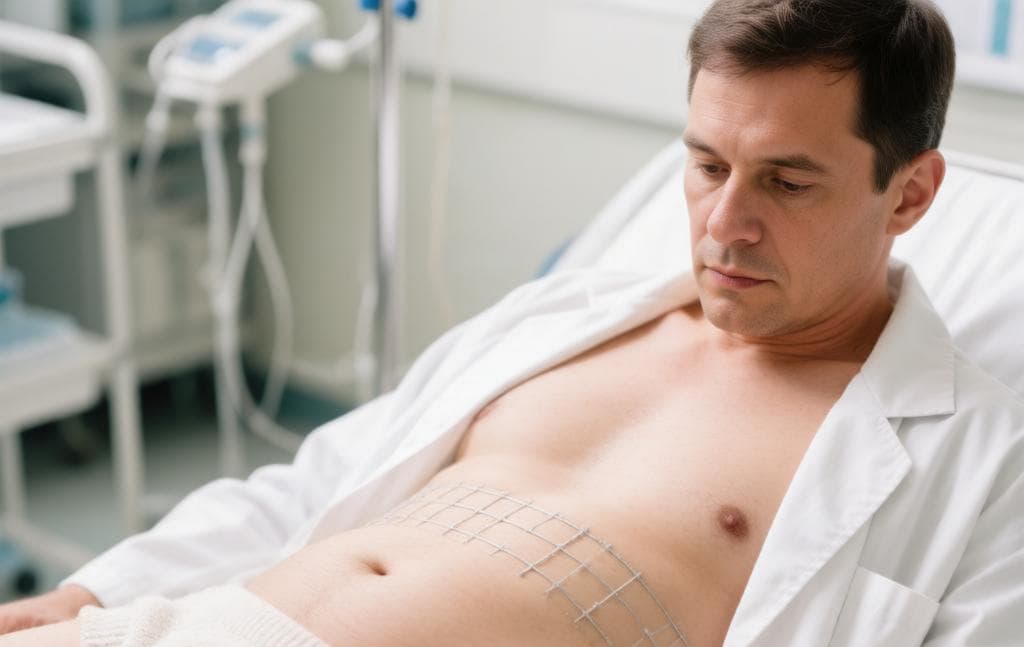
This refers to surgical endoprosthetic meshes that change under stress. Such prostheses are used in surgery for inguinal and umbilical hernias, soft tissue reconstruction in oncological operations, and muscle strengthening.
The methodology can be used by medical device manufacturers to assess the reliability of mesh implants.
The university explained that in developing the methodology, the authors relied on data on abdominal wall muscle deformations during coughing or physical exertion. The stretch level can be up to 30%.
During the experiments, researchers used the Instron-1122 universal testing machine. They stretched samples of endoprosthetic meshes of various weaves by 10%, 15%, 20%, and 30% of their original length. After the 10th deformation cycle, the samples were given time to recover. Then, the scientists recorded the residual deformations (those that do not disappear after the load is reduced).
The endoprosthetic mesh with a "tricot-tricot" weave deformed by 2% when stretched by 15%. Under a load of up to 30%, it deformed equally in all directions. The residual deformation of the mesh with a "tricot-cloth" weave was significantly higher, the university concluded.
Read more on the topic:
Never miss our newsAdd this site to your preferred sources to see us more oftenAdd on Google

















