Translated with AI from the Russian original.
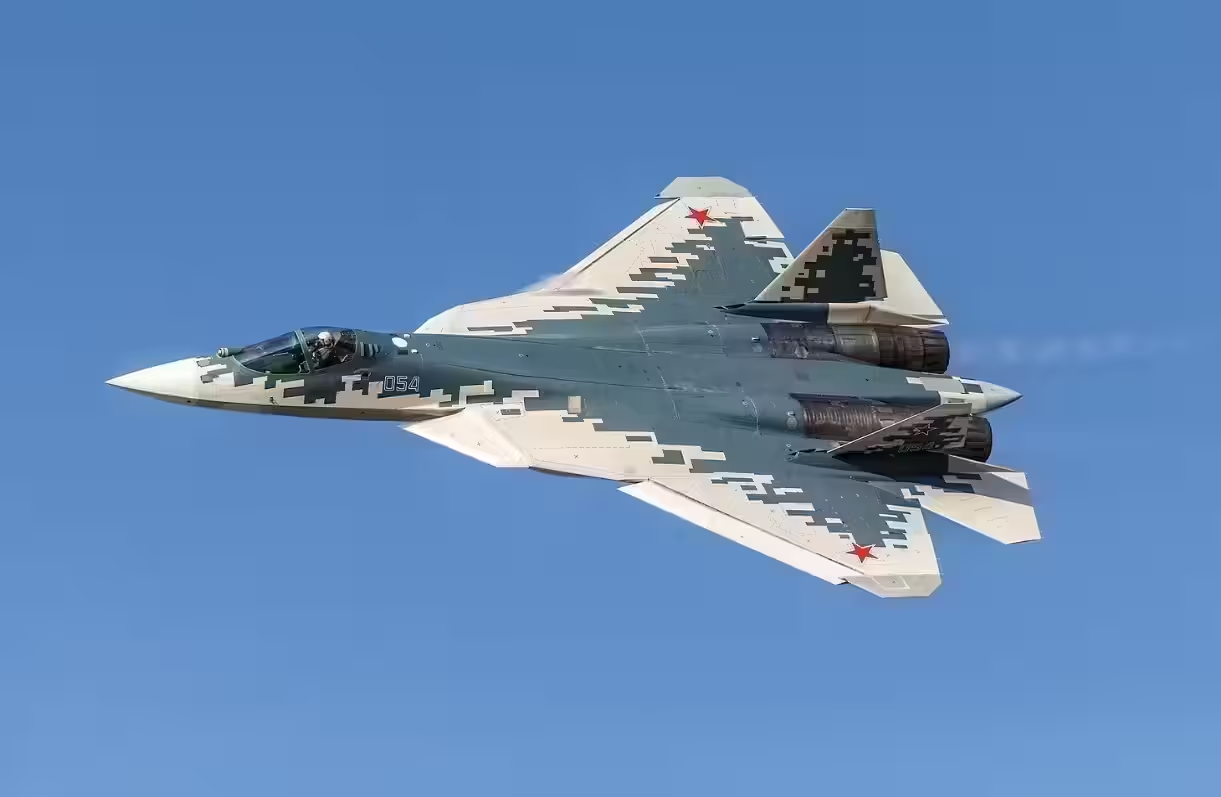
New fighters — the Su-35 of generation "4++" or the fifth-generation Su-57 — differ dramatically from previous combat aircraft in terms of maneuverability and stability. Technical details, using the example of performing a Nesterov's loop, were explained by Sukhoi Design Bureau's chief pilot, Hero of Russia Sergey Bogdan.
According to him, to perform a Nesterov's loop on an Su-17, it must be done within strict parameters: speed — 950 km/h, altitude — from 1000 to 1800 m.
Bogdan noted that if one goes beyond these limits, there is a risk of being at the top point at a lower or higher speed, which can be dangerous.
But on the Su-35 or Su-57, you can enter the loop at a speed of 300 or 1500 km/h, and it will be performed according to the optimal law. You can lose speed even to zero, and the aircraft will still be controllable due to the velocity vector. You can turn it further and enter a safe mode.
The pilot emphasized that the onboard intelligence of new fighters simplifies many things in control, while on older aircraft, one must manually maintain all necessary restrictions.
Earlier, foreign sources also estimated the number of Su-34 and Su-57 in service with the Russian Aerospace Forces.
Read more on the topic:
- New S-71 "Kovyor" missile for Su-57 will be invulnerable to electronic warfare
- Russia to sell 300 R-37M missiles abroad for $1.2 billion
- Engine of S-71K "Kovyor" missile with 300 km range shown for the first time in photo
Never miss our newsAdd this site to your preferred sources to see us more oftenAdd on Google

















