At the Russian Vostok Station in Antarctica, a new core storage facility is being created for ancient ice samples over a million years old. The project is being implemented by the Arctic and Antarctic Research Institute.
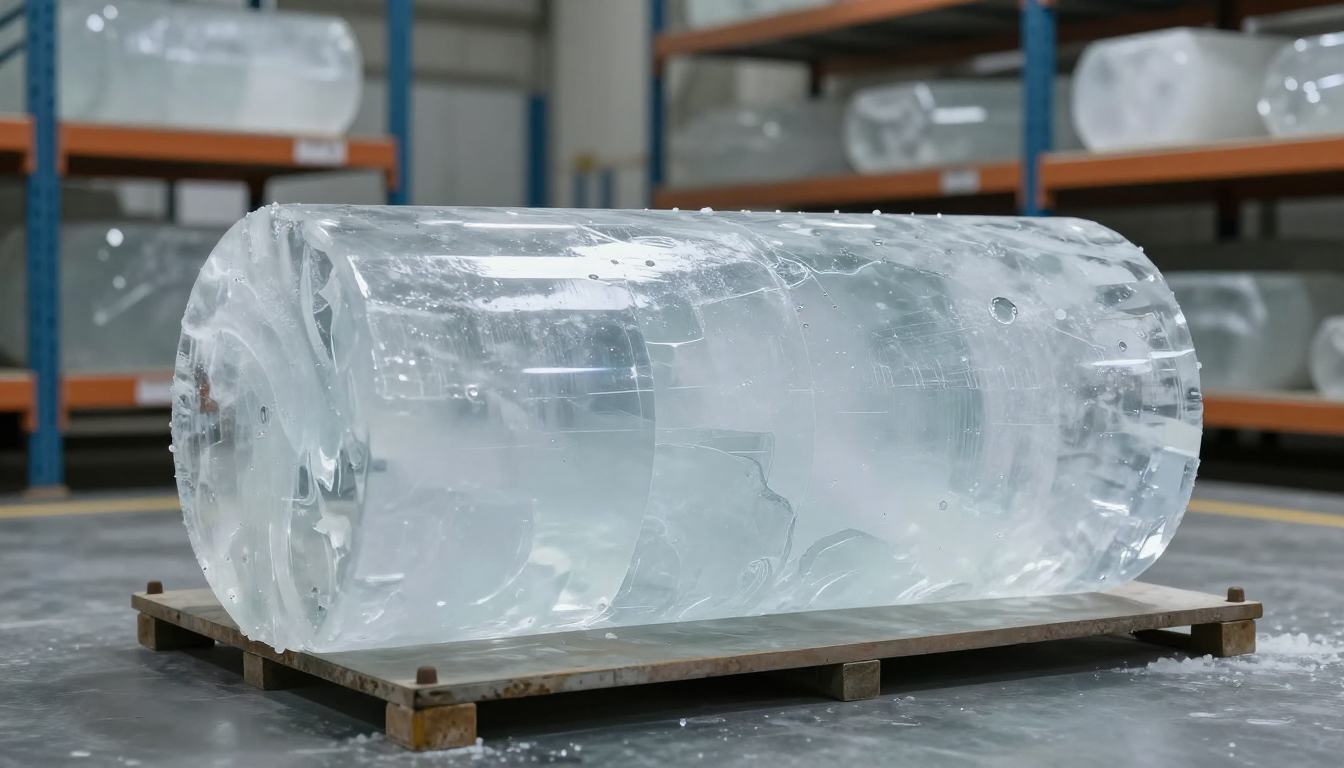
According to Alexander Makarov, Director of AARI, the collection of ice cores is currently stored in Antarctica due to natural conditions. A constant temperature of about minus 55 degrees allows samples to be preserved without complex refrigeration infrastructure. Scientists regularly deliver some of the cores to laboratories for research and then return them.
According to Makarov, the archive has already accumulated more than five kilometers of ice cores. The samples are ice cylinders just over a meter long. All of them are marked and will be placed on special racks after construction is completed.
The collection is replenished during ultra-deep drilling over Lake Vostok. Currently, no new samples are being received, as work is temporarily suspended.
Dmitry Bashmashnikov, head of Vostok Station, said that the existing core storage facilities are under a thick layer of snow and are gradually falling into disrepair. According to him, the old structures are deforming, and access to them is becoming increasingly difficult.
Construction of the new complex has already begun and is proceeding in stages. In the coming years, all samples are planned to be moved to a modern storage facility, where it will be safer and more convenient to work with them.
Why ice is preserved
Scientists preserve ice in core storage facilities to study the ancient atmosphere and climate of the Earth: ice cores are layers of frozen snow thousands of years old, containing air bubbles, volcanic ash, pollen, and traces of pollution. Samples are stored to analyze the concentration of greenhouse gases, temperature fluctuations, volcanic activity, and pollution levels in the past.
Read more on the topic:
Never miss our newsAdd this site to your preferred sources to see us more oftenAdd on Google

















