An attempt to establish the production of domestic analogs of American microelectronics has resulted in a multi-million dollar fine. The Ministry of Industry and Trade of the Russian Federation recovered 52 million rubles from the Research Institute of Molecular Electronics (NIIME) for disrupting the contract terms for launching mass production of microchips for battery charge management.
The institute was supposed to master the production of chips for lithium-ion and lithium-polymer batteries, but delayed the second stage of work by 1329 days — more than three and a half years. The amount of the fine was 42% of the contract amount of 123.4 million rubles.
The development was carried out as part of the import substitution program — the microchips were considered as an alternative to solutions from the American Texas Instruments.
The difficulty of such development is associated with a shortage of specialists in the field of analog microcircuits, explained Dmitry Pshichenko, Academician of the International Academy of Communications.
The main difficulty is in accuracy and reliability. This is not just a chip, but essentially the brain of the battery, which must very carefully manage the charge, temperature, and protection. An error here is either rapid battery wear or the risk of an accident.
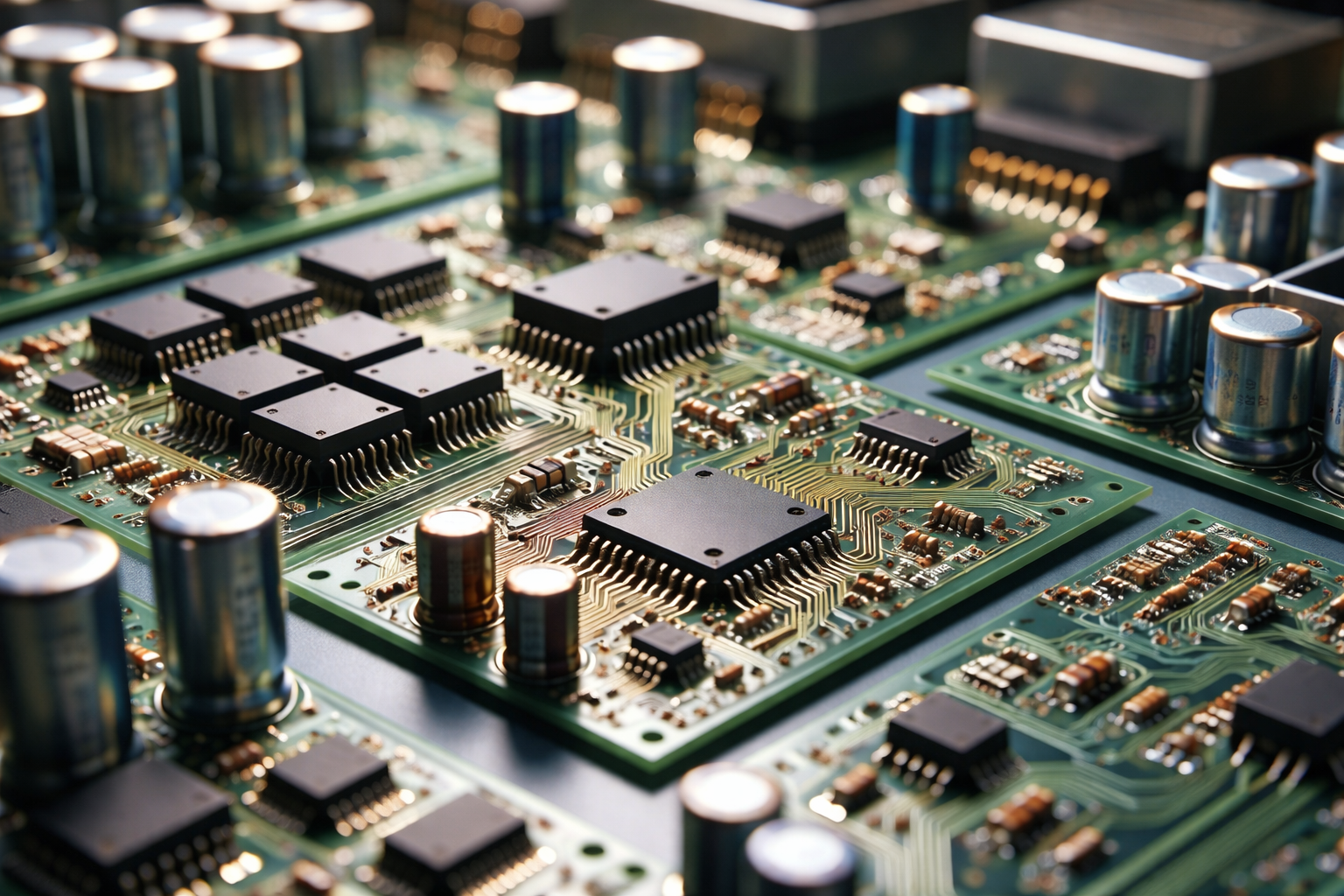
The chips being developed are a key element of power systems. They manage the charge of up to four batteries, control current, voltage, and temperature, and prevent overheating and overcharging.
Earlier, the Ministry of Industry and Trade stated that domestic manufacturers of materials for printed circuit boards produce world-class products and fully cover the demand. Deputy Prime Minister Denis Manturov also stated that Russia has restored its competencies in microelectronics, which were lost in the 1980s.
Read more materials on the topic:
- One story high: the largest military printed circuit board in Russia was manufactured in Yoshkar-Ola
- First in Russia: a plant for the mass production of printed circuit boards will appear in the Rudnevo industrial park
- Requirements for electronics may be updated in Russia: we are talking about materials for printed circuit boards
Never miss our newsAdd this site to your preferred sources to see us more oftenAdd on Google