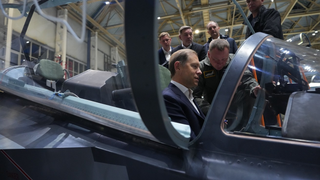
NPO Molniya, the legendary developer of the Soviet Buran spacecraft, has registered a patent for a promising unmanned aerial vehicle (UAV) with reduced radar signature. The device is designed as part of a ground-based complex and is intended for multi-stage engagement of protected targets.
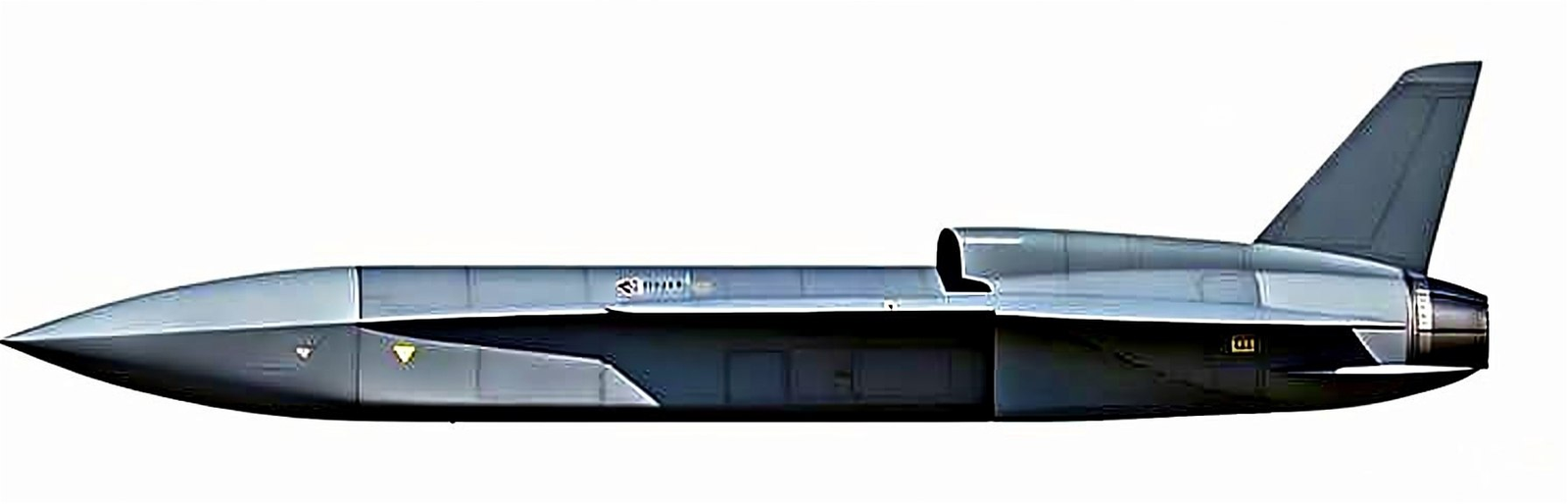
According to the patent description, the UAV is designed according to an aerodynamic configuration with a fuselage, swept wing, and three-keel all-moving empennage. A turbojet engine with an air intake and nozzle is used as a power plant, providing a cruising speed in the range of M = 0.24-0.6. The aircraft is equipped with a warhead and can carry various payloads depending on the task.
Particular attention in the patent is paid to the tactics of use. The strike is carried out in three successive echelons, each of which includes UAVs of the same design, but with different functional equipment:
- The first echelon consists of air target simulators with an inflated effective scattering area (ESA), designed to disorient and activate enemy air defense systems.
- The second echelon consists of vehicles with passive homing heads that detect and attack operating radar stations of the enemy, using their own radiation.
- The third echelon consists of strike UAVs with standard combat equipment, designed to destroy stationary infrastructure facilities that remain without air defense cover.
This approach will effectively suppress air defense systems and deliver pinpoint strikes against critical targets, minimizing risks to own forces.
Read more materials on the topic:
- Russia and Iran tested the latest stealth UAV Hadid-110 at the Sakhand-2025 exercises
- The new Russian interceptor drone "OSOT" with AI is presented: attacks at a speed of 350 km/h
- Russia and India are discussing the localization of the production of Lancet drones
Never miss our newsAdd this site to your preferred sources to see us more oftenAdd on Google