Translated with AI from the Russian original.
The Kalashnikov concern has begun developing its own line of combat unmanned aerial vehicles based on the technologies of the people's military-industrial project "Archangel", according to Alan Lushnikov, CEO of the concern.
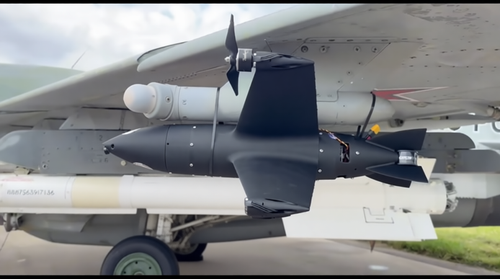
A whole line of development is based on their products. We took what was there as a basis, and now we are developing it.
Earlier, in August 2025, the parties already announced a strategic cooperation: "Archangel"'s developments will have access to "Kalashnikov"'s production facilities for scaling and standardization of production. Now this partnership has moved into the phase of practical implementation - a full-fledged line of UAVs is being launched, adapted to the needs of the Russian armed forces and law enforcement agencies.
The "Archangel" project, initiated by a group of enthusiastic engineers in 2022, quickly established itself as one of the most promising in the field of FPV strike drones. Its development centers are located in several regions of Russia. In April 2025, the founder of the project, Mikhail Filippov, presented the UAV of the same name, capable of reaching speeds of up to 280 km/h and hitting targets at a range of up to 50 km. Successful tests of the new modification took place in June of the same year in the Republic of Crimea.
Read materials on the topic:
- Developers of the "Archangel" project tested a complex for detecting and suppressing UAVs
- Russian engineers have modernized the "Geran-2" to intercept air targets
- Rostec has increased the production of high-tech drones
Never miss our newsAdd this site to your preferred sources to see us more oftenAdd on Google

















