A concept for a new tank has been created in Russia, the protection of which resembles the structure of a dandelion. The invention relates to passive protection means for protecting mobile and stationary objects from kamikaze drone strikes.
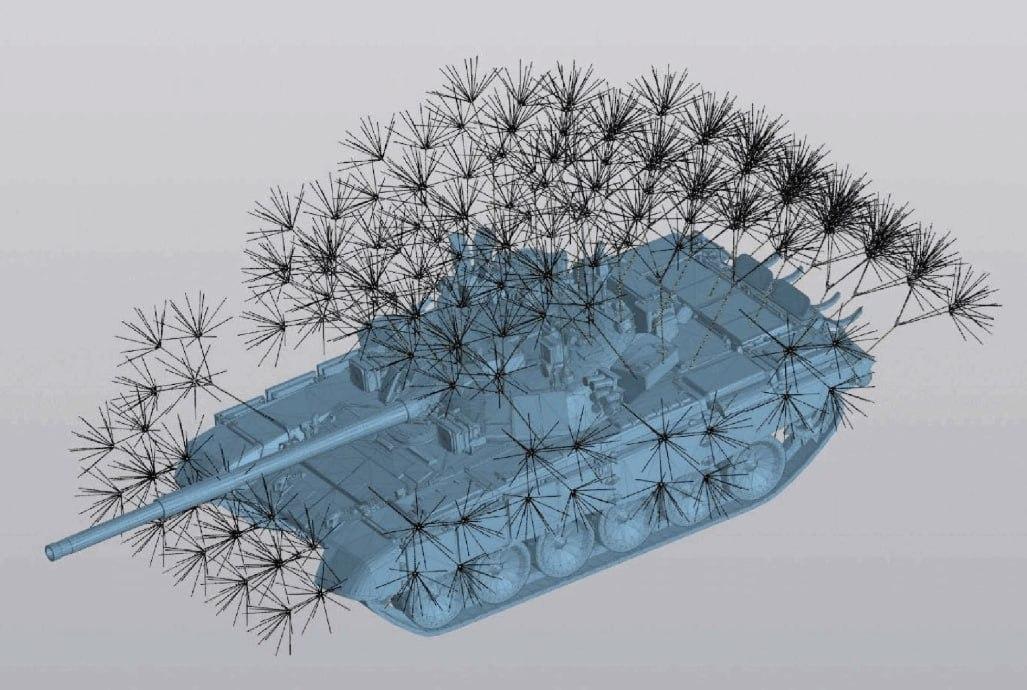
The protective device on the tank body contains sets of rods made of flexible material, interconnected in a common tree-like structure, forming a volumetric barrier.
The protection provides for several tiers, in each of which there are flexible rods of various sizes and cross-sections. The upper tiers consist of rods of small cross-section, and the lower tiers consist of rods of large cross-section.
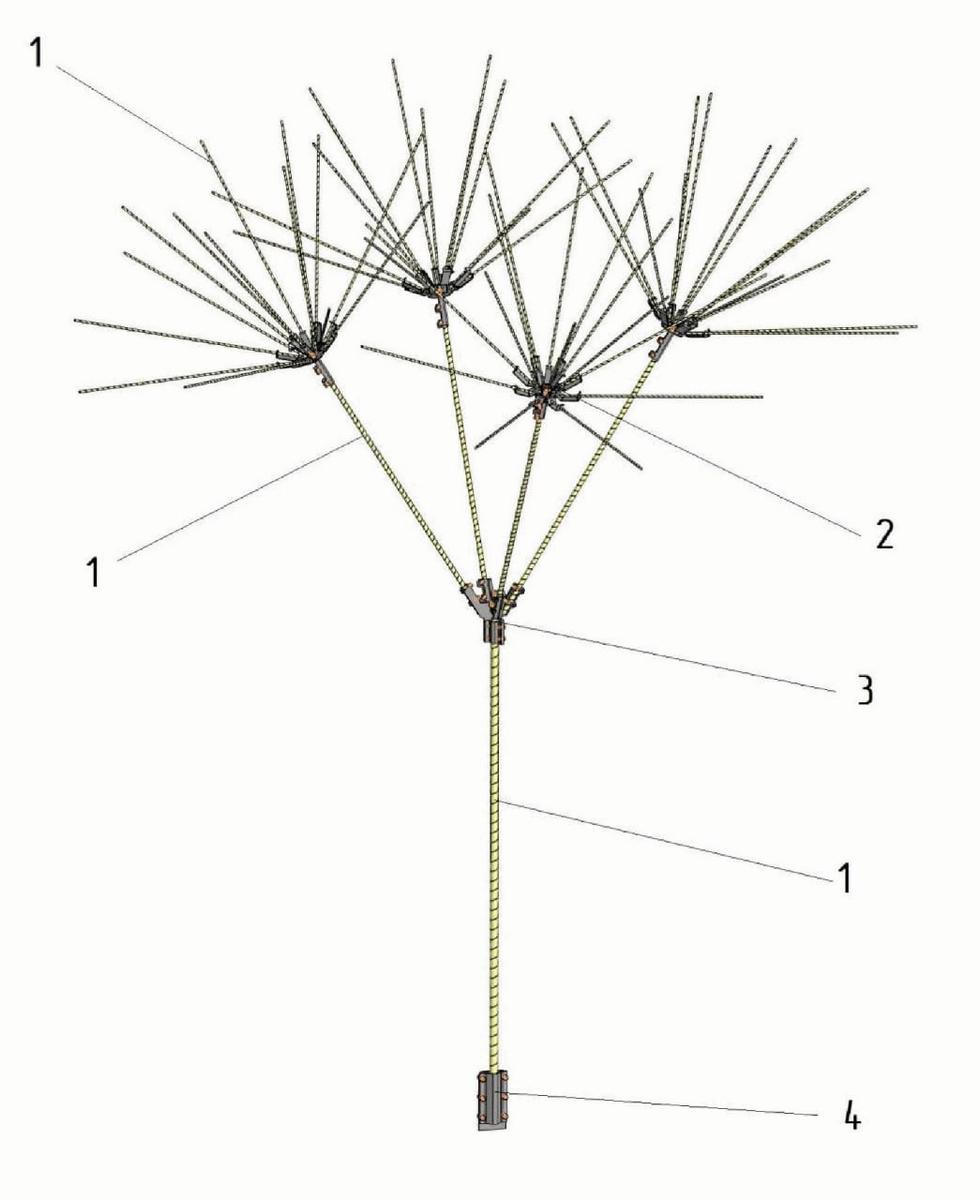
The number of rods in the tiers increases from bottom to top, the rods are interconnected by easily detachable connecting elements. The rods themselves are made of fiberglass reinforcement of various cross-sections.
The connecting elements were proposed to be made of molded sheet metal or impact-resistant plastic. A mesh made of synthetic high-strength material with a fine-meshed structure is stretched between the upper tiers of tree-like structures.
Read more materials:
Never miss our newsAdd this site to your preferred sources to see us more oftenAdd on Google