Translated with AI from the Russian original.
Russian troops have hit thousands of targets using the Kornet anti-tank missile system (ATGM). This was announced by the industrial director of the Rostec State Corporation's weapons cluster, Bekhan Ozdoev.
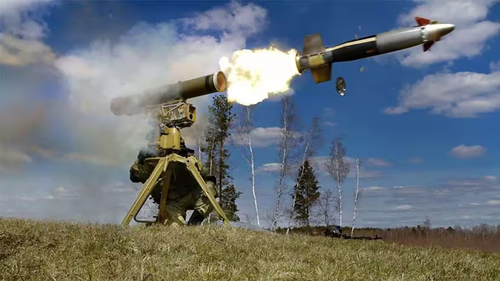
The day before, the High-Precision Systems holding (part of Rostec) delivered another batch ofmissiles for the Kornet ATGM to the troops.
Russian servicemen call the Kornet an "armor burner." It has thousands of successfully hit targets to its credit, including Western-made armored vehicles, strongholds, and enemy fortifications.
The state corporation added that the Kornet has already proven its effectiveness in combating drones. The complex can be used from various shelters, and to increase mobility, it is installed on buggies and ATVs. The remote control panel ensures the operator's safety from return fire.
About the Kornet ATGM
The missile for the Kornet ATGM is made according to the "duck" aerodynamic configuration. In the middle part there is a solid propellant engine and a shaped-charge warhead. The tail section contains elements of the missile control system. ATGMs are produced by specialists of the V. A. Degtyarev Plant (Kovrov, Vladimir Region).
Read more materials:
- Russia sold 2,200 combat aircraft and helicopters abroad
Never miss our newsAdd this site to your preferred sources to see us more oftenAdd on Google

















