Translated with AI from the Russian original.
In 2025, Russian industry is demonstrating growth in the use of digital technologies, but the level of their implementation remains low. According to experts, the number of large and medium-sized enterprises using big data, the Internet of Things, computer vision, and generative AI will increase by approximately 40%.
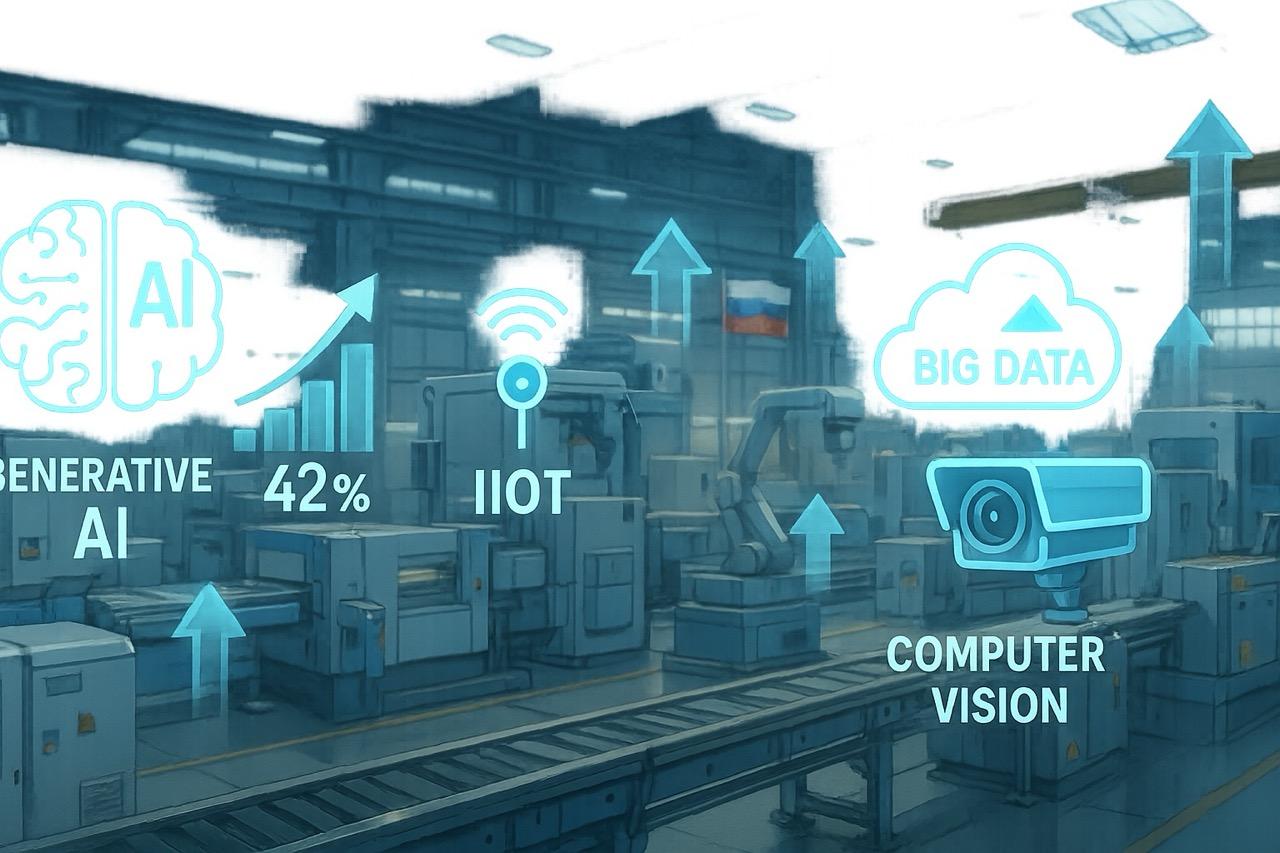
According to a study by Strategy Partners and Tsifra Group, in 2025, industry will increase the use of IIoT by 2% (more than 5.7 thousand enterprises), computer vision by 10% (36.2 thousand), machine learning and big data by 16% (5 thousand), and generative AI by 42% (371 enterprises). At the same time, in 2024, only 0.3% of companies used generative AI, 7.1% used IIoT, 5.5% used ML and big data, and 41.6% used computer vision.
Experts note that digitalization is developing unevenly. The main barriers are infrastructure deficit, shortage of qualified personnel, limited corporate budgets, the consequences of sanctions, and a focus on projects with short payback periods.
Import substitution, on the contrary, has become a driver for the introduction of technologies: enterprises are forced to switch to domestic solutions, revise processes, and simplify the structure of work, which stimulates innovation.
Up to 50% of accumulated data remains unused. Conscious work with information and the construction of management models can become the engine of a new wave of digitalization.
According to estimates by the Ministry of Energy, by 2035, the total effect of digital transformation in the oil industry could amount to 700 billion rubles per year.
Read more materials on the topic:
- For the digitalization of Siberia: Rosseti laid 117 km of optical fiber in Ugra
- Digitalization in Russia: Putin urges officials not to forget about live communication with citizens
- Digitalization and automation of processes will help customs officers in the Russian Federation to defeat corruption
Never miss our newsAdd this site to your preferred sources to see us more oftenAdd on Google

















