Translated with AI from the Russian original.
The Russian company RootCode presented a series of unmanned aerial vehicles (UAVs) with visual-inertial navigation and vertical take-off and landing (VTOL) at the "Digital Transportation" forum, capable of operating in the complete absence of GPS and GLONASS signals. These devices are designed for infrastructure inspection and monitoring of extended facilities, including railways, highways, power lines, and pipelines.
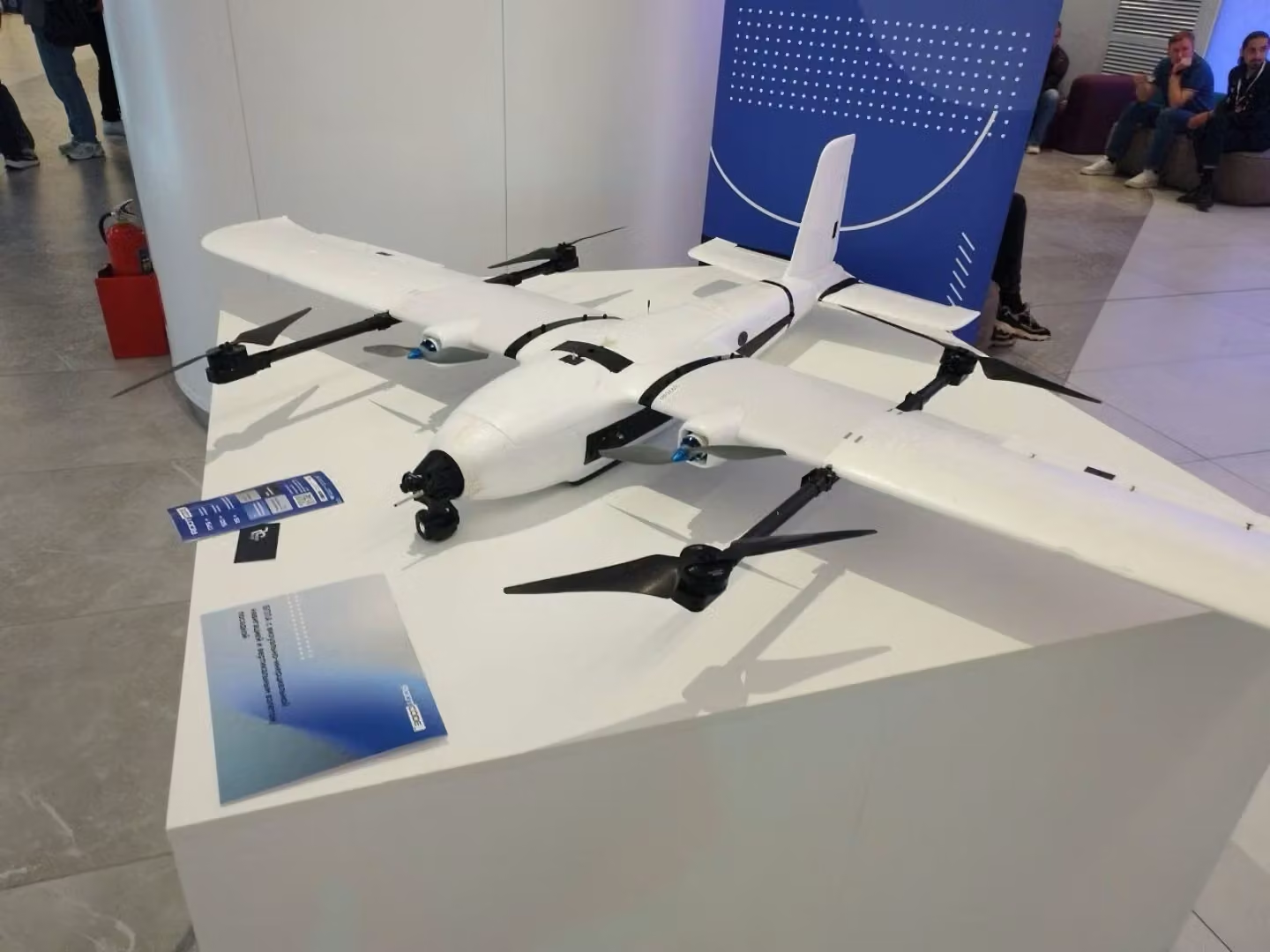
The innovation addresses one of the key problems of modern drones: loss of navigation in weak or disabled satellite system signals. Rootcode UAVs are capable of autonomously orienting themselves in space using visual data and a technical vision system, allowing them to safely perform flights even in urban canyons and hard-to-reach places.
The lineup includes three models: ARA-PRO-WM3, ARA-PRO-WM3-ICE, and the agro-industrial ARA-PRO-QM8-400. All of them provide vertical take-off and landing, autonomous flight modes, and the ability to operate in manual, semi-automatic, and fully automatic modes. The models differ in engine type, payload capacity, and flight time: electric versions fly up to 4 hours, and gasoline versions up to 5 hours, with a maximum speed of up to 120 km/h. The payload includes cameras, thermal imagers, multispectral cameras, lidars, and small cargo up to 7 kg.
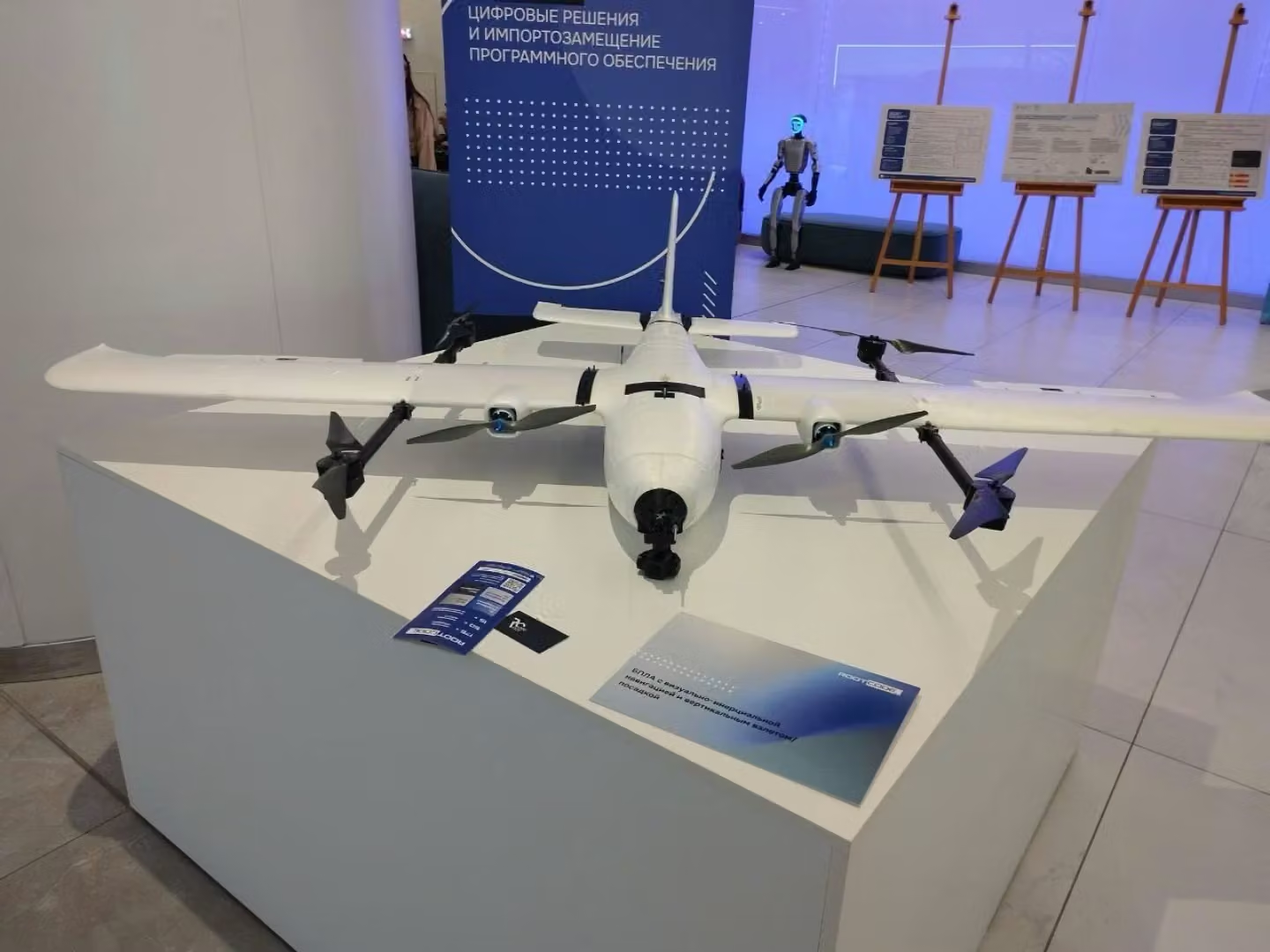
Our UAVs are not just drones for observation, they are full-fledged platforms for video analytics, cartography, and inspection that work even when GPS is suppressed
He emphasized that the software and control system are completely Russian, which makes the development independent of foreign technologies.
The portalwww1.ru is an information partner of the "Digital Transportation" forum, which is currently taking place in Moscow.
Read more materials:
- Unique micro-UAV "Karakurt-R" from the Kalashnikov concern was shown at the "Innoprom. Belarus" exhibition
- Bowstring drawn: the newest Svarog-Strela interceptor drone has entered the testing stage
- The Kalashnikov concern presented the Skat-350M universal serial unmanned aerial vehicle at the Innoprom. Belarus exhibition
Never miss our newsAdd this site to your preferred sources to see us more oftenAdd on Google

















