Translated with AI from the Russian original.
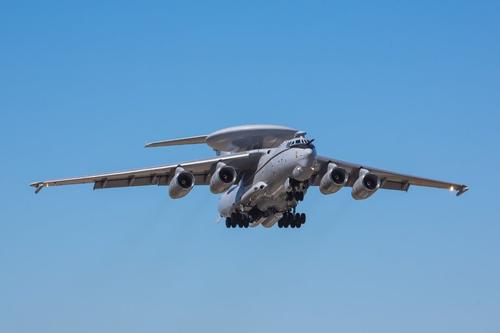
Military pilot Alexey Voevoda suggested building a new airborne early warning and control (AWACS) A-100 aircraft based on existing aircraft and components of combat fighters. He voiced his proposal on his Telegram channel.
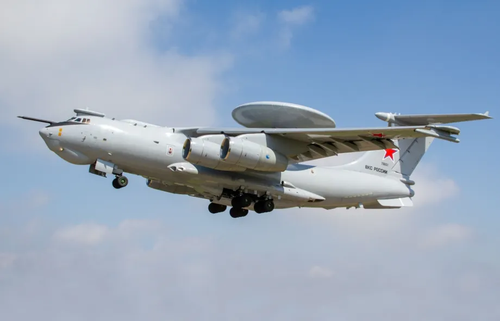
According to him, it is necessary to equip civilian passenger three-engine Tu-214 aircraft manufactured by the Kazan Aviation Plant with the "Irbis" radar station, which is installed on Su-34 and Su-35 combat fighters.
There are excellent Tu-214s, there are magnificent "Irbis". All our own. With the budgets that were allocated to the A-100 program, it would have been possible to cross both inputs a long time ago.
Aviation industry expert Alexey Zakharov explained that the impossibility of mass production of the A-100 "Premier" due to problems with components isnot a reason to abandon testing the aircraft. Some of the equipment developed for the A-100 can probably be used to modernize existing A-50 family aircraft.
N035 "Irbis" is a multi-mode airborne radar station with a phased antenna array developed by NIIP and GRPZ. The average radar radiation power is about 5 kW, the maximum is 20 kW.
Earlierwww1.ru reported thata frightening feature was found in the Russian Su-35.
Read more materials:
Russia has established the production of combat marine unmanned boats
A foreign customer was not satisfied with the color of the Russian Su-34E fighters
Named the key Russian combat aircraft
Never miss our newsAdd this site to your preferred sources to see us more oftenAdd on Google

















