Three hydrographic boats - "Raskat", "Zarya", and "Voskhod" - have joined the fleet of the Astrakhan branch of FSUE "Rosmorport". The first vessel has already started depth measurements in the water area of the seaport of Astrakhan and on the Volga-Caspian Sea Shipping Canal (VCSSC).
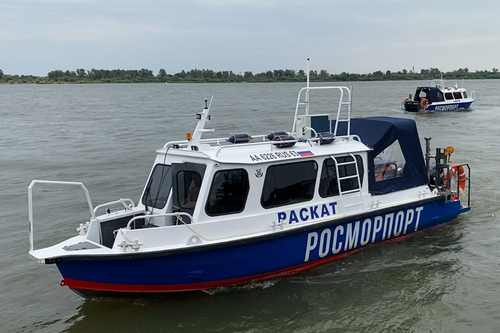
The boats were built at the Samara shipyard according to the "AMG 112" project. Their length is 7.8 m, width is 2.4 m, and draft is 0.4 m. The crew of each vessel is two people. Equipped with two engines with a total power of 280 hp, the boats develop a speed of up to 25 knots, but hydrographic works are carried out at low speeds (3-4 knots).
The vessels are constructed from marine aluminum and include stationary equipment and a surveying complex. There is a cabin with a hydrographer's workplace on the deck. The boats can operate in coastal areas up to 6 miles from the shore in waves up to 1.2 m.
According to "Rosmorport", "Raskat" has already started measurements, "Zarya" is undergoing running-in, and "Voskhod" is preparing for equipment. The new vessels will complement the existing boats "Luch", "Petr Bakanev", and "Relief", increasing the volume of research on the VCSSC - a key section of the "North - South" transport corridor.
In 2024, the branch's fleet was replenished with the service boat "Rubin". Previously, in 2023, large-scale works were carried out on the VCSSC to increase the navigable depth to 4.5 m as part of the instructions of the President of Russia.
Subscribe to "First Technical" news on Google News to stay up to date with the latest events from the world of science and technology.
Read more materials on the topic:
Old ships may have limited access to Russian ports
USC will reduce 70% of staff at the Khabarovsk Shipbuilding Plant
KMZ will supply KMZJET-180 water jet propulsion units for equipping fishing boats
Never miss our newsAdd this site to your preferred sources to see us more oftenAdd on Google