Translated with AI from the Russian original.
Russian scientists are developing a three-dimensional model of the Pavlov volcano in Alaska, using data from American colleagues and the method of seismic tomography. The work is scheduled to be completed in 2025.
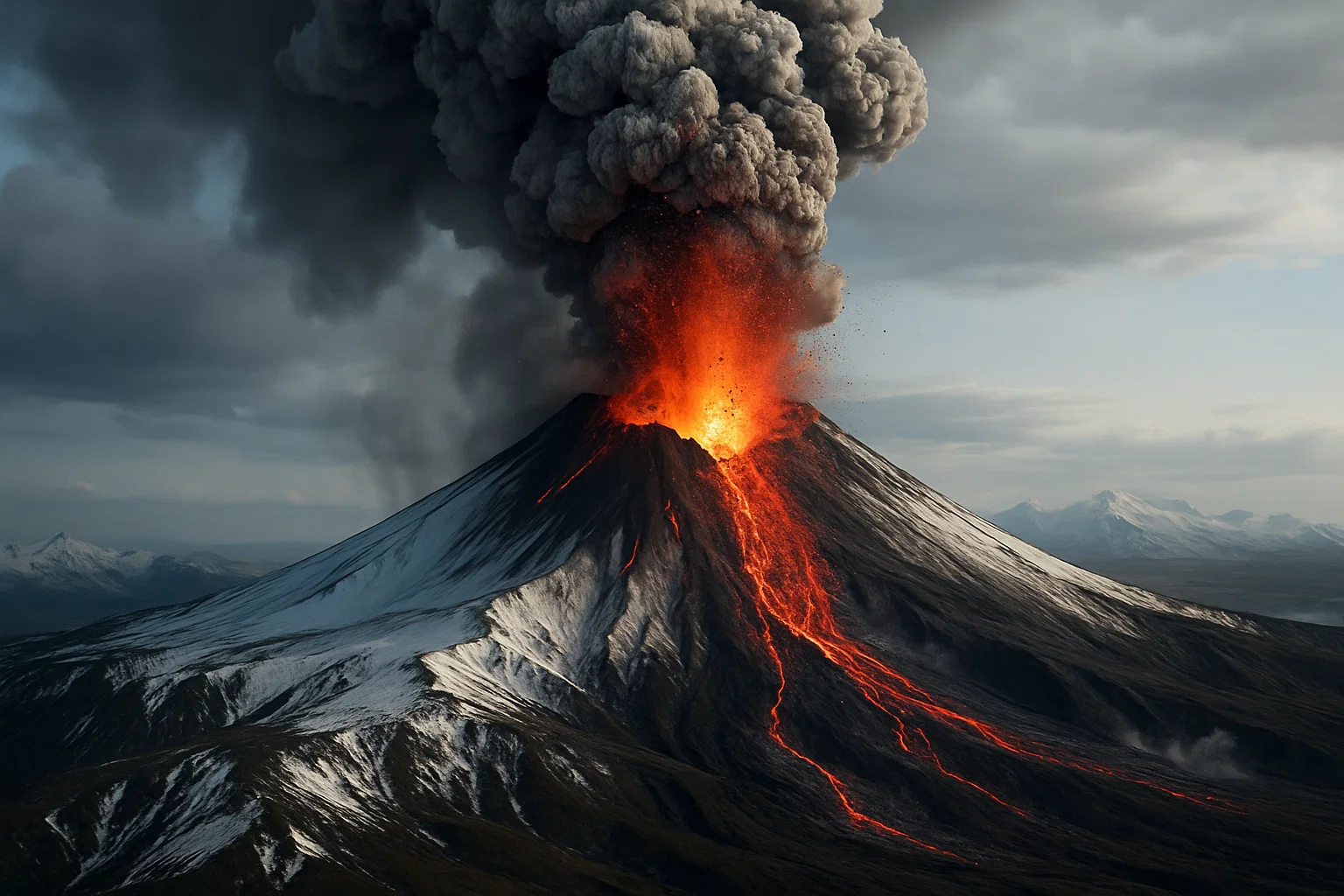
The model will allow studying the structure of the volcano, including the location of magmatic chambers and geothermal flows. This will help predict the nature of future eruptions - whether they will be explosive or accompanied by magma effusion.
Kulakov noted that the study is based on data provided by American scientists. Russian specialists already have experience in such work: earlier they created the first model of the Semisopochnoi volcano, also located in Alaska. Despite international difficulties, scientific cooperation in this area continues.
We play a major role in the study of these volcanoes. Moreover, the first model of one of the islands - Semisopochnoi - was made by our team. We took the American data, processed it and published it. It is now generally recognized that this is the first result for this island. We are very actively, despite any conflicts, continuing to work.
Pavlov Volcano, 2,519 meters high, is one of the most active in Alaska. More than 40 eruptions have been recorded during the observation period, the last of which occurred in 2024. The most powerful eruptions in the 20th century occurred in 1981, 1983, 1986, 1996 and 2007.
The creation of the Pavlov volcano model will help to better understand the mechanisms of eruptions, which in the future will improve the prediction of such events. This is important not only for science, but also for the safety of people living in seismically active regions.
Read more materials on the topic:
Now in 3D: Russian scientists will create the most accurate 3D models of the Moon and Mars
Mathematical model from Perm scientists will predict wound healing and the development of oncology
Never miss our newsAdd this site to your preferred sources to see us more oftenAdd on Google

















