Translated with AI from the Russian original.
A new technology to improve oil production has been developed at Dubna University, the Ministry of Education and Science press service reported. The innovation allows for more efficient management of water supply, which displaces oil to the surface.
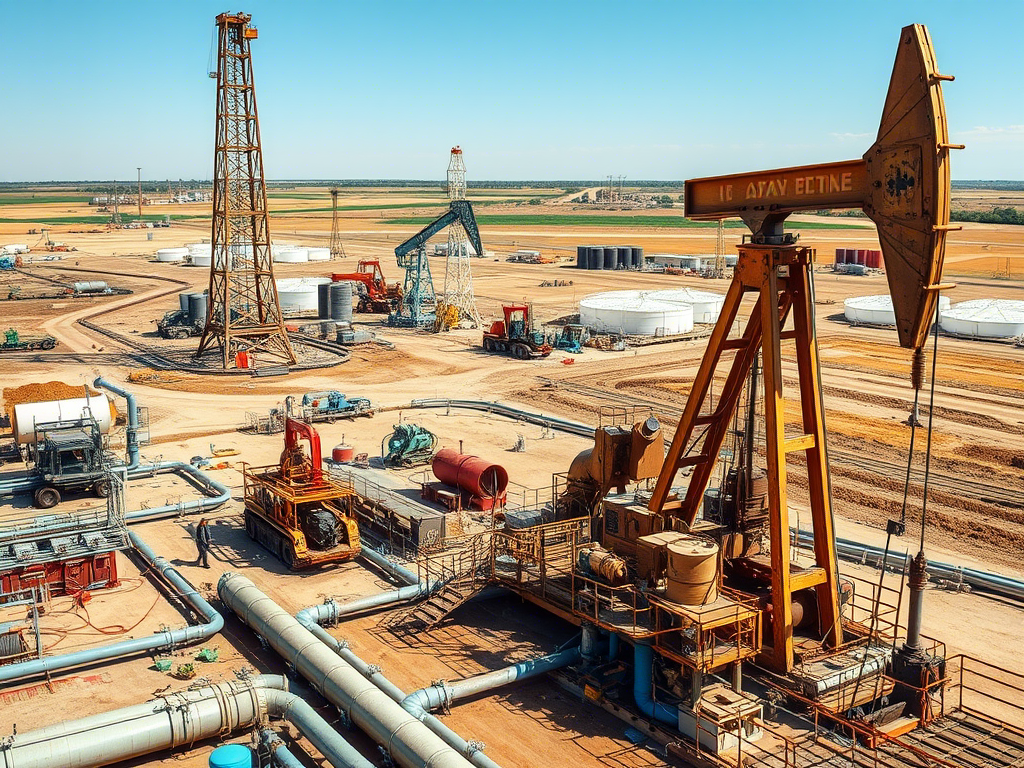
Water injected into oil reservoirs helps push more oil to the surface. However, it is not always distributed evenly. Sometimes water moves only through the most permeable areas of the rock, leaving the rest without effect.
To solve this problem, researchers have come up with a new method of controlling exactly where the water goes. Water labeled with a special indicator is pumped into the well, then samples are taken and, using computer modeling, it is tracked where the water moves efficiently and where it does not.
A team of scientists from the Department of General and Applied Geophysics, under the leadership of Professor Mikhail Khozyainov, has developed and registered a patent for a unique method "Method for managing the flooding of a heterogeneous reservoir of an oil field".
According to the new technology, water with an indicator is pumped into the injection well. Then, for 90-120 days, water samples are taken from the surrounding production wells. After that, the research area is expanded. To increase efficiency, artificial channels are created between the wells - "highly permeable interlayers." After analysis and modeling, oil workers can reduce the volume of injected water, eliminating inefficient use.
Our methodology helps to better manage water supply and avoid unnecessary costs, which makes the oil production process much more predictable and economical. The university has received two patents in this area, a monograph and a number of articles have been published in leading journals.
Earlier, artificial intelligence developednew chemical compounds to increase hydrocarbon production at Gazprom Neft's fields. The reagents will help to more effectively develop complex deposits and extend the service life of dozens of fields throughout Russia.
Read more on the topic:
Kazan scientists have developed reagents to prevent accidents during oil and gas production in the Arctic
Simple and effective: Perm engineers have improved pumps for oil production
A new Russian oil production technology allows you to drill wells up to 4 km faster
Never miss our newsAdd this site to your preferred sources to see us more oftenAdd on Google

















