Translated with AI from the Russian original.
During a planned command and staff exercise of the Strategic Missile Forces (RVSN) in the Tver region, on combat patrol routes, to detect sabotage groups in the positional area of the missile division and to protect the mobile missile systems "Yars", the military used a new unmanned aerial vehicle (UAV) of the aircraft type "Eleron-7".
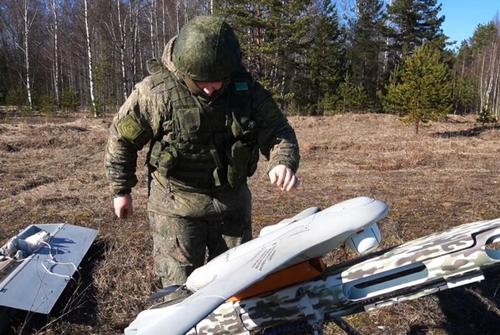
The advantages of the UAV are silence, improved high-definition image stabilization, increased duration and range of flight.
"Eleron-7" is capable of simultaneously conducting aerial reconnaissance in the optical and infrared ranges, and also has the ability to use a control and telemetry radio channel in conditions of electronic warfare.
A compact electric motor with a folding propeller is placed in the tail section of the fuselage. The main part of the internal volume of the glider is allocated for batteries. With the help of such a power plant, "Eleron-7" develops a speed of 70 to 130 km/h. Practical ceiling - 5000 m. Flight duration - 2.5 hours. The operating radius of the system with video signal transmission is 25 km.
Earlier www1.ru reported that a way has been found in Russia to make aircraft engine blades ultra-strong and heat-resistant.
Read also materials:
"Don't feel sorry for the bird": the newest anti-drone gun with a range of 1.5 km was developed in Russia
Engine failure of the R-195 could have caused the crash of the Su-25 subsonic attack aircraft in the Primorsky Territory
"Bulat" vs. "Baba Yaga": drone detector taught to detect heavy hexacopters
Never miss our newsAdd this site to your preferred sources to see us more oftenAdd on Google

















