Some specifications of the new North Korean medium- and long-range hypersonic missile, which was tested the day before, January 6, have become known. They were reported by the Korean Central News Agency (KCNA).
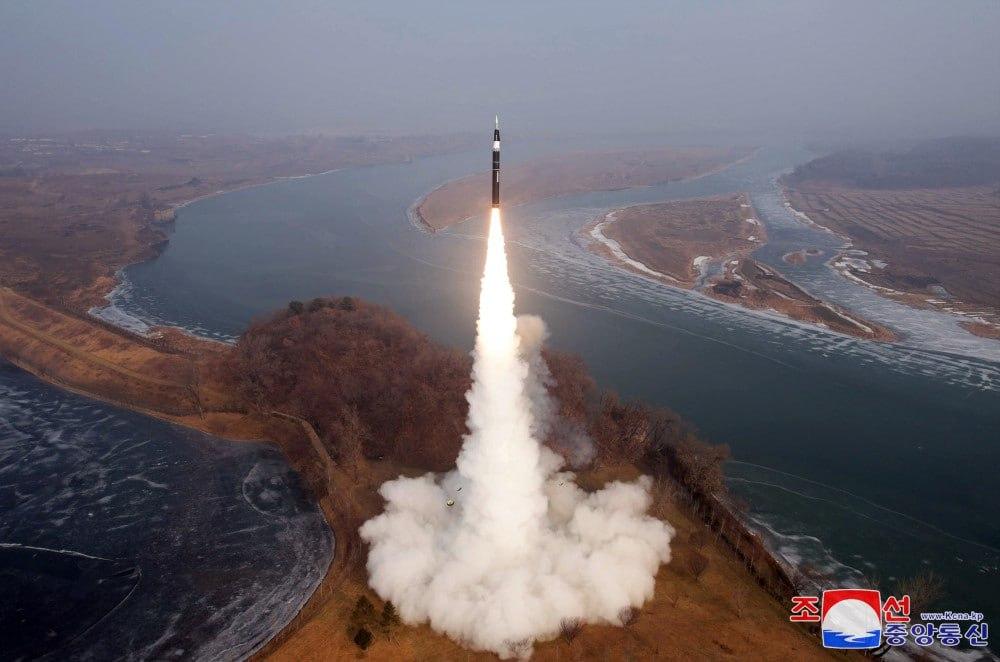
Thus, according to KCNA, the missile's speed exceeded the speed of sound by 12 times (approximately 14,800 km/h), and during the launch, the missile reached an altitude of 99.8 km. It is emphasized that the missile accurately hit a designated area in open waters at a distance of 1500 km.
A new composite material reinforced with carbon fibers was used to manufacture the engine body of the hypersonic missile.
Thus, the North Korean missile surpassed the performance of the Russian "Hazel" ballistic system, the maximum flight speed of which is Mach 10 (12,380 km/h).
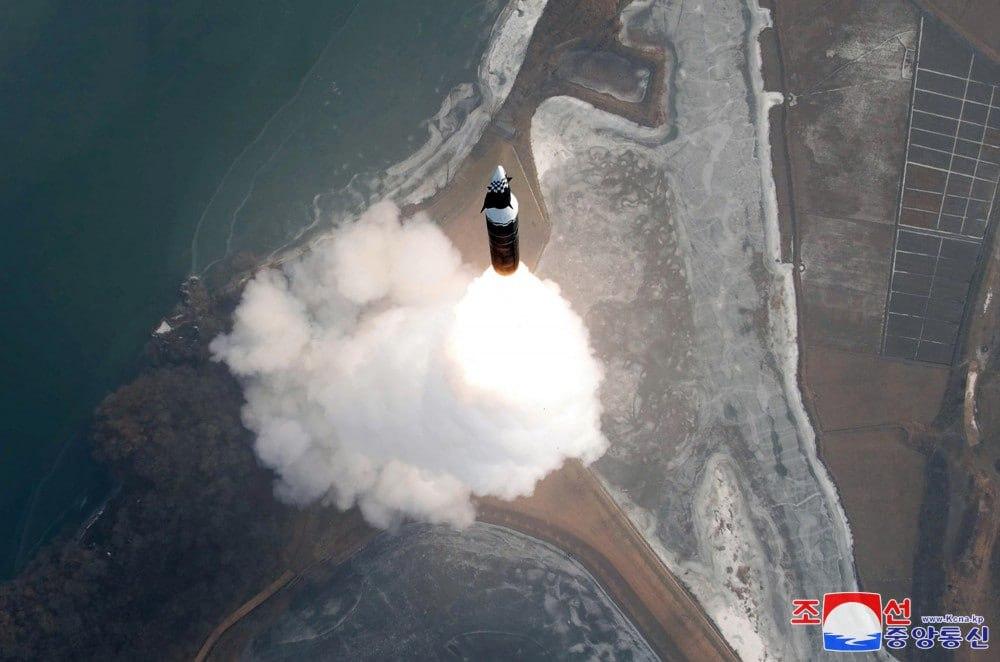
Commenting on the successful test, North Korean leader Kim Jong-un stated that the main goal of developing the new hypersonic missile is to ensure self-defense. He also emphasized that the new North Korean missile "can effectively overcome any missile defense systems in the world."
Earlier www1.ru reported how the Su-35S fighter will repel the threat of ultra-long-range American AIM-174B missiles.
Read also:
Emerged victorious in a battle with "Baba Yaga": a Russian drone went on a ram
Never miss our newsAdd this site to your preferred sources to see us more oftenAdd on Google

















