Translated with AI from the Russian original.
Scientists from the National Center for Physics and Mathematics (NCFM) plan to create a working prototype of a hybrid electronic-photonic computing system in the next two years that will process information "at the speed of light."
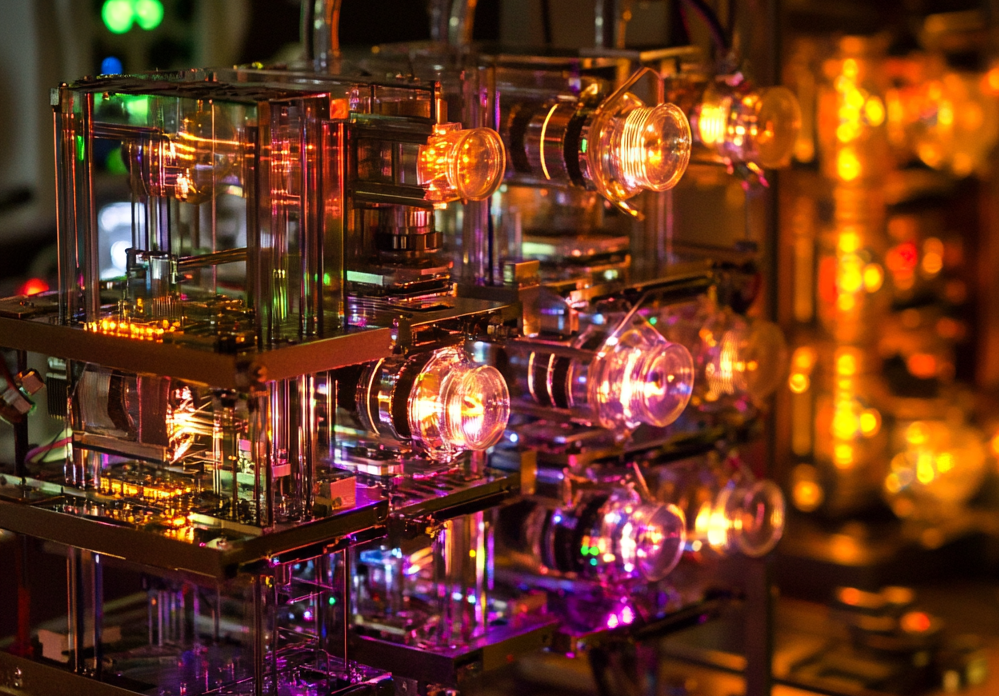
This system, based on a combination of electronics and photonics, is designed for ultra-fast data processing using neural network methods, including optical artificial neural networks. Aimed at solving complex computational problems, the system promises the ability to process more than 10^19 operations per second, which significantly exceeds current global achievements in this field.
As noted by the scientific director of the NCFM, Academician Alexander Sergeev, the project will be implemented with the participation of leading scientific institutions such as the Russian Federal Nuclear Center and Samara State University. Compared to traditional computing systems using universal processors and graphics accelerators, photonic computing machines can significantly speed up problem-solving, offering a 100-1000 times increase in computing speed. In the future, by 2030, they will be able to reach the exaops level, which corresponds to billions of billions of operations per second, while significantly increasing energy efficiency.
This project represents an important step in the development of computing technologies capable of providing breakthroughs in various fields, including artificial intelligence, big data processing, and solving complex scientific and engineering problems.
Never miss our newsAdd this site to your preferred sources to see us more oftenAdd on Google

















