The first spacecraft, according to scientists, will study the meteor hazard between the Moon and the Earth, and the second will explore the soil at the South Pole of the Moon for its further development.
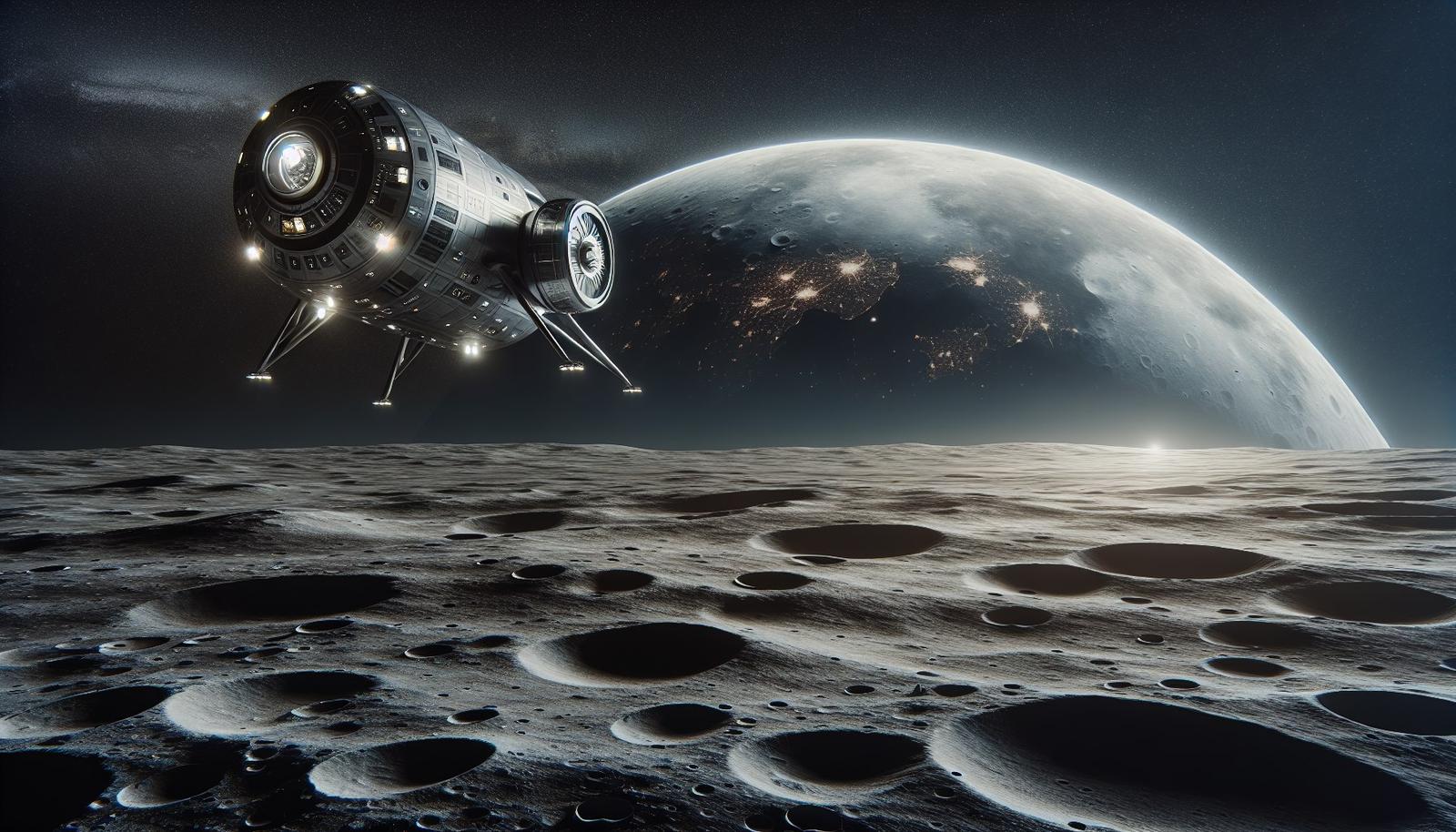
According to Evgeny Slyuta, head of the laboratory of geochemistry of the Moon and planets at the V. I. Vernadsky Institute of Geochemistry and Analytical Chemistry of the Russian Academy of Sciences, told IA "TASS", the launch of "Luna-26" is planned for 2027.
Its orbital mission includes photographing the lunar surface with a stereo camera with a resolution of 3-6 m, studying the lunar surface using radio waves, infrared, neutron and gamma radiation, as well as providing communication with the next landing vehicle. Thirteen devices will be installed there, including:
- radar complex for studying the internal structure of the lunar soil;
- meteor sensor for studying the micrometeorite hazard on the Earth-Moon route and the distribution of cosmic dust around the Moon.
The launch of "Luna-27", according to the scientist, is planned for 2028, its main mission is "studying the composition and content of volatile components and water ice in the lunar soil in the South polar region of the Moon". More than ten scientific instruments will be installed on this device.
In particular, these are devices that will study the concentration of lunar dust above the surface, the composition of rarefied gases above the surface, the interaction of solar plasma with the lunar soil, and other parameters necessary for the development of the Moon. The equipment of "Luna-27" will also include:
- chromatographic complex for direct study of the composition of volatile components and water in lunar soil samples that will be delivered to the device by a manipulator;
- complex that studies the hydrogen content in the lunar soil, its chemical and mineral composition;
- complex that studies the physical, mechanical, thermophysical and electromagnetic properties of the lunar soil at a depth of up to 1-2 m;
- devices for panoramic and stereoscopic surveying of the surface around the landing vehicle.
Earlier, the head of Roscosmos, Yuri Borisov,stated that there will be two Luna-27 system devices. "Luna-27a" and "Luna-27b" should avoid the catastrophe for Russian science that came with thecrash of "Luna-25". If one of the Luna-27 spacecraft does not land, the second will perform the scientific tasks of the mission, and the work of scientists will not stop.
What Russia is planning in terms of the lunar program in the coming years is still unknown.
As for the plans of the Russian scientific lunar program beyond 2028, there are no approved projects yet. Various proposals are currently being considered, including those with lunar rovers. We will all find out which of them will be accepted and approved in the next two to three years.
However, it is obvious that Russia will definitely conduct partnership work on the Moon with other countries in the next ten years. President Vladimir Putin in mid-Juneratified the agreement on the creation of the International Scientific Russian-Chinese Lunar Station (MNLS). 12 countries are already participating in this project of Russia and China, including the United Arab Emirates, South Africa, Pakistan, Belarus, and Turkey. It is also known that representatives of unfriendly countries may be allowed to work with the MNLS.
Read materials on the topic:
Anthropomorphic lunar rover robot from Magnitogorsk tested
Obtaining materials from lunar soil is being worked out at the ISS
The Russian spacecraft "Orel" received a new battery. It is more economical than SpaceX
The Russian spacecraft "Orel" is preparing for production
Never miss our newsAdd this site to your preferred sources to see us more oftenAdd on Google

















