The "Vysokotochnye Kompleksy" holding of "Rostec" has refined aeroballistic missiles for the Russian Iskander-M operational-tactical missile system (OTRK).
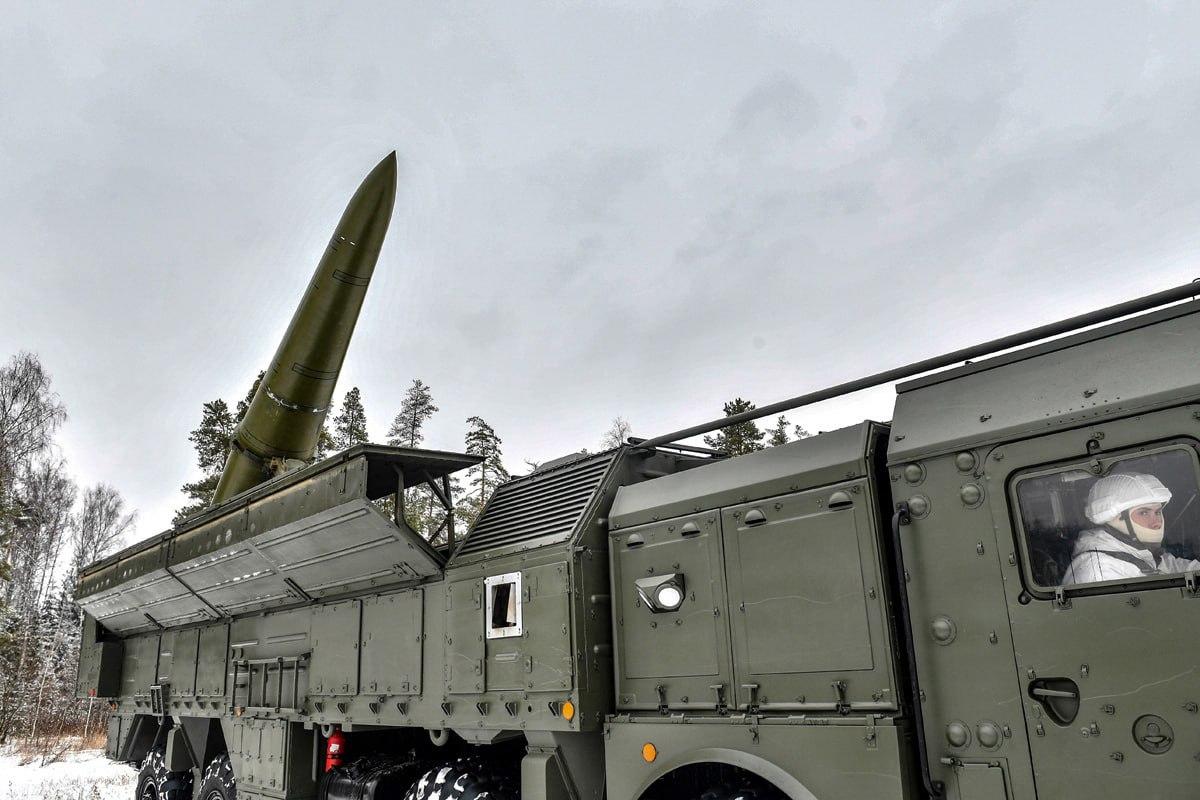
This was announced on the "Military Acceptance" program on the Zvezda TV channel by the holding's CEO, Oleg Ryazantsev. According to him, it is specifically about the aeroballistic missile, which has undergone changes over the past two years of frontline work of the "Iskander-M", taking into account "technological challenges".
In the holding, "the complex was very quickly refined," and the specialists "quickly and efficiently coped with this task." Ryazantsev, naturally, did not disclose detailed characteristics of the changes, but in response to a journalist's question about whether it was about increasing the accuracy of the missile, he answered in the affirmative.
At the end of 2022, the Ministry of Defense noted that all missile units in Russia have already been re-equipped with Iskander-M missile systems, "which have no analogues in the world." Representatives of the "Iskander" parent state corporation "Rostec" also consider this development to be "the most advanced weapon in the world in its class."
In terms of accuracy of hitting targets and the probability of overcoming enemy missile defense, it has no equal. At the same time, the complex initially had a large modernization potential, in particular, through the development and improvement of combat equipment.
Characteristics of the "Iskander-M"
The Iskander-M OTRK is designed to defeat the enemy's:
- multiple launch rocket systems;
- anti-missile and air defense systems;
- aircraft and helicopters at airfields;
- command posts and infrastructure facilities.
Aeroballistic or quasi-ballistic missiles, which are used by the Iskander-M OTRK, include the 9M723 missile. Before modernization, according to the Ministry of Defense, the missile was equipped with a guidance system based on inertial and satellite navigation, electronic warfare modules for jamming, and had the ability to control the entire flight path.
According to data from other open sources, the missile also had other notable characteristics. Speed and maneuverability made the missile, capable of hitting targets at a range of more than 280 km, a difficult target for almost all known missile defense systems. In addition, according to some reports, it had the skill of dropping false targets to misinform enemy radars.
As warheads, depending on the targets, high-explosive and concrete-piercing monoblock parts and several versions of cluster warheads with many submunitions were used, including self-targeting anti-tank ones. Together with the R-500 cruise missiles, capable of automatically bypassing the terrain at extremely low altitudes, the "Iskander-M" before the modernization of aeroballistic missiles were capable of destroying targets at a range of up to 500 km.
Read materials on the topic:
Ready to defend Kaliningrad: in the Baltic Fleet, units of Iskander-M OTRK crews conducted exercises
Russia has increased the range of FPV calculations to protect the Navy and airfields
Anti-ship "Bastions" spotted at Russian Baltic Fleet exercises — what is known about them
Never miss our newsAdd this site to your preferred sources to see us more oftenAdd on Google