Earlier this year, Russia reinstated free travel on toll roads for electric vehicles - this is how the government supports the transition of Russians to this eco-friendly transport. However, this is not the only step that stimulates the transition to e-vehicles - charging stations for electric vehicles will also become more accessible.
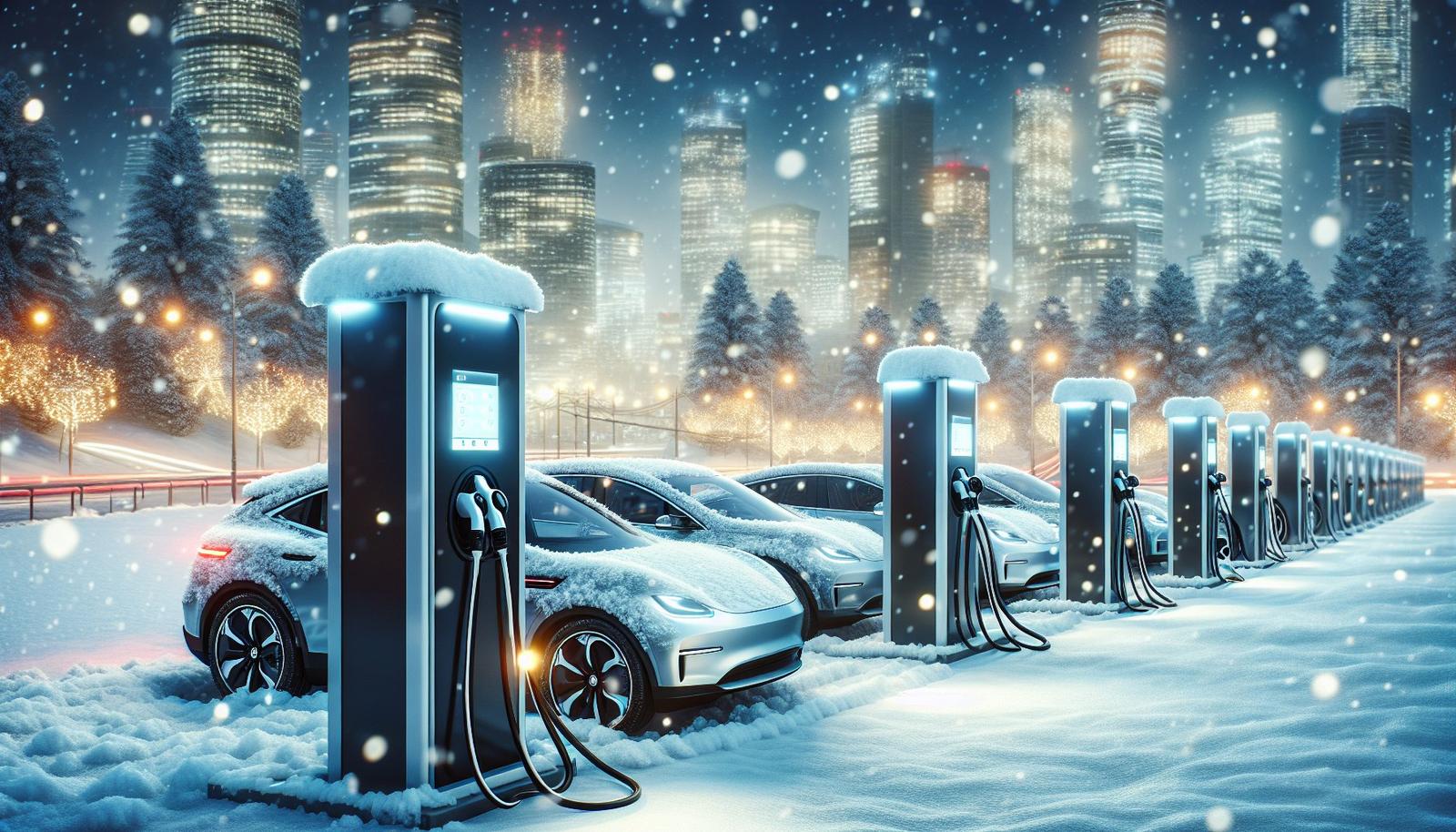
According to the Russian government, during the 2022-2023 implementation of the "Electric Vehicle and Hydrogen Vehicle" initiative, more than 1,100 fast charging stations appeared in 35 regions.
In 2024, we are talking about doubling the network and doubling the number of regions in which a fast charging infrastructure is being created. The number of fast charging stations should increase to more than 2.5 thousand by the end of 2024.
In eleven months, the "Electric Vehicle and Hydrogen Vehicle" initiative will cover 65 constituent entities. According to the Ministry of Economic Development, it is planned to put into operation 1437 fast charging stations with a capacity of more than 50 kW by the end of 2024 - this is twice as much as last year. Also, 3206 new slow charging stations with a capacity of less than 50 kW will appear in Russia by the end of this year.
This will help develop electric taxi services, electric car sharing, and the production of e-transport for public utilities.
Charging stations for electric vehicles
Currently, several manufacturers produce them. At the same time, new solutions are constantly being developed both in Moscow and in the regions of Russia.
In particular, one of the subsidiaries of KRET (Concern Radio-Electronic Technologies) "Rostec" recently launched the production of universal "Fora" charging stations - they will be useful for electric cars, electric buses, and electric trucks. And in Moscow, a number of charging stations have been created, designed for several cars at the same time, and for installation in cottage villages and residential areas.
Also in Moscow, which currently has the most e-transport, a new concept of a mobile electric station (MElS) has been developed - the idea of the company "Aprior Solutions of Machines" will allow charging electric vehicle batteries anywhere. If an electric vehicle runs out of power, it can be called. The appearance of MElS was published in his Telegram channel by auto expert Maxim Kadakov.
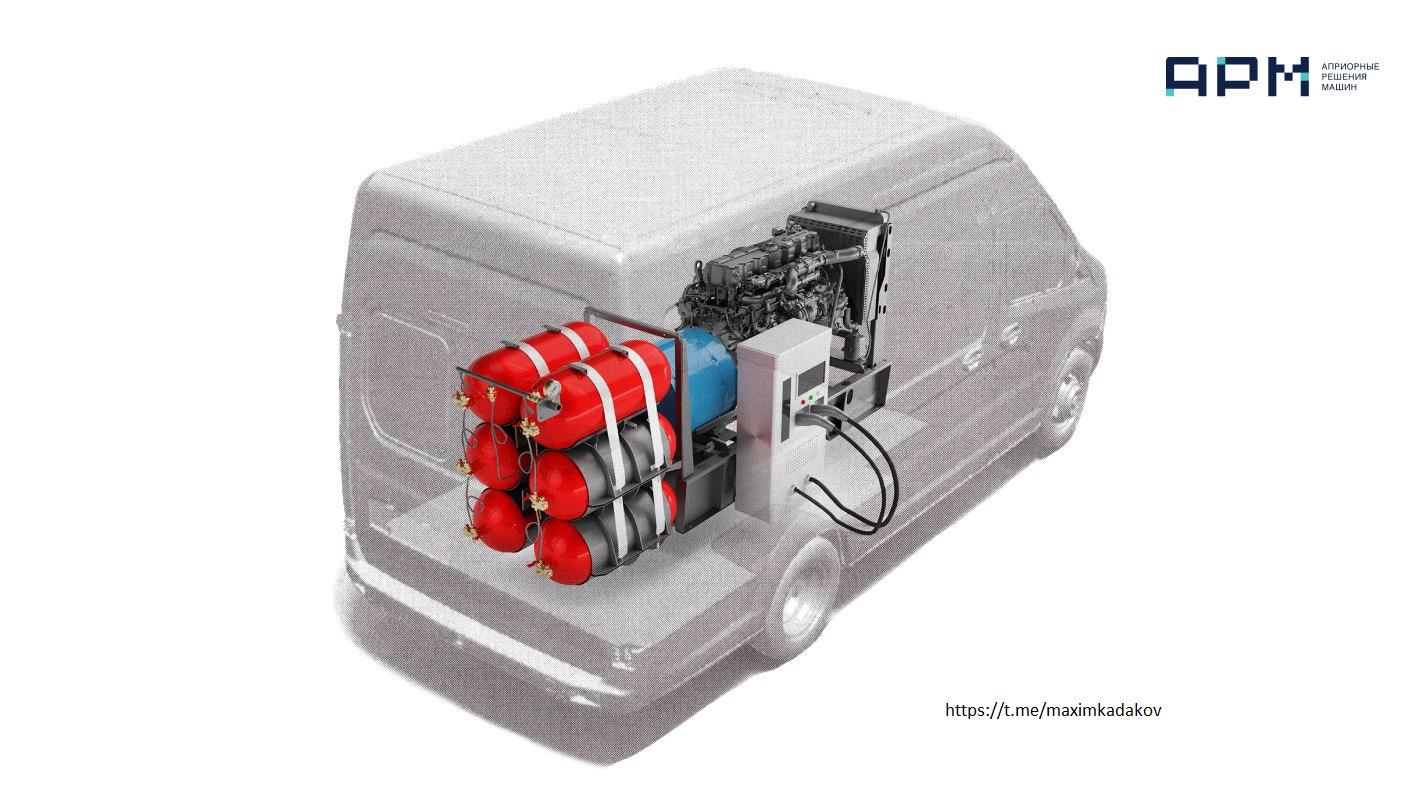
MElS operates on a mobile platform based on the principle of gas microgeneration - gas cylinder equipment and a gas internal combustion engine, a direct current generator for providing fast battery charging, cooling and ventilation systems, as well as charging module interfaces are installed on the platform.
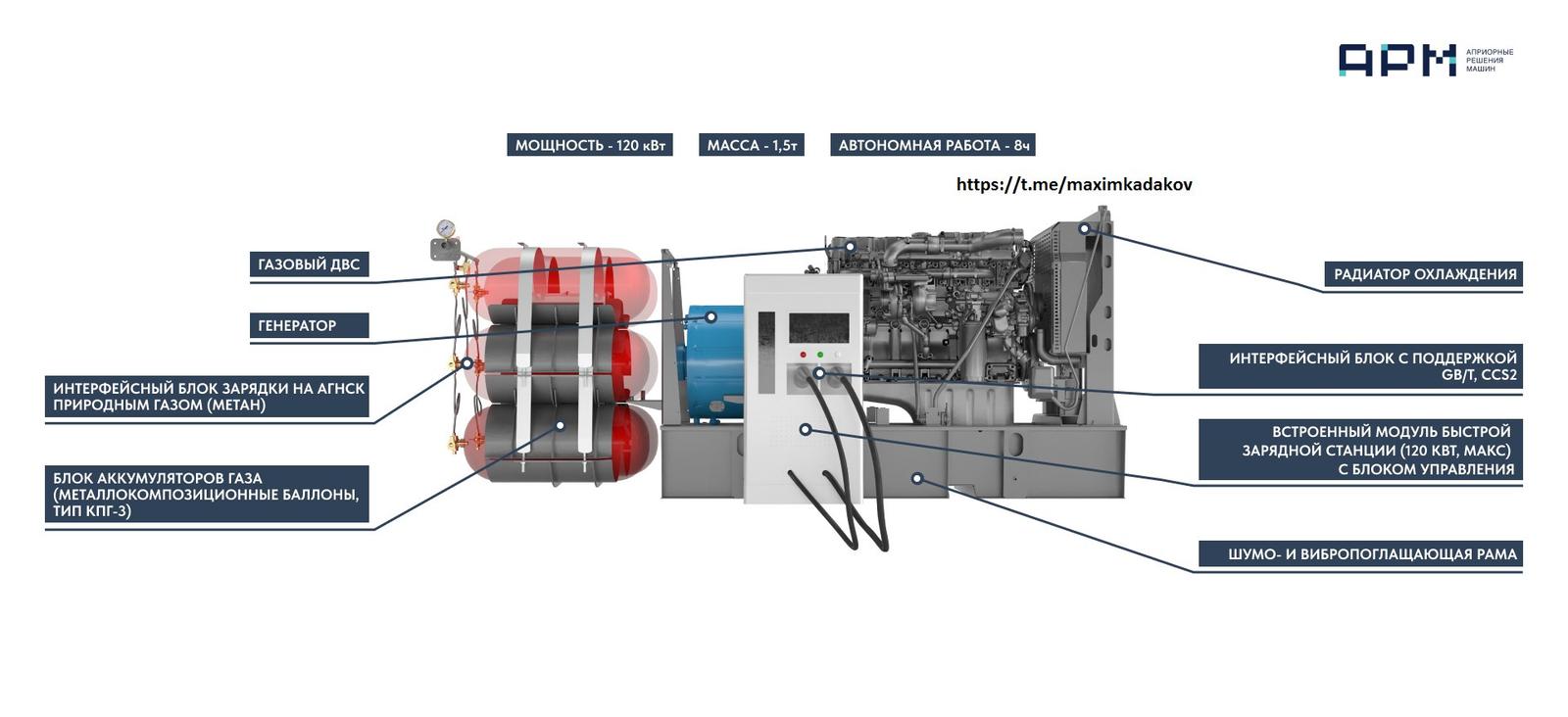
Compressed natural gas will be used as the main fuel in the installation, which corresponds to the EURO-5 environmental standard. The device - with a capacity of up to 125 kilowatt-hours - will be able to operate autonomously for up to 8 hours or complete fifteen charging sessions. The gas shortage can be replenished at a gas filling station within 15 minutes.
All key components of the mobile electric station are domestic. It is assumed that a domestic IT platform will also appear, which will allow planning the movement and operation of the mobile electric station and provide a gateway for paying for charging sessions. A special interface will also be developed for integration into the existing IT landscape of car sharing and taxi operators.
Never miss our newsAdd this site to your preferred sources to see us more oftenAdd on Google

















