Translated with AI from the Russian original.
Russian scientists have developed a bionic ear prosthesis. The project was worked on by a team of researchers from Perm Polytechnic University (PNRPU), Perm Medical University (PGMU), and Moscow State University of Medicine and Dentistry (MSUMD).
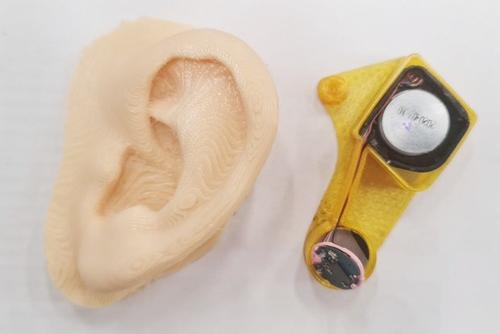
The silicone epithesis of the auricle was developed using digital modeling and volumetric printing technology. According to Sergey Arutyunov, Head of the Department of Digital Dentistry at MSUMD, the prosthesis will be made individually for the patient. To do this, specialists will scan a healthy ear. In the absence of both auricles, the prosthesis will take shape from a database of other patients.
The university clarified that the bionic prosthesis can be used for anotia - a pathology in which a person has no ear from birth and no auditory canal. This will eliminate the need for complex surgery to create an artificial auditory canal.
Earlier in Tomsk, scientists came up with a special coating that helps the implant to take root in patients with bone defects.
Never miss our newsAdd this site to your preferred sources to see us more oftenAdd on Google

















