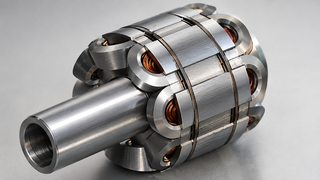
The Khlopin Radium Institute in Russia is preparing to create a new cyclotron, which will become the most powerful proton accelerator among national analogues. This machine, developed by the Efremov Institute of Electrophysical Apparatus (NIIEFA), will bring a number of innovations to the field of medical technology in Russia.
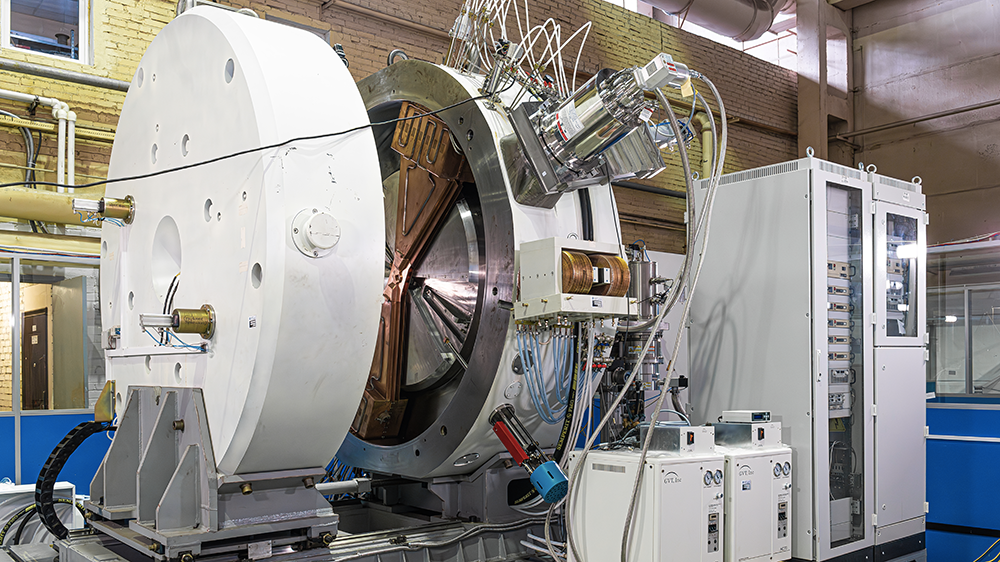
The features of the upcoming SS-30/15 accelerator lie in its adjustable proton energy, ranging from 15 to 30 MeV, and beam intensity up to 400 μA. This device is designed to ensure the production of isotopes used for medical purposes.
A feature of the SS-30/15 will be the possibility of obtaining generator-type isotopes, which, when decayed, create target radioisotopes. This means that, for example, germanium-68, when decaying, generates gallium-68, which is in demand for proton emission tomography. It is important to note that the half-life of gallium-68 is only 67.7 minutes, which allows it to be transported to other cities or countries for use in a generator from which the target isotope will be obtained in hospitals.
«The parameters of the cyclotron allow it to be used both in boron neutron capture and simply in neutron therapy», — added Yuri Gavrish, Deputy Scientific Director of NIIEFA.
The developed accelerator at the Radium Institute will have a number of distinctive features, including a robotic system for changing target devices. This will not only speed up production processes, but also make the device more compact. It is also worth noting that the current on the device will be constant and regular, maintained for up to several days, which is the optimal time for obtaining the most complex radionuclides.
In recent years, NIIEFA specialists have significantly reduced the use of imported components in the production of cyclotrons, which indicates a desire for complete independence in this area of technology.
With the help of the new cyclotron, the Radium Institute will be able to guarantee stable supplies of iodine-123 throughout the country, revive the production of gallium-67, and begin the production of germanium-68 and generators based on germanium and gallium. These substances are used in medical research, including brain scintigraphy, analysis of liver and kidney function, thyroid studies, diagnosis of relapsed prostate cancer, lymphomas, and small cell lung cancer, as well as assessment of the functional state of the sympathetic nervous system and heart.
The new cyclotron represents not only a new stage of development in medical technologies in Russia, but also provides extensive opportunities for scientific research and innovation in the field of radiopharmaceuticals and research on the radiation resistance of materials.
Never miss our newsAdd this site to your preferred sources to see us more oftenAdd on Google