Translated with AI from the Russian original.
Kamaz CEO Sergei Kogogin announced that Russian Atom electric vehicles are most likely to be produced at the Moscow automobile plant. A separate legal entity will be created for this purpose. Earlier it was said that the production of Atom could be established at the Ford plant in Naberezhnye Chelny, however, according to Kogogin, this is unlikely, since the enterprise is inoperable and requires investment.
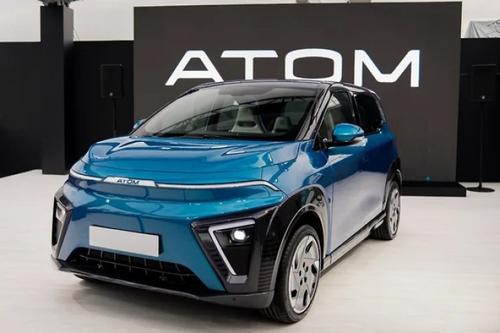
The CEO of Kama, Igor Povarazdnyuk, announced that Kama cars will be launched for testing in October 2023. In the second and third quarters of 2024, the company expects to produce the first prototype at the production site and gradually start mass production of cars by mid-2025. The production volume at the first stage will be from 5 to 15 thousand cars, depending on the number of pre-orders. By 2030, Kama intends to reach production volumes of over 100 thousand cars per year. The cars are planned to be exported to Southeast Asia and the Middle East. And also, possibly, to China.
The dimensions of the Atom will be 3995 x 1780 x 1615 mm. The electric car will be presented in four versions: a single-seat Delivery, a two-seat Duo, a four-seat Taxi and a five-seat Family. The range of each on a single charge will be 500 km. All modifications will be front-wheel drive and will receive a recuperation system. Atoms will be supplied with the ATOM OS operating system, which can be controlled using a smartphone application.
Never miss our newsAdd this site to your preferred sources to see us more oftenAdd on Google

















