The stealthiness of combat aircraft is determined by their effective radar cross-section (RCS), airframe shape, and air intake architecture. The lower the RCS, the later the radar will detect the target.
The Russian Su-57 belongs to the fifth generation, but in a direct comparison of stealth, it is inferior to specialized stealth platforms. "Pervy Tekhnichesky" compiled a rating of combat aircraft based on estimated data from open sources.
5. Chengdu J-20 (China)
The Chengdu J-20 uses canards ("ducks"), which increase radar reflection during maneuvers.

As a result, its effective radar cross-section is estimated to be in the range of 0.1–0.5 m², making it the most detectable on this list.
4. Su-57 (Russia)
The Su-57 combines stealth elements with high maneuverability, but its direct air intakes partially expose the engine to radars.
Its RCS is also estimated to be around 0.1–0.5 m², although in a frontal projection, it may be lower.
3. Shenyang FC-31 / J-31 (China)
The Shenyang FC-31 is designed with a more "clean" stealth scheme without canards.
_at_the_2014_Zhuhai_Air_Show.jpg)
Due to its geometry and layout, its RCS is estimated to be around 0.01 m², which is significantly better than the heavier J-20.
2. F-35 Lightning II (USA)
The F-35 Lightning II is optimized for minimal detectability across a wide range of radars.
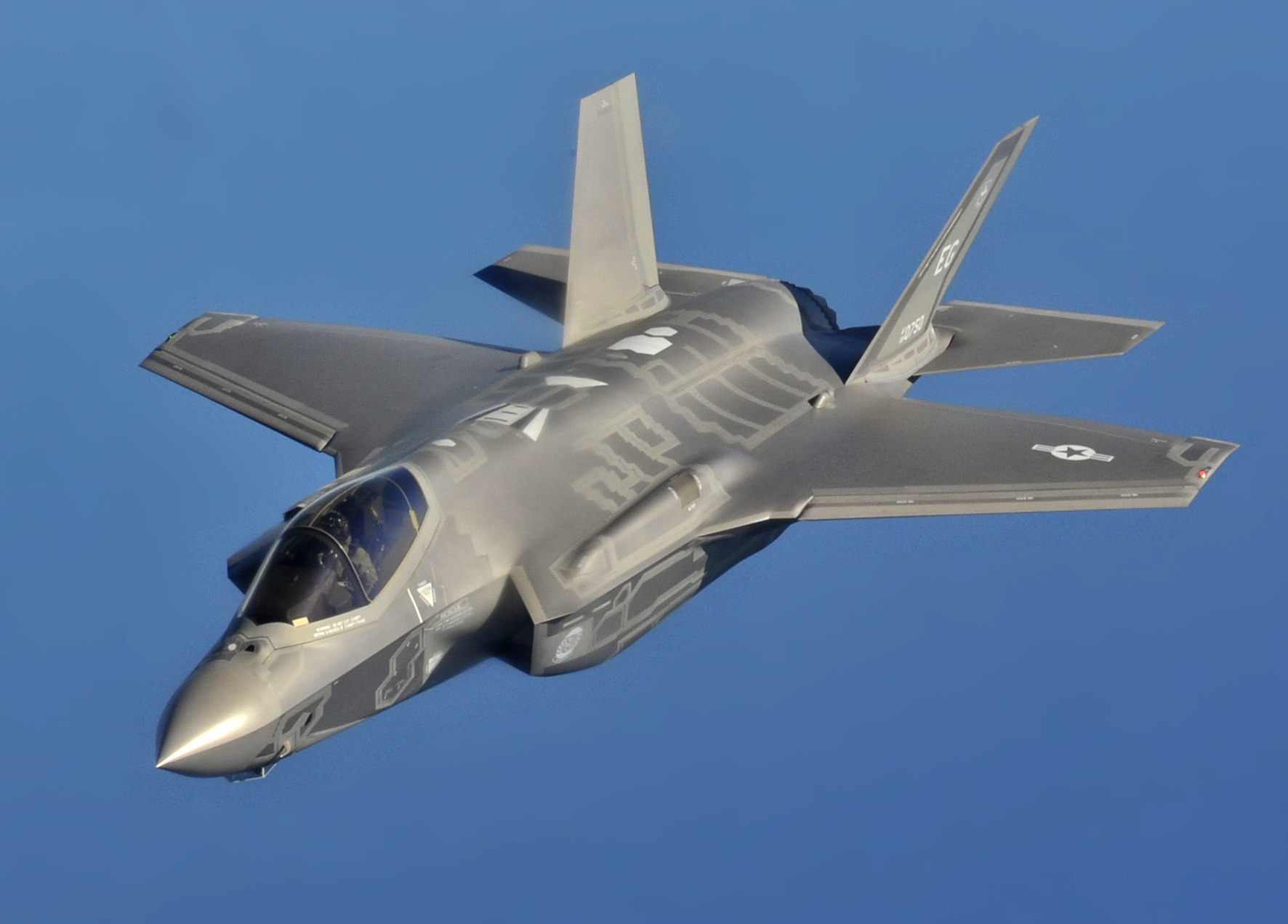
Its RCS is estimated to be around 0.001–0.005 m², making it one of the least detectable production aircraft in the world.
1. F-22 Raptor (USA)
The F-22 Raptor remains the benchmark for stealth among fighters: its RCS is estimated at 0.0001–0.001 m².
.jpg)
S-shaped air intakes and a "smooth" airframe geometry minimize radar reflection and make it the most difficult target to detect.
The gap in stealth levels between the participants in the rating is explained not by generation, but by design philosophy. For example, the F-22 Raptor and F-35 Lightning II were initially created around the idea of minimal RCS.
The Russian Su-57 was initially designed on a different principle — as a balance of stealth, maneuverability, and combat load.