Translated with AI from the Russian original.
A rare video has appeared online, telling about the evolution of the MiG family of aircraft. Among dozens of machines, one unique specimen attracted special attention - the MiG 1.44 experimental fighter. This is not a project "on paper" and not a model: the plane existed in metal and even took to the air.
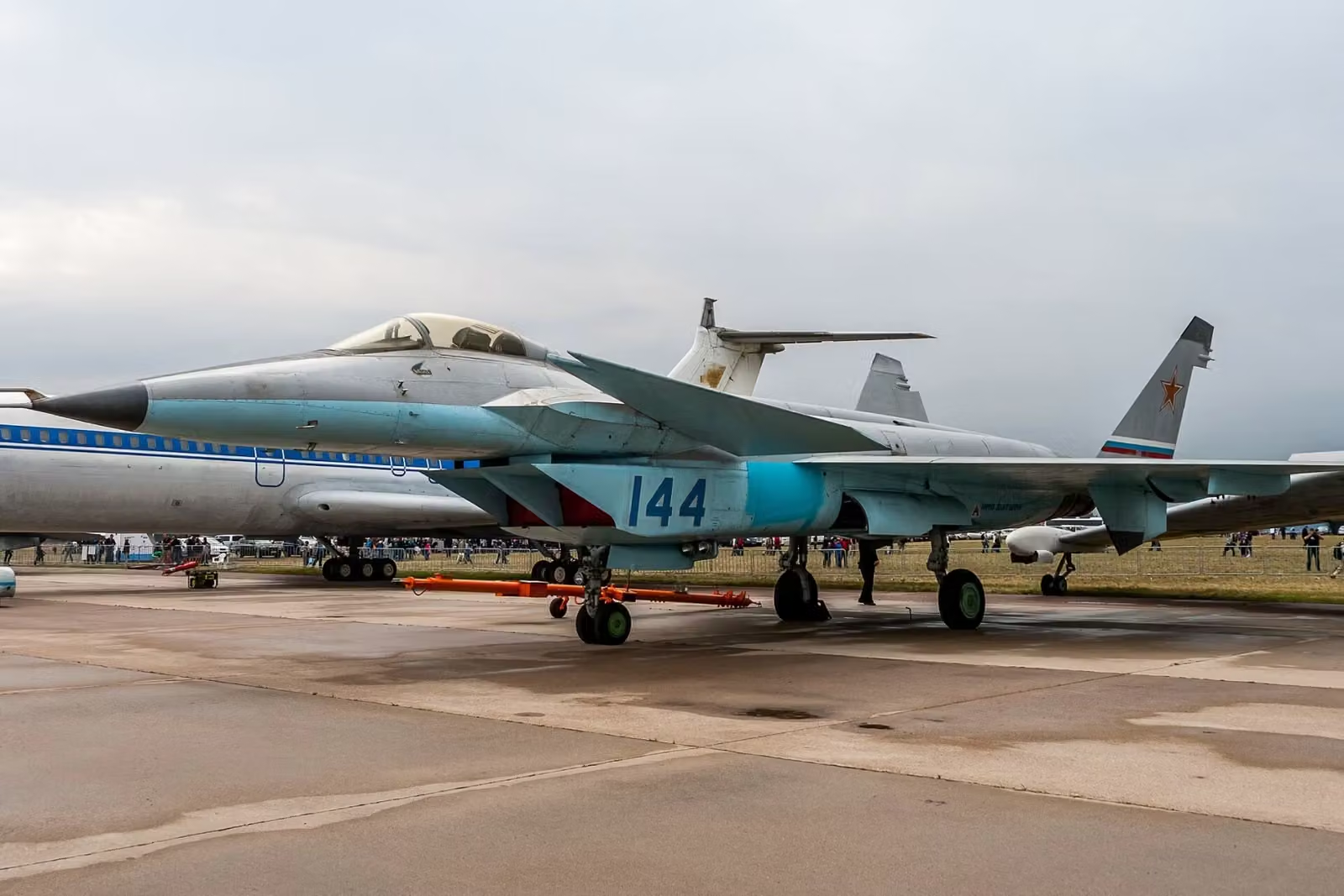
Our Answer to the F-22 Raptor
The MiG 1.44 was created in the late 1990s as an answer to the American F-22 Raptor - the first fifth-generation fighter. The MiG 1.44 was supposed to become "invisible" - the fuselage was designed using radar signature reduction technologies, and missiles were placed in internal compartments - like modern "stealth" aircraft.
The aircraft's radar could detect up to 40 targets at a distance of over 400 km. According to the designers' calculations, the MiG 1.44 developed a speed of up to 2450 km/h, climbed to a height of 20 km, and had a flight range of about 4000 km.
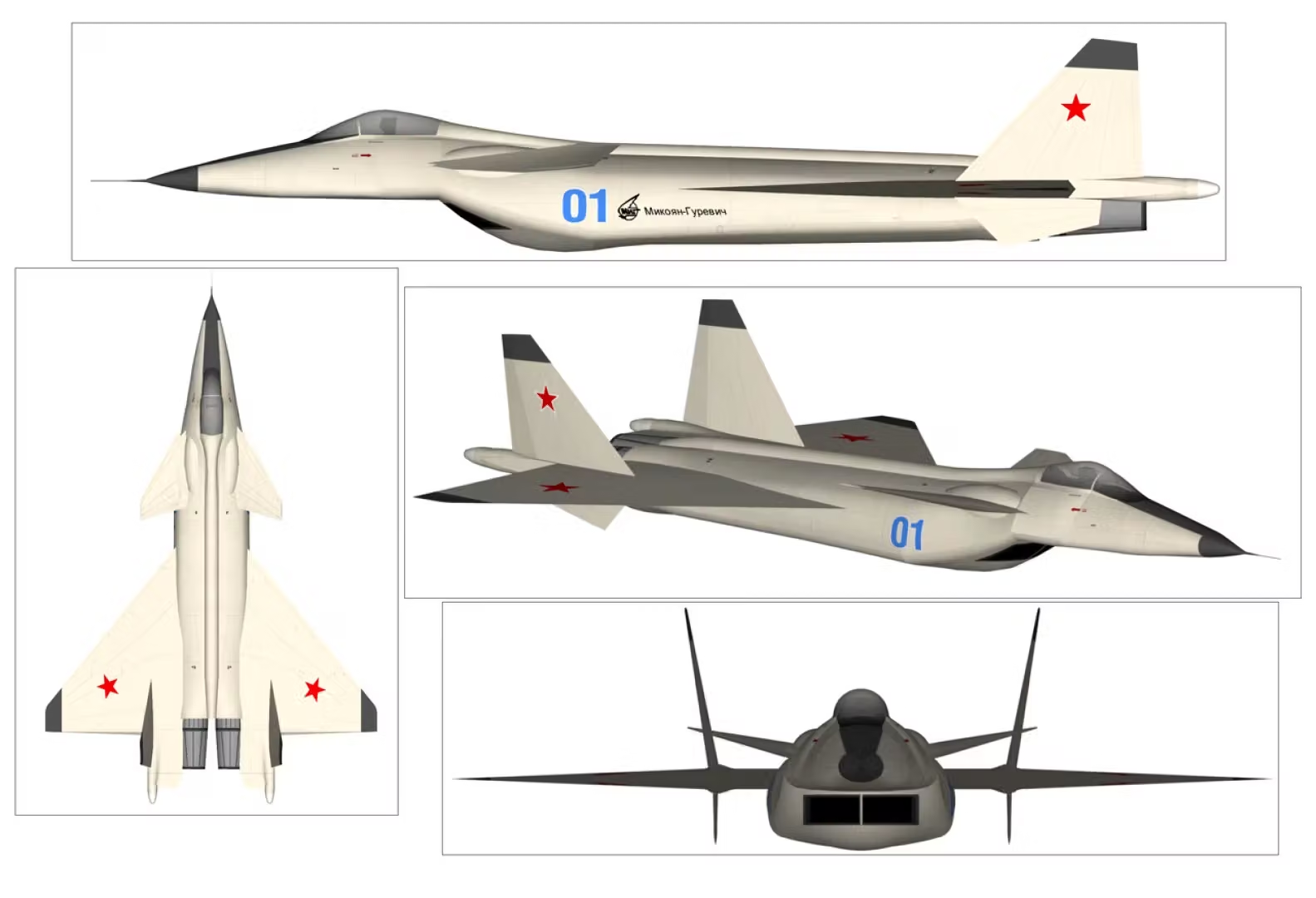
Composite Beast
AL-41F engines with a thrust of 18 thousand kg each provided the machine with outstanding flight characteristics. The length of the aircraft was 17.3 m, the wingspan was almost 12 m. It was a real "beast" made of titanium and composites, capable of aerobatics at supersonic speeds.
It was planned that the MiG 1.44 would be used to develop solutions for future fifth-generation fighters. However, the project was frozen in the early 2000s - there was not enough money, the defense industry was being restructured in the country, and priority shifted towards the development of the Su-57.
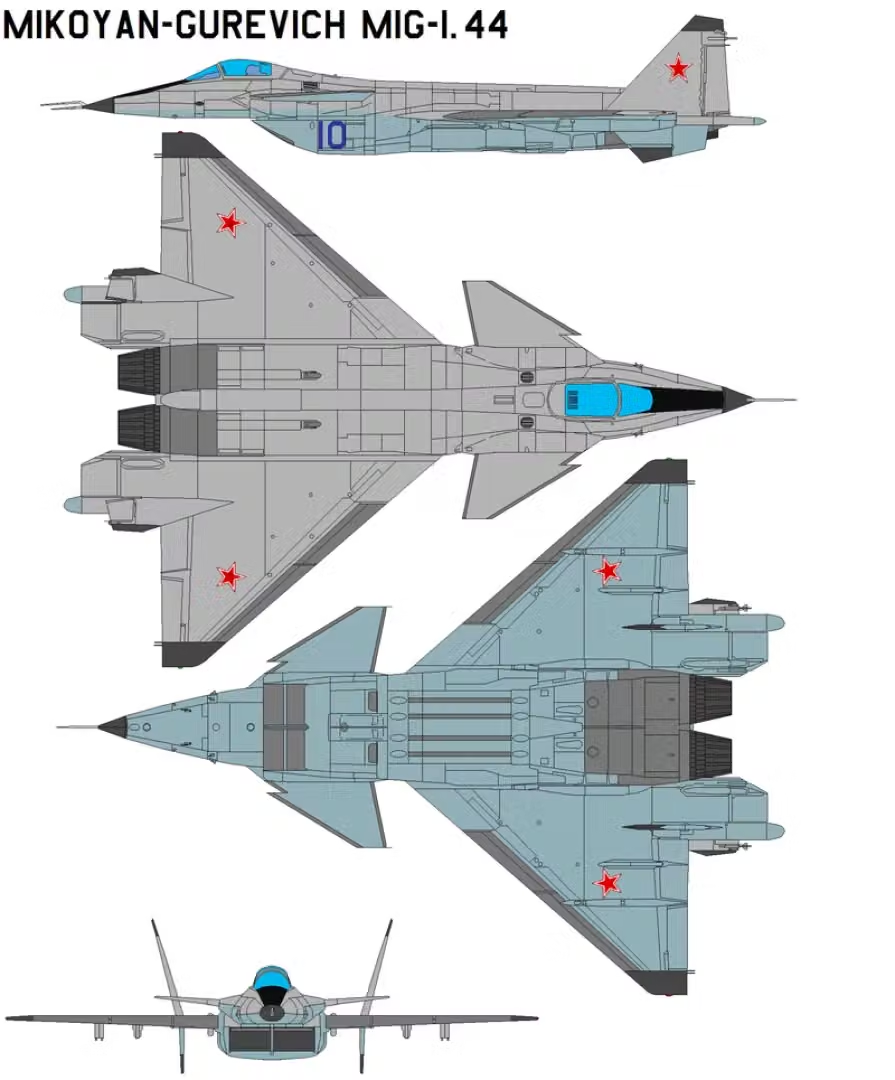
Ancestral Heritage Came in Handy
Nevertheless, many technologies created for the MiG 1.44 were not lost. They formed the basis of modern engines, control systems, and avionics, which are used today on Russian combat aircraft.
Today, the MiG 1.44 is stored as a museum exhibit - a reminder of the time when Russian aviation took a step into the future, ahead of its time.
Earlier www1.ru reported that the "Splinter" fiber-optic FPV drone developed by the "Groza" project hits 80% of targets.
Read also:
- Rostec revealed the secret of the Su-34 "duck": the wide "beak" is needed for a reason
Never miss our newsAdd this site to your preferred sources to see us more oftenAdd on Google

















