Translated with AI from the Russian original.
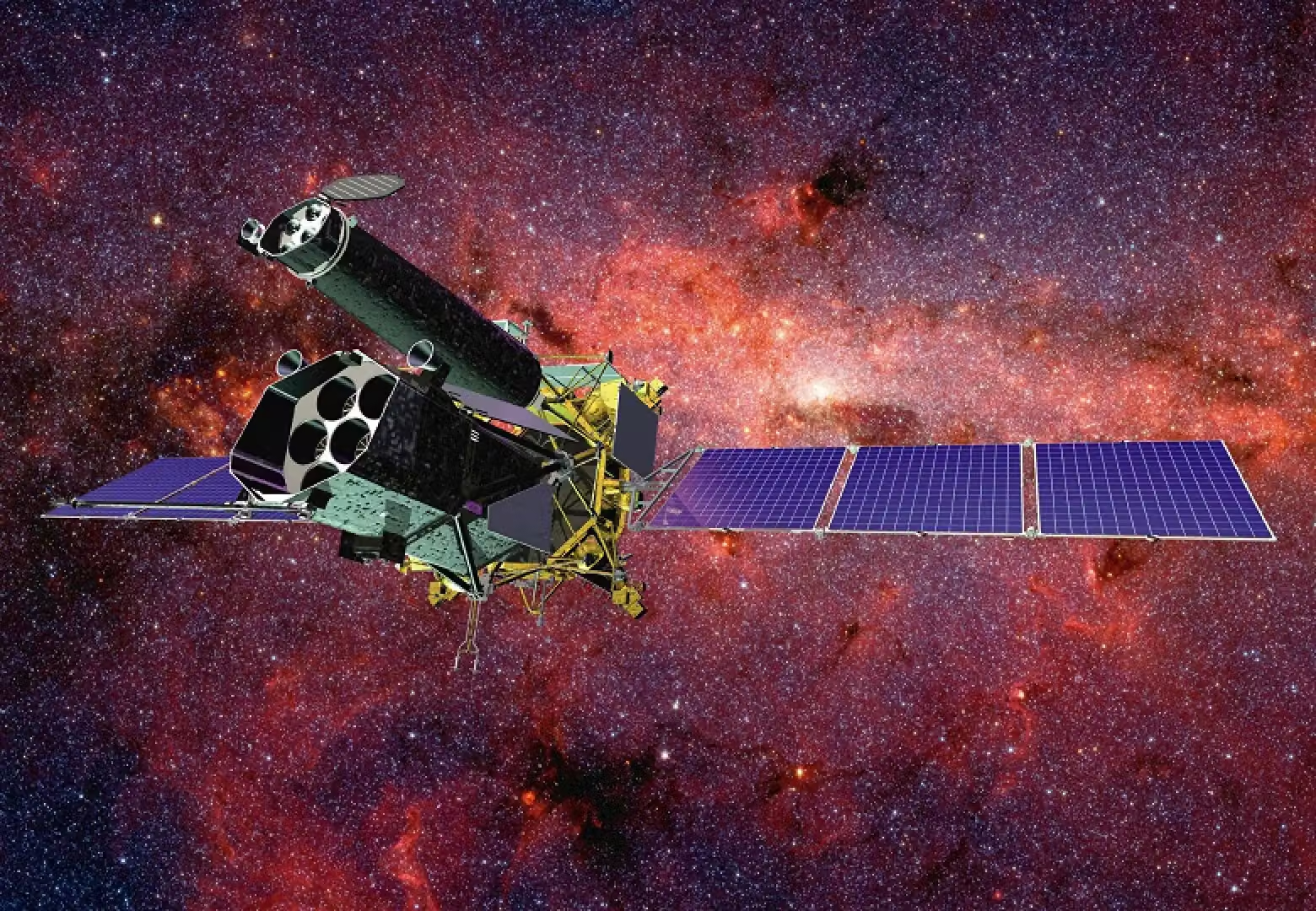
By 2032, the astrophysical observatory "Spektr-RGN" will be launched, which will become the successor to the successfully operating telescope "Spektr-RG" in orbit. The preliminary design of the new telescope will begin before the end of this year, Anatoly Petrukovich, Director of the Space Research Institute (IKI) of the Russian Academy of Sciences, said in an interview with TASS.
What tasks does "Spektr-RG" perform in space?
The astrophysical laboratory was created by Russian scientists with the participation of scientists from Germany to study the Universe in the X-ray range of wavelengths, observe Supernova flashes with the study of their evolution, as well as study black holes and neutron stars in our Galaxy.
The IKI RAS predicts that the current astrophysical observatory will operate in orbit for a long time, despite the approaching end of its active lifespan.
We optimistically predict that it will live long enough.
It should be reminded that "Spektr-RG" was launched in mid-2019 with a declared active lifespan of 6.5 years.
How is "Spektr-RGN" better?
The new device will differ from its predecessor in its expanded functionality, in particular, one of the goals of the project is to develop a technology for autonomous navigation of spacecraft using X-ray sources, which will be reflected in the name - the letter "N" stands for "Navigation".
Earlierwww1.ruwrote that the Spektr-RG observatory will operate longer than the warranty period.
Read more materials on the topic:
- "Spektr-RG": what the Russian astrophysical observatory can do
- Russian telescope "Spektr-RG" found quasar SRGA J2306+1556, hidden from direct observation
- New horizons for the use of satellites have been opened: the SG3 platform in the CubeSat format was presented in Russia
Never miss our newsAdd this site to your preferred sources to see us more oftenAdd on Google

















