Translated with AI from the Russian original.
Many wonder why the strategic aviation of the Russian Aerospace Forces (VKS) is not in concrete shelters at military airfields, but is based in the open air. Analysts at the "Military Review" explained this situation.
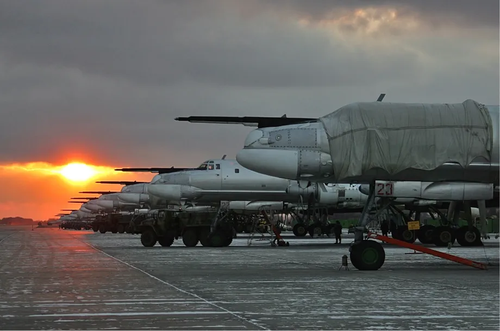
They recalled that Russia and the United States extended the Treaty on Measures for the Further Reduction and Limitation of Strategic Offensive Arms (START-3) until February 6, 2026, despite the fact that its control mechanisms are effectively frozen.
One of the key elements of the agreement is to ensure transparency. Strategic bombers must be placed in open parking lots so that their condition and quantity can be verified through inspections and satellite reconnaissance. This rule is designed to reduce the risks of mistrust and prevent unexpected escalation.
In February 2023, Russia suspended its participation in inspection procedures and ceased exchanging data on its nuclear arsenal.
However, despite this, Russian bombers still remain in sight, which may indicate de facto compliance with the treaty by our country.
The analyst noted that this is most likely the key reason why the strategic aviation of the Russian Aerospace Forces is still in parking lots in the open air.
Earlier www1.ru reported that the use of half-century-old Grad MLRS has been completely rethought: new approaches to combat work.
Read more materials:
Russia has officially sold a batch of the latest Su-30SM2 fighters abroad
India will equip MiG-29 and Su-30MKI with Russian R-77 new generation missiles
Never miss our newsAdd this site to your preferred sources to see us more oftenAdd on Google

















